Carnitas, Queso Fresco & Tacos: The Mexican Food Pregnancy Safety Guide
Is Mexican food safe while pregnant? Discover the clinical rules for Queso Fresco, the truth about Carnitas safety, and how to navigate the salsa bar without the risk of Listeria.
In this article
Editorial note: This article is researched from official public health and pregnancy food safety guidance, then edited by the PregnancyPlate team for clarity. It is not medical advice. If you are worried about symptoms or a specific exposure, contact your midwife, GP or healthcare provider.
The Mexican Cuisine Safety Audit: Mexican food is often a craving-savior for pregnant mothers due to its high protein, healthy fats, and vibrant acidity. However, navigating the world of artisanal cheeses and slow-cooked meats requires a clinical eye for Pasteurization and Internal Temperatures.
Check Mexican Ingredient Safety on PregnancyPlateYour next meal, a little less guesswork.
Scan your plate for pregnancy food-safety guidance and a nutrition breakdown. Keep your meals and nutrient progress in one place.
 Scan with your iPhone
to get the app
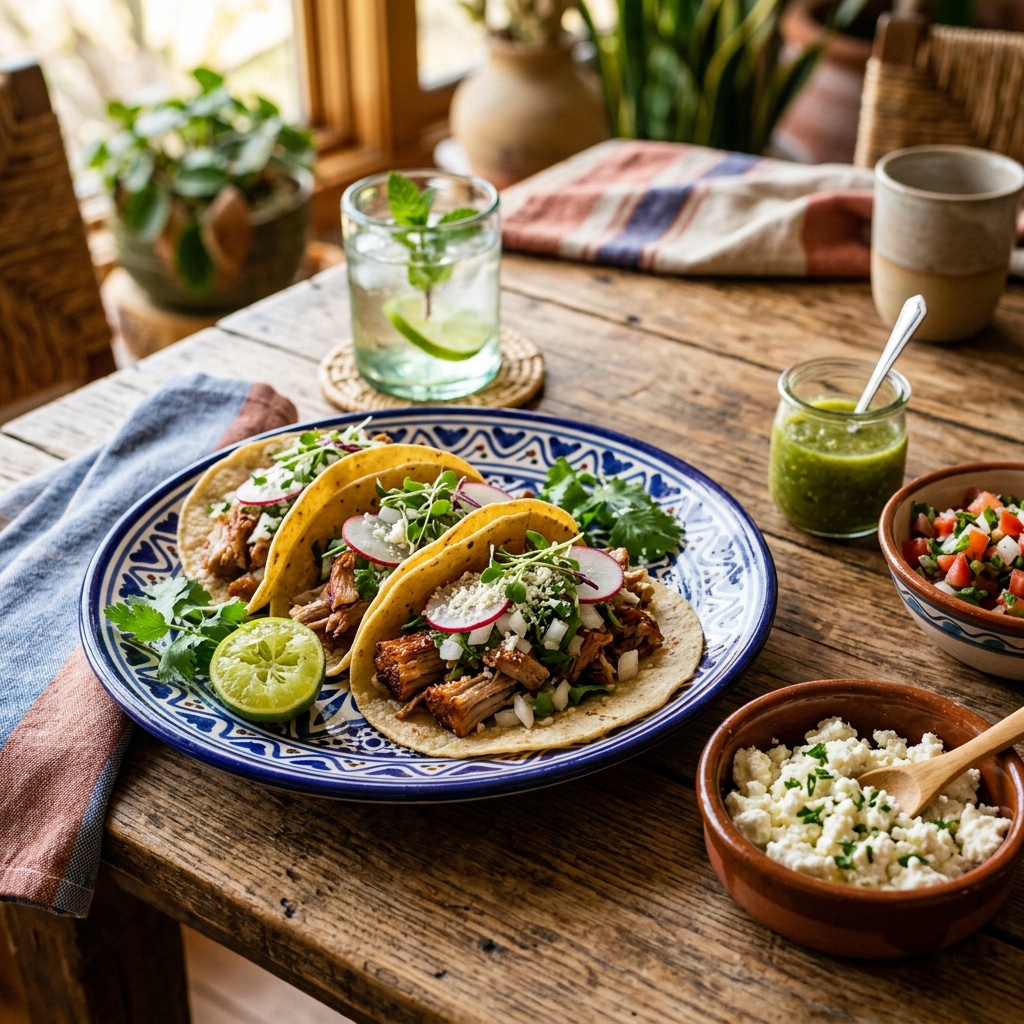
From the sizzle of street-style carnitas to the creamy allure of freshly made guacamole, Mexican cuisine is a sensory powerhouse. For an expectant mother in 2026, it offers a wealth of essential nutrients: avocados provide the healthy monounsaturated fats needed for the baby's brain development, beans offer a significant fiber and folate boost, and corn tortillas provide a gluten-free source of complex carbohydrates. However, Mexican restaurants and home kitchens often utilize traditional methods - specifically with artisanal "soft" cheeses and slow-cooked pork - that can harbor Listeria or Toxoplasmosis if not managed with clinical precision.
The fear surrounding Mexican food often stems from a lack of clarity regarding ingredient processing. "Is the Queso Fresco safe?" "Is the salsa too acidic for my third-trimester heartburn?" "Are the carnitas fully cooked through?" In this deep-dive audit, we break down every element of the modern Mexican menu, from the "Hidden Dangers" of unpasteurized dairy to the high-authority rules for safe taco consumption.
The Cheese Audit: Queso Fresco, Cotija, and Queso Blanco
Cheese is the #1 point of anxiety in Mexican dining. Traditional "farm-style" Mexican cheeses are frequently made from raw (unpasteurized) cow or goat milk. While this provides a depth of flavor, it also provides a perfect breeding ground for Listeria monocytogenes - a bacterium that can cross the placenta and lead to catastrophic outcomes for the pregnancy.
- Pasteurized Is Not Enough for Queso Fresco: Most queso fresco sold in US grocery stores and served at chains is pasteurized, but the FDA's current guidance tells pregnant women to avoid queso fresco-type cheeses (queso fresco, queso blanco and requesón) whether they are pasteurized or not. These soft, moist, low-acid cheeses can pick up Listeria after pasteurization, and listeriosis outbreaks have been linked to them repeatedly. Raw-milk versions from a taqueria that makes its own cheese are riskier still.
- The "Cooked Cheese" Exception: Any cheese that has been heated until it is bubbling and steaming (like the Monterey Jack in a quesadilla or queso fundido) is considered safe, because the heat kills Listeria. If you do eat queso fresco, the FDA's advice is to cook it into the dish to 165°F (74°C) rather than eat it crumbled cold.
- Cotija (The Hard Cheese Rule): Hard, aged Cotija is generally safer than soft Queso Fresco because its low moisture and high salt content are hostile to bacteria, and it is not one of the fresh cheeses the FDA warning covers. Choose pasteurized, and treat any young, soft cotija the same way as queso fresco.
Meats: Carnitas, Barbacoa, and Pastor
Slow-cooked meats are a staple of Mexican flavor. The risk here isn't just Listeria; it's Toxoplasmosis, a parasite found in undercooked pork. To be safe, any meat you consume must have reached an internal temperature of 165°F (74°C).
- Carnitas (Pork): Because carnitas are traditionally braised for hours and then fried, they are usually very safe. The long cooking time effectively eliminates any parasites. However, ensure they are served "Crispy" and steaming hot.
- Al Pastor: This meat is cooked on a vertical spit. The outer layers are sliced off as they cook. Ensure your server isn't slicing off "pink" or undercooked central sections for your tacos.
- Chorizo: This is a raw sausage. It must be fully browned and crumbled in a pan. Avoid "Cold Chorizo" appetizers that haven't been aggressively heated.
Salsa, Guacamole, and the "Raw Vegetable" Risk
We often focus on meat and cheese, but the salsa bar is actually a significant source of food-borne illness. Raw onions, cilantro, and tomatoes carry a risk of Salmonella or E. coli if they haven't been washed with clinical care.
- Guacamole: Avocados are a "pregnancy superfood," but the skins can harbor bacteria. At home, wash the avocado before cutting. At restaurants, ensure the guacamole is freshly made and has been kept refrigerated.
- Pico de Gallo: This is entirely raw. If you are at a high-volume restaurant with high turnover, it is generally safe. If the salsa looks like it has been sitting in a warm buffet for hours, skip it and opt for a cooked salsa roja instead.
- Cilantro: If you are especially cautious, ask for no raw cilantro on your tacos. Pathogens can hide in the delicate leaves of herbs that aren't properly agitated during washing.
Managing Heartburn and Acidity
By the third trimester, your acid reflux will likely be triggered by the high acidity of Mexican food. The combination of tomatoes, lime juice, and spicy capsaicin is a "triple threat" for the lower esophageal sphincter.
The Neutralization Strategy: Always pair your spicy tacos with a cooling agent like Greek yogurt (as a sour cream substitute) or extra beans. The fiber and protein help stabilize the stomach acid. Avoid drinking large amounts of water during the meal, as this can dilute stomach acid and lead to slower digestion and more reflux.
Beverages: Horchata, Jamaica, and Tequila-Free Margaritas
Mexican drinks are delicious but carry specific pregnancy considerations.
- Horchata: This rice-milk drink is generally safe but very high in sugar. Use it as a treat rather than a primary hydration source. Some traditional recipes use unpasteurized milk - always verify.
- Agua de Jamaica (Hibiscus): There is some conflicting data about high-concentrate hibiscus tea during the first trimester. While an occasional glass is fine, avoid drinking liters of it daily, as it can potentially impact hormonal balance in very high quantities.
- Margaritas: Stick to the "Virgin" version. Most restaurants use commercial mixes which are pasteurized and safe.
The Mexican Safety Cheat Sheet
- The "Bubbling" Rule: If it's hot, bubbling, and steaming, it's almost certainly safe.
- Skip Cold Queso Fresco: Pasteurized or not, the FDA advises pregnant women to avoid queso fresco-type cheeses unless they are cooked into the dish until steaming hot.
- Bean Power: Opt for whole beans (frijoles de la olla) over refried beans to avoid excess lard/saturated fats while keeping the fiber high.
- Lime is Your Friend: The Vitamin C in lime juice significantly increases the absorption of iron from your beans and meat. Squeeze liberally!
Mexican food doesn't have to be off-limits during your 40 weeks. By applying these high-authority safety filters, you can enjoy the protein-dense benefits of tacos and the healthy fats of guacamole with total clinical confidence. Focus on heat, verify your dairy, and enjoy the vibrant flavors of a safe Mexican feast.
Unsure About a Specific Mexican Ingredient?
Don't guess when it comes to your baby's safety. Use the AI Food Scanner in the PregnancyPlate App. Just snap a photo of the menu or the cheese label, and our engine will instantly audit it for pasteurization and bacterial risk based on the latest 2026 medical data. Stay safe, stay nourished.
Ordering at a Mexican Restaurant Without the Guesswork
The practical version, since menus rarely tell you what you need to know.
Safest orders: anything from the grill served hot, so carne asada, grilled chicken, fajitas that arrive sizzling. Carnitas and barbacoa are slow cooked and served hot, which makes them fine. Bean dishes, rice and baked dishes like enchiladas are all straightforwardly safe.
Skip the cold crumbled cheese: queso fresco, queso blanco and requesón are the one cheese family the FDA specifically tells pregnant women to avoid, even when pasteurized. They are soft, moist and low in acid, Listeria can get in after pasteurization, and outbreaks have traced back to them again and again. Ask for it on the side or left off.
Melted is fine: cheese that arrives bubbling and steaming, like queso fundido, a quesadilla or enchiladas baked under cheese, has been heated enough to deal with Listeria. Aged, crumbly cotija is lower risk than fresh cheese, but if it is soft and fresh, treat it like queso fresco.
Watch the salsa station rather than the salsa. Fresh salsa and pico are fine when freshly made. The consideration is how long the self-serve bowls have sat out and how many spoons have visited.
Ceviche, Guacamole and the Other Specifics
Ceviche is the clear no. The fish is cured in citrus rather than cooked, so the acid changes the texture without ever reaching a temperature that deals with listeria or parasites. It is the one genuinely off-limits dish on most Mexican menus.
Guacamole is fine and actively good for you, bringing folate and healthy fats. The only caveat is the one that applies to any prepared dip, which is time spent sitting at room temperature.
Horchata is safe when made with pasteurised milk, which commercial versions are.
Chilli heat will not harm the baby. It may well punish your reflux in the third trimester, which is a comfort question rather than a safety one, and our heartburn foods guide covers that.
Meet the Editorial Team
The researchers and experts behind PregnancyPlate.

Fiza Izra
Founder & Tech Researcher
A UK-based mother of 3 with a background in tech and data synthesis, Fiza brings real-world experience navigating hyperemesis gravidarum and postnatal depression. She engineers complex clinical guidelines (NHS, ACOG) into accessible tools, ensuring rigorous fact-checking with deep empathy.

Emma Davies
Senior Nutrition Editor
A mum and writer, Emma runs our food safety desk. She is the one who rings the restaurant to ask how long the lettuce sits out, checks every claim against CDC, FDA and NHS guidance, and rewrites the answer until it is usable at 9pm in a drive-thru queue.
Make sense of every plate.
Scan your plate for pregnancy food-safety guidance and a nutrition breakdown. Keep your meals and nutrient progress in one place.
Scan with your iPhoneto get the app