Gluten-Free Pregnancy Meal Plan: 5 Days From One Sunday Prep
A gluten-free pregnancy meal plan built around the folate, iron and fiber that gluten-free swaps often miss, with a 90-minute Sunday prep, five days of meals, hidden-gluten traps and a shopping list.
In this article
Editorial note: This article is researched from official public health and pregnancy food safety guidance, then edited by the PregnancyPlate team for clarity. It is not medical advice. If you are worried about symptoms or a specific exposure, contact your midwife, GP or healthcare provider.
Why This Plan Is Different: In the US, most regular white bread, pasta and cereal are made with enriched flour, which by law includes folic acid and iron. Gluten-free versions often aren't enriched. So a gluten-free pregnancy diet needs to get its folate, iron and fiber from whole foods like lentils, beans, spinach, quinoa and meat. This plan does that across five weekdays, from one 90-minute Sunday prep session.
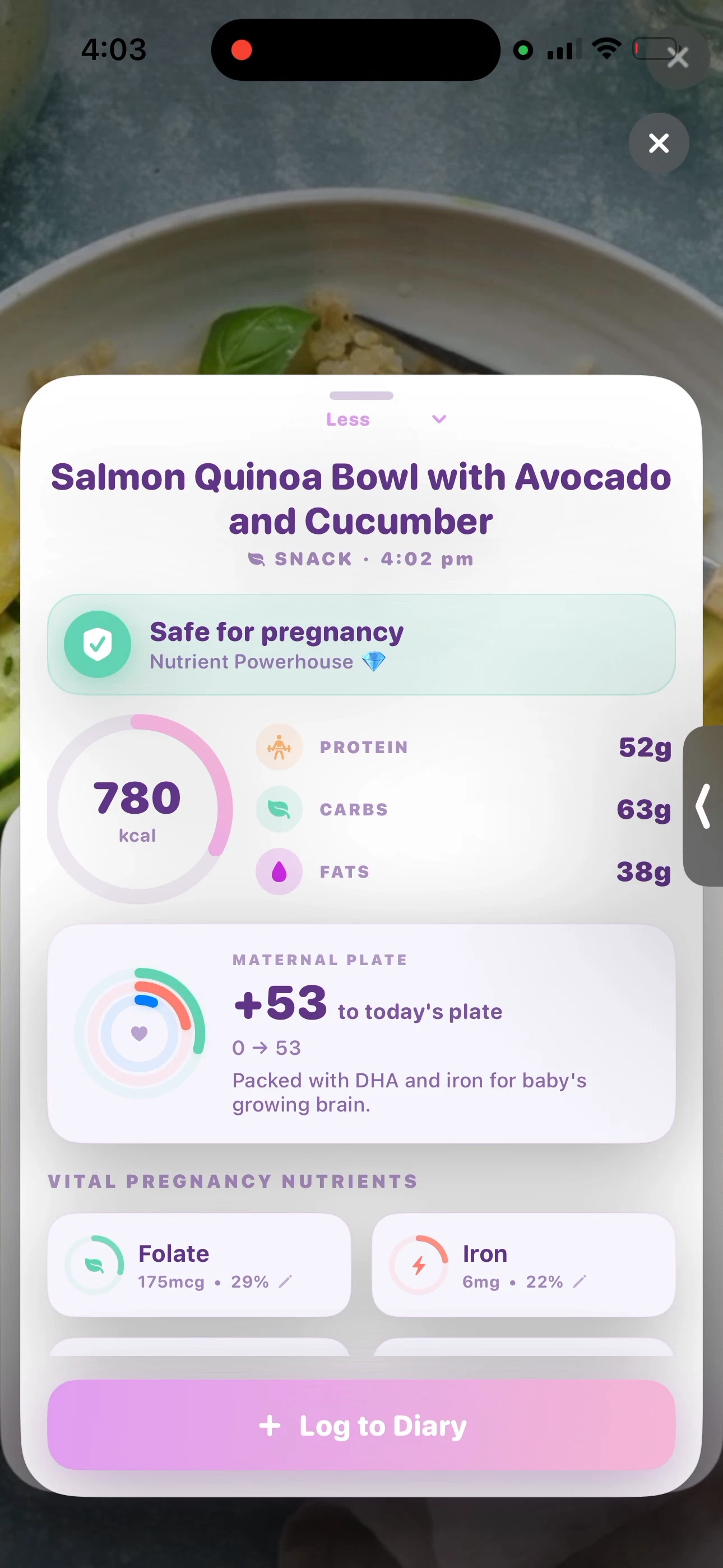
Track folate and iron in PregnancyPlateYour next meal, a little less guesswork.
Scan your plate for pregnancy food-safety guidance and a nutrition breakdown. Keep your meals and nutrient progress in one place.
 Scan with your iPhone
to get the app
Whether you have celiac disease, a wheat allergy or a gluten sensitivity, eating gluten-free while pregnant takes a little more planning than it did before. It's not about missing out on bread. It's that the gluten-free swaps often skip the nutrients that regular grain products quietly supply.
Since 1998, the FDA has required enriched grain products in the US to include folic acid, the nutrient that helps prevent neural tube defects. Many gluten-free breads, pastas and baked goods aren't enriched, so they don't carry it. That's the main gap this plan fills. Our gluten-free pregnancy nutrition guide goes into more detail on the nutrition side.
The Three Nutrients to Build Around
| Nutrient | Daily target in pregnancy | Best gluten-free sources |
|---|---|---|
| Folate | 600 mcg DFE | Lentils, black-eyed peas, spinach, asparagus, avocado, broccoli, fortified gluten-free cereals |
| Iron | 27 mg | Beef, dark-meat chicken, lentils, beans, spinach, pumpkin seeds, fortified cereals |
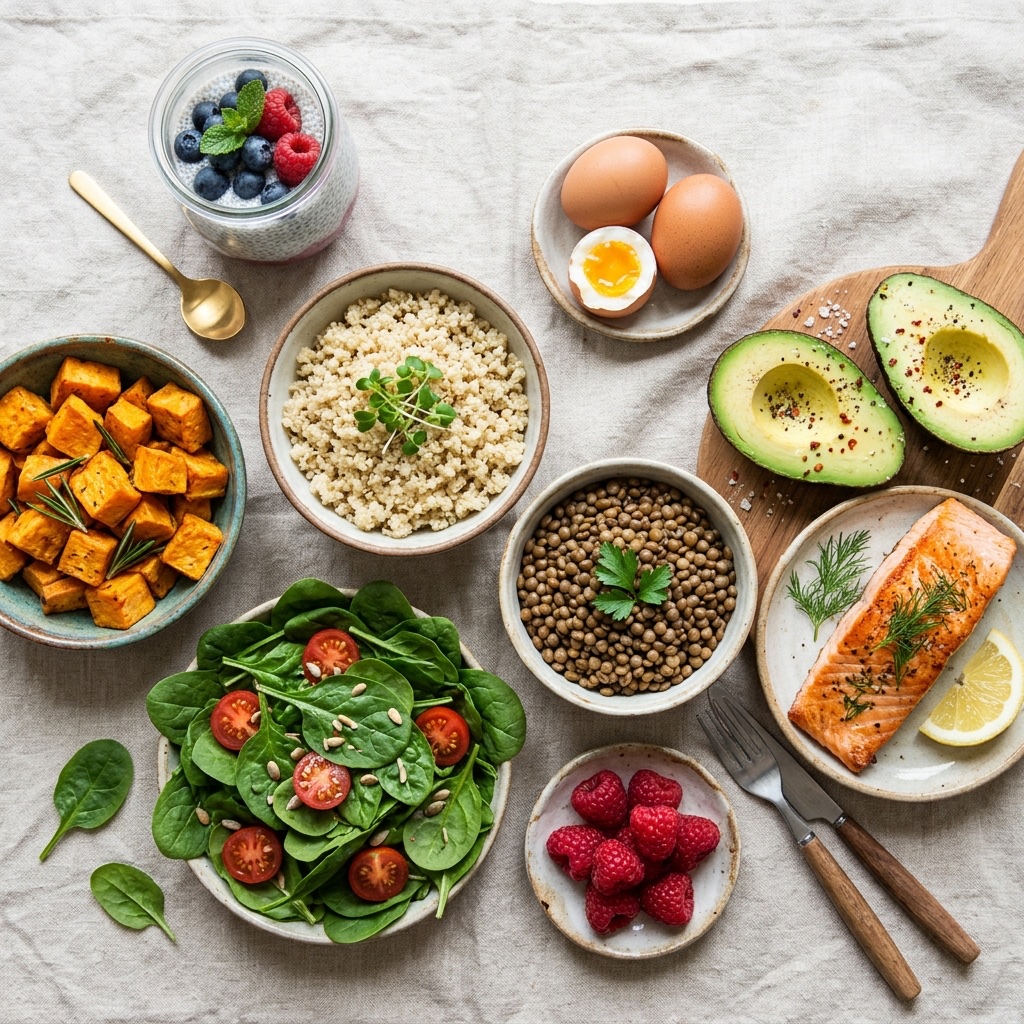
| Fiber | 28 g | Lentils, beans, chia seeds, raspberries, quinoa, gluten-free oats, sweet potatoes |
For a sense of scale, the NIH lists half a cup of cooked lentils at about 180 mcg of folate DFE and half a cup of boiled spinach at about 130 mcg. Food alone rarely covers the full 600 mcg, which is why the CDC recommends that anyone who could become pregnant get 400 mcg of folic acid a day from a vitamin or fortified foods, and why your prenatal vitamin matters even more when you're gluten-free.
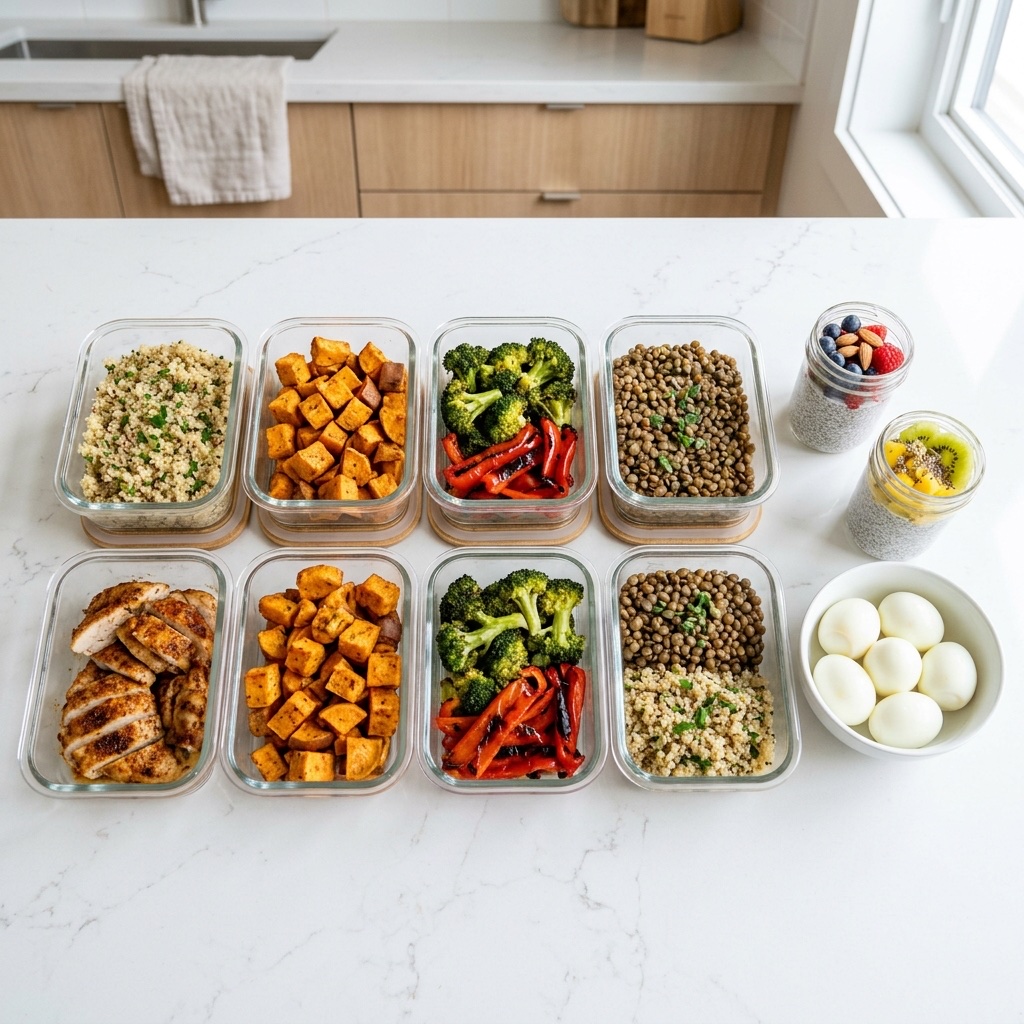
Sunday Prep: 90 Minutes, Five Days of Meals
- Cook a big pot of quinoa (about 2 cups dry).
- Cook a pot of lentils (about 2 cups dry), or use canned lentils and skip this step.
- Roast two sheet pans of vegetables: sweet potato cubes on one, broccoli and red peppers on the other.
- Bake chicken thighs to an internal temperature of 165°F, then cool and refrigerate.
- Hard-cook six eggs until the yolks are completely firm.
- Make two jars of chia pudding: 3 tablespoons chia seeds and ¾ cup milk in each. (Friday's jar gets made fresh on Thursday night.)
- Wash the fruit and greens for the week.
The USDA's guideline for cooked leftovers is 3 to 4 days refrigerated, so the plan uses the chicken and lentils early and switches to quick-cook dinners later in the week.
The Five Days
Monday
- Breakfast: chia pudding topped with raspberries.
- Lunch: quinoa bowl with lentils, roasted sweet potato, spinach and a lemon-tahini dressing.
- Dinner: baked chicken thighs with roasted broccoli and peppers.
- Snack: apple slices with peanut butter.
Folate and iron today: lentils and spinach at lunch. Fiber: chia, raspberries and lentils.
Tuesday
- Breakfast: two hard-cooked eggs, gluten-free toast and an orange.
- Lunch: chicken and quinoa salad with roasted peppers, cucumber, avocado and lemon.
- Dinner: beef and black bean tacos on corn tortillas with salsa and avocado.
- Snack: hummus with carrots and gluten-free crackers.
Iron today: beef and black beans. Corn tortillas are naturally gluten-free, but look for a gluten-free label if you have celiac disease, since some are made on shared equipment.
Wednesday
- Breakfast: chia pudding with mango.
- Lunch: warm lentil and spinach soup made with the last of the lentils and gluten-free broth.
- Dinner: sheet-pan salmon with brown rice and asparagus.
- Snack: plain Greek yogurt with pumpkin seeds.
Folate today: lentils, spinach and asparagus. Salmon adds omega-3s and is one of the FDA's Best Choices for fish in pregnancy.
Thursday
- Breakfast: oatmeal made with certified gluten-free oats, topped with berries and walnuts.
- Lunch: leftover salmon flaked over brown rice with a fried egg (cooked over hard) and steamed broccoli.
- Dinner: chickpea and spinach curry over quinoa. Check the curry paste label for gluten.
- Snack: a hard-cooked egg and a pear.
Fiber today: oats, chickpeas, berries and the pear.
Friday
- Breakfast: chia pudding (made Thursday night) with banana.
- Lunch: leftover chickpea curry.
- Dinner: baked potatoes topped with turkey and bean chili, cheddar and avocado.
- Snack: a fortified gluten-free cereal with milk.
Iron today: beans and turkey, plus the fortified cereal if you choose one that lists iron and folic acid.
Where Gluten Hides
If you have celiac disease, these are the ingredients that most often catch people out:
- Soy sauce usually contains wheat. Use tamari labeled gluten-free.
- Oats are naturally gluten-free but often cross-contaminated. Buy oats labeled gluten-free.
- Broth, stock and bouillon can contain wheat, so check the label.
- Sauces, marinades, curry pastes and seasoning mixes sometimes use wheat as a thickener.
- Imitation crab and some processed meats contain wheat starch.
In the US, a food labeled "gluten-free" must contain less than 20 parts per million of gluten, under FDA rules. That label is the simplest thing to look for.
Shopping List
- Grains: quinoa, brown rice, certified gluten-free oats, corn tortillas, gluten-free bread and crackers, a fortified gluten-free cereal.
- Protein: chicken thighs, ground beef, ground turkey, salmon fillets, eggs, dry or canned lentils, black beans, chickpeas, kidney beans.
- Produce: spinach, broccoli, red peppers, asparagus, sweet potatoes, baking potatoes, avocados, cucumber, carrots, raspberries, berries, mango, bananas, apples, pears, oranges, lemons.
- Dairy: milk, plain Greek yogurt, cheddar.
- Pantry: chia seeds, pumpkin seeds, walnuts, peanut butter, tahini, hummus, salsa, gluten-free broth, gluten-free curry paste, canned tomatoes.
If you have celiac disease, let your provider know early in pregnancy. Untreated celiac disease can make it harder to absorb iron and folate, and they may want to check your levels. For more meal plan ideas, see our vegetarian and dairy-free pregnancy meal plans.
Sources
This is a general example. If you have celiac disease or a wheat allergy, a registered dietitian can tailor a pregnancy plan to you.
Meet the Editorial Team
The researchers and experts behind PregnancyPlate.

Fiza Izra
Founder & Tech Researcher
A UK-based mother of 3 with a background in tech and data synthesis, Fiza brings real-world experience navigating hyperemesis gravidarum and postnatal depression. She engineers complex clinical guidelines (NHS, ACOG) into accessible tools, ensuring rigorous fact-checking with deep empathy.

Emma Davies
Senior Nutrition Editor
A mum and writer, Emma runs our food safety desk. She is the one who rings the restaurant to ask how long the lettuce sits out, checks every claim against CDC, FDA and NHS guidance, and rewrites the answer until it is usable at 9pm in a drive-thru queue.
Make sense of every plate.
Scan your plate for pregnancy food-safety guidance and a nutrition breakdown. Keep your meals and nutrient progress in one place.
Scan with your iPhoneto get the app