Dairy-Free Pregnancy Meal Plan: Mix-and-Match Meals That Still Hit 1,000 mg of Calcium
A dairy-free pregnancy meal plan you can mix and match, with the calcium in every breakfast, lunch, dinner and snack, plus how to cover iodine, protein and vitamin D without milk.
In this article
Editorial note: This article is researched from official public health and pregnancy food safety guidance, then edited by the PregnancyPlate team for clarity. It is not medical advice. If you are worried about symptoms or a specific exposure, contact your midwife, GP or healthcare provider.
The Short Version: Pick one breakfast, one lunch, one dinner and a snack from the lists below and you'll land at or above the 1,000 mg of calcium pregnancy calls for, without any dairy. The trick is building each day around three things: a fortified soy or pea milk, calcium-set tofu or fish with soft bones, and iodized salt to cover the iodine that dairy usually supplies.
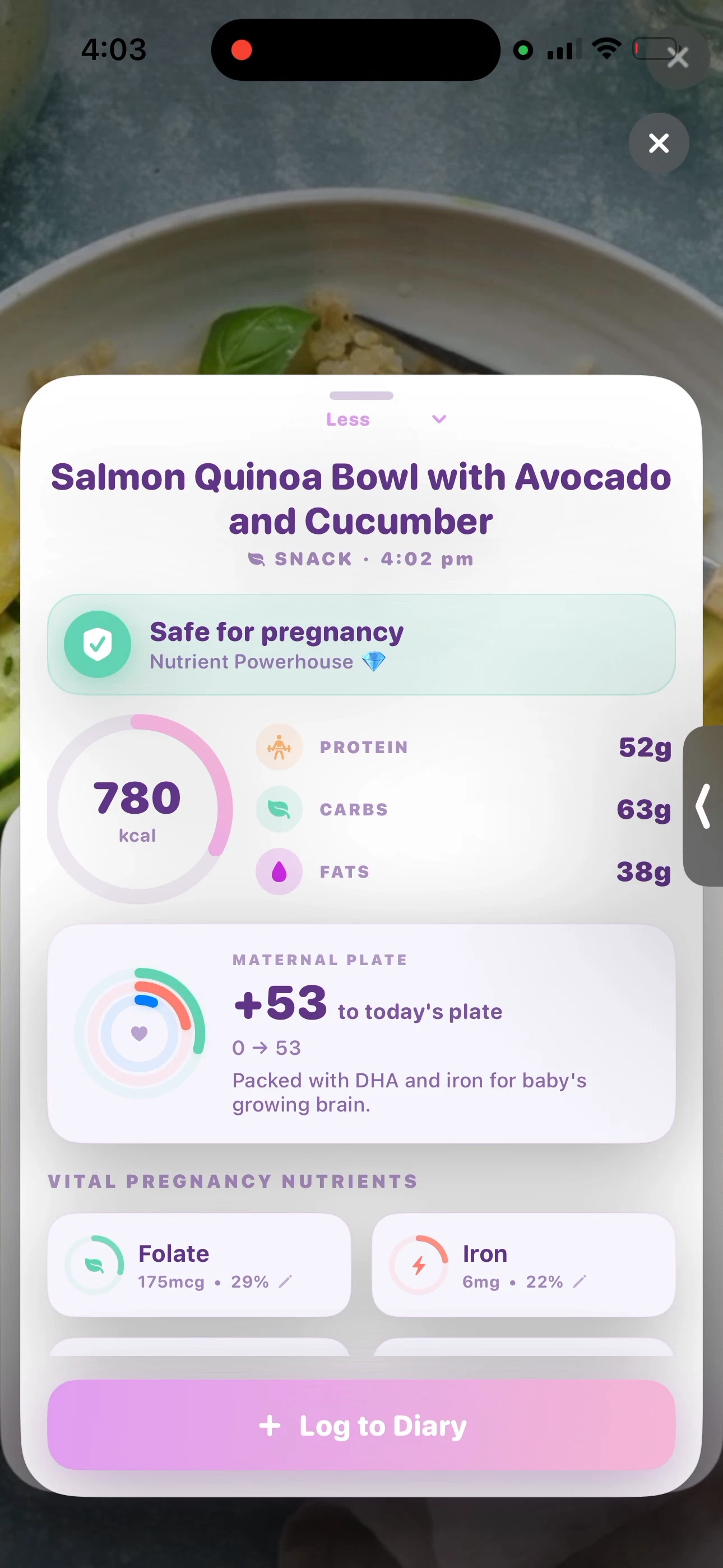
Track your calcium in PregnancyPlateYour next meal, a little less guesswork.
Scan your plate for pregnancy food-safety guidance and a nutrition breakdown. Keep your meals and nutrient progress in one place.
 Scan with your iPhone
to get the app
Whether it's a milk allergy, lactose intolerance that pregnancy has made worse, or a sudden aversion to anything creamy, going without dairy while pregnant is common. The food itself is easy to replace. What takes planning is the nutrients dairy quietly supplies: calcium, protein, iodine and vitamin D.
Rather than a rigid seven-day plan, this is a set of building blocks. Each meal lists roughly how much calcium it brings, so you can mix and match and still know you've covered the day. The calcium numbers are approximate and depend on brands, so check the label on fortified products. Our dairy-free pregnancy guide goes deeper on the nutrition side.
First, Choose the Right Milk
Plant milks aren't interchangeable in pregnancy. The ones that matter here are fortified soy milk and pea milk, because they come close to cow's milk on protein as well as calcium.
| Milk (1 cup) | Protein | Calcium |
|---|---|---|
| Fortified soy milk | About 7 to 8 g | About 300 mg |
| Fortified pea milk | About 8 g | Often 300 mg or more |
| Fortified oat milk | About 2 to 4 g | Varies, check the label |
| Fortified almond milk | About 1 g | Varies, check the label |
Shake the carton well. The added calcium settles at the bottom, and an unshaken glass can have much less than the label says.
Breakfasts
| Meal | Calcium (approx.) |
|---|---|
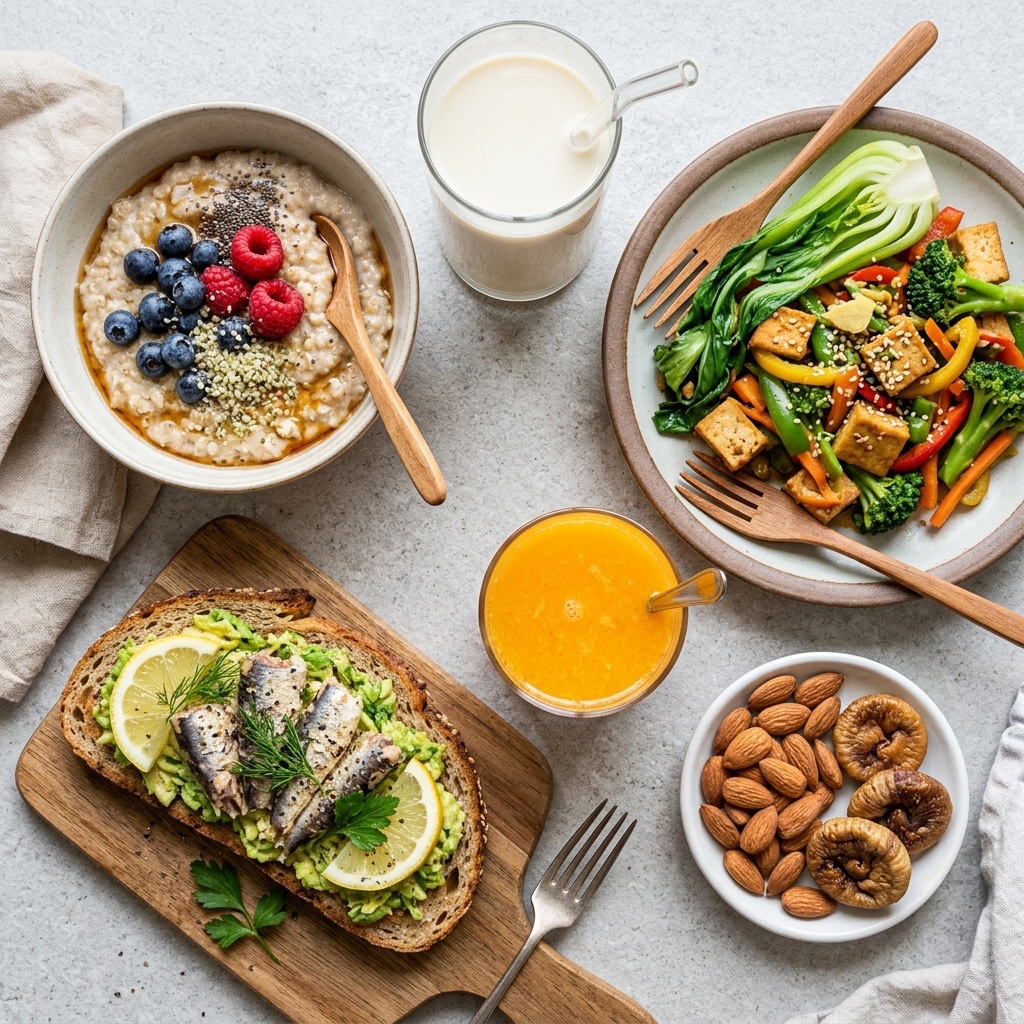
| Oatmeal cooked in 1 cup fortified soy milk, topped with 2 tbsp chia seeds and berries | About 450 mg |
| Chia pudding made overnight with soy milk, topped with mango | About 400 mg |
| Smoothie: soy milk, banana, peanut butter, frozen berries and a handful of spinach | About 320 mg |
| Tofu scramble with calcium-set tofu, spinach and peppers on whole-grain toast | About 300 mg |
| Two eggs, cooked firm, with avocado toast and a glass of calcium-fortified orange juice | About 400 mg |
Lunches
| Meal | Calcium (approx.) |
|---|---|
| Canned salmon salad (with the soft bones mashed in) in a whole-wheat wrap with greens | About 200 mg |
| Sardines on whole-grain toast with lemon and tomato | About 350 mg |
| Quinoa bowl with chickpeas, roasted vegetables and tahini dressing | About 150 mg |
| Homemade egg salad sandwich with a side of baby carrots and hummus | About 100 mg |
| Chicken and white bean soup with a slice of toast and almond butter | About 200 mg |
Canned salmon and sardines are among the best dairy-free calcium sources there are, because the bones are soft enough to eat. They're also low in mercury, and the FDA puts both among its Best Choices, at 2 to 3 servings a week.
Dinners
| Meal | Calcium (approx.) |
|---|---|
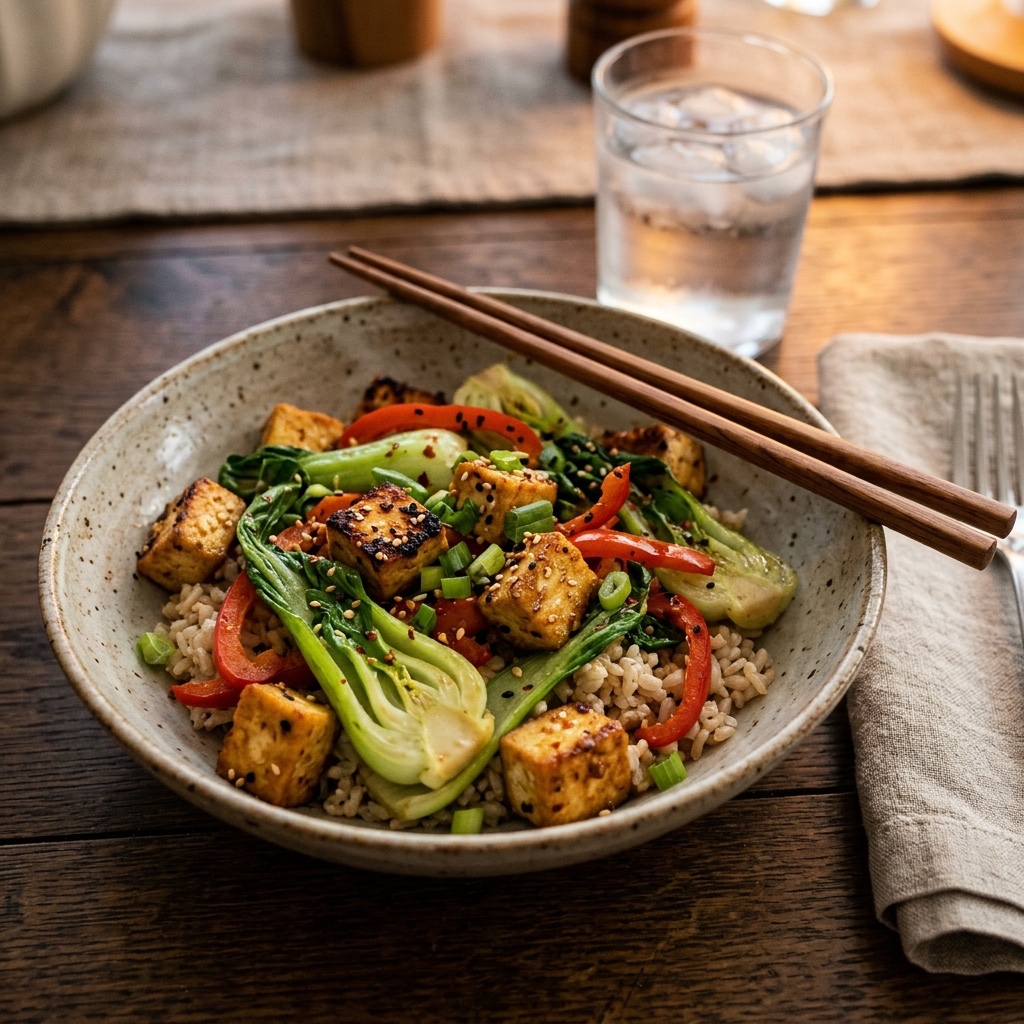
| Calcium-set tofu and bok choy stir-fry over brown rice | About 400 mg |
| Sheet-pan salmon fillet with sweet potatoes and broccoli | About 100 mg |
| Chicken fajitas with peppers, onions, black beans and guacamole (no cheese or sour cream) | About 150 mg |
| Beef and bean chili topped with avocado and cilantro | About 150 mg |
| Whole-wheat pasta with marinara, turkey meatballs and sautéed greens, with nutritional yeast in place of Parmesan | About 150 mg |
Snacks
- A glass of calcium-fortified orange juice: about 350 mg.
- Calcium-fortified soy yogurt with granola: often 150 to 300 mg, depending on the brand.
- Four dried figs and a small handful of almonds: about 125 mg.
- Edamame: about 100 mg a cup.
- Hummus with vegetables and whole-grain crackers: about 50 mg, but filling and full of fiber.
What a 1,000 mg Day Looks Like
| Meal | Pick | Calcium |
|---|---|---|
| Breakfast | Oatmeal with soy milk and chia | About 450 mg |
| Lunch | Canned salmon wrap | About 200 mg |
| Snack | Calcium-fortified orange juice | About 350 mg |
| Dinner | Tofu and bok choy stir-fry | About 400 mg |
| Total | About 1,400 mg |
A day built from lower-calcium picks, like chili and an egg salad sandwich, still works if breakfast includes fortified soy milk and you add a calcium-rich snack. Go for at least two of the higher-calcium picks each day.
The Other Nutrients Dairy Covers
Iodine. This is the gap most people miss. Dairy is one of the main sources of iodine in the US diet, and pregnancy needs rise to 220 mcg a day for your baby's brain and thyroid development. Plant milks usually aren't fortified with it. Cook with iodized salt (a quarter teaspoon has about 78 mcg), include eggs and seafood, and check that your prenatal vitamin contains iodine, because not all of them do.
Protein. Dropping milk, yogurt and cheese can remove 20 or 30 grams of protein from a day without you noticing. Soy or pea milk, eggs, tofu, beans, fish and meat fill the gap. Our protein guide covers how much you need.
Vitamin D. You need 600 IU a day. Fortified plant milks, salmon, sardines and egg yolks all contribute, and most prenatal vitamins include some.
Lactose Intolerance or Milk Allergy?
It's worth knowing which one you're dealing with, because the plan is different:
- Lactose intolerance: you may not need to give up dairy entirely. Lactose-free milk is real cow's milk with the lactose already broken down, so it has the same calcium and protein. Aged hard cheeses like cheddar and Parmesan contain very little lactose, and many people tolerate yogurt.
- Milk allergy: you need to avoid milk protein completely, including lactose-free milk, and check labels for whey, casein and milk solids. A dietitian can help make sure your pregnancy diet covers everything.
Prefer a full week laid out for you? Our vegetarian pregnancy meal plan and complete pregnancy meal plan work with the swaps above.
Sources
Calcium values are rounded estimates and vary by brand and portion. If you have a milk allergy, talk to your provider or a registered dietitian before relying on any meal plan.
Meet the Editorial Team
The researchers and experts behind PregnancyPlate.

Fiza Izra
Founder & Tech Researcher
A UK-based mother of 3 with a background in tech and data synthesis, Fiza brings real-world experience navigating hyperemesis gravidarum and postnatal depression. She engineers complex clinical guidelines (NHS, ACOG) into accessible tools, ensuring rigorous fact-checking with deep empathy.

Emma Davies
Senior Nutrition Editor
A mum and writer, Emma runs our food safety desk. She is the one who rings the restaurant to ask how long the lettuce sits out, checks every claim against CDC, FDA and NHS guidance, and rewrites the answer until it is usable at 9pm in a drive-thru queue.
Make sense of every plate.
Scan your plate for pregnancy food-safety guidance and a nutrition breakdown. Keep your meals and nutrient progress in one place.
Scan with your iPhoneto get the app