The Complete Pregnancy Meal Plan: What to Eat in Every Trimester
A realistic pregnancy meal plan for all three trimesters, built around how you actually feel each stage, with sample days and the nutrients each one targets.
In this article
Editorial note: This article is researched from official public health and pregnancy food safety guidance, then edited by the PregnancyPlate team for clarity. It is not medical advice. If you are worried about symptoms or a specific exposure, contact your midwife, GP or healthcare provider.
The Fast Answer: A pregnancy meal plan that assumes you feel the same in week 8 and week 38 will fail by the second day. The plan below changes across the three trimesters, because your appetite, your stomach capacity and your nutrient priorities all change. First trimester is about keeping anything down. Second is the window to build iron and protein. Third is small and frequent because there is no room left. Sample days for each below.
Track your plan against your trimester targets in the PregnancyPlate AppSafety is step one. Nutrition helps your baby thrive.
Knowing a meal is safe does not tell you whether you are getting enough iron, folate, calcium and choline. PregnancyPlate tracks all of it from a photo of your plate.
- See nutrient progress
- Scan meals instantly
- Nourish with confidence
 Scan to download
Open with iPhone camera
Scan to download
Open with iPhone camera
Most pregnancy meal plans are written by someone imagining pregnancy rather than remembering it. They assume a steady appetite, a working sense of smell, and a stomach that still has room in it. Pregnancy offers none of those consistently.
So this plan is built around the three genuinely different phases, with a sample day for each, the nutrients that matter most at that point, and what to do when the plan goes out of the window. Which it will, and that is fine.
The Numbers Underneath the Plan
Two things worth knowing before the food, because they explain the shape of everything below.
You need far fewer extra calories than people think. Nothing extra in the first trimester, about 340 a day in the second, about 450 in the third. That is a snack and a half, not a second dinner. Our pregnancy calorie calculator works out your personal number.
The nutrients matter more than the calories. Across the whole pregnancy you are aiming for roughly 75 to 100g of protein, 27mg of iron, 1,000mg of calcium, 450mg of choline, 600mcg of folate and 200mg or more of DHA daily. Iron and choline are the two most commonly missed, and neither is fully covered by a standard prenatal vitamin.
First Trimester: The Survival Plan
Weeks 1 to 13. The goal is not optimisation, it is keeping food down and blood sugar steady, because low blood sugar makes nausea dramatically worse. Small and frequent beats three proper meals, and cold food smells less than hot.
A realistic day:
- Before you sit up: plain crackers or oatcakes kept by the bed
- Breakfast: cold peanut butter toast, or overnight oats made the night before
- Mid-morning: Greek yogurt, or cheese and an apple
- Lunch: cheese and cracker plate, or a cold pasta salad
- Afternoon: frozen grapes, nuts, or a smoothie sipped slowly
- Dinner: baked potato with cheese and beans, or plain chicken and rice
- Evening: milk and a biscuit, which also helps you sleep
Priority nutrient: folate, for neural tube development, which is happening now. Your prenatal covers it, so do not panic if food feels impossible. What to let go of: everything else. A fortnight of beige food does not harm your baby. Our detailed first trimester plan goes deeper.
Second Trimester: The Building Window
Weeks 14 to 27. Nausea usually settles, appetite returns, and you can eat properly again. This is the stretch to actually build stores, particularly iron, because it gets harder again later.
A realistic day:
- Breakfast: eggs on wholegrain toast with spinach, or porridge with nut butter and berries
- Mid-morning: yogurt and fruit
- Lunch: tuna and butter bean salad, or a proper sandwich with hard cheese and salad
- Afternoon: hummus and vegetables, or cheese and oatcakes
- Dinner: steak or lentil bolognese with sweet potato and greens
- Evening: milk, or yogurt with seeds
Priority nutrients: iron and calcium. The baby's skeleton is hardening and your blood volume is expanding by roughly half. Pair plant iron with vitamin C, and keep tea and coffee away from meals since both block absorption. Our 7 day second trimester meal plan turns this into a full written-out week, and our second trimester food guide has the detail.
Third Trimester: Small, Frequent, Upright
Weeks 28 to 40. The baby is compressing your stomach and relaxed valves mean reflux arrives easily. The same food as the second trimester, split into five or six smaller occasions instead of three meals.
A realistic day:
- Breakfast: porridge with banana, gentle on reflux
- Mid-morning: boiled egg and toast
- Lunch: chicken and avocado rice bowl, modest portion
- Afternoon: cheese and crackers, or yogurt
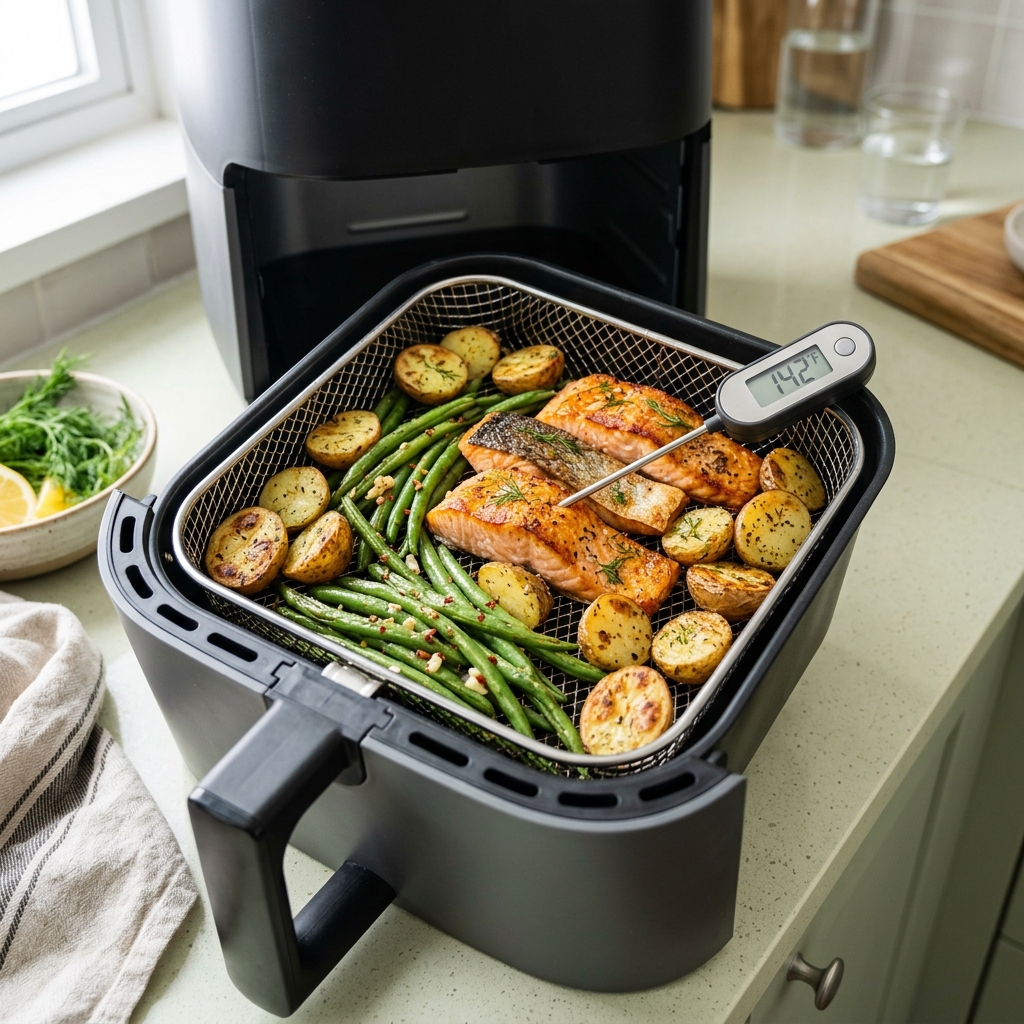
- Early dinner: salmon, mash and green beans, eaten two to three hours before bed
- Second dinner at 8pm: whatever you could not finish earlier
- Bedside: oatcakes and water for the 3am hunger, which is real
Priority nutrients: iron again, at its peak demand, plus DHA as brain growth accelerates. The key change is timing, not food: finish eating well before lying down. Our 7 day third trimester meal plan is this section written out as a full week, and our third trimester meal guide covers the mechanics.
Making the Plan Survive Real Life
Four things that decide whether a meal plan lasts past Tuesday.
Plan four dinners, not seven. The other three are leftovers, a takeaway, and whatever happens. Plans that assume perfect adherence collapse and take your motivation with them.
Cook double, freeze half. Every batch dinner you freeze in the second trimester is a meal you do not have to cook in the third, or after the birth.
Keep the emergency shelf stocked. Tinned beans, tinned fish, rice pouches, frozen peas, pasta, jarred sauce. Ten-minute meals for the evenings nothing was planned.
Judge yourself weekly, not daily. Nutrition averages out across a week. One bad day is genuinely irrelevant, which is the single most useful thing to internalise about eating while pregnant.
If You Have Gestational Diabetes
Your dietitian's plan overrides everything here. The structural difference is that carbohydrate gets distributed evenly across the day and always paired with protein or fat, rather than concentrated in big meals. Most of the days above adapt with wholegrain swaps and modest fruit portions. Our gestational diabetes diet guide covers it properly.
The Plan in One Box
- First trimester: small, cold, frequent. No extra calories. Survival, not optimisation.
- Second trimester: +340 calories. Build iron and protein while you can eat.
- Third trimester: +450 calories, split into five or six small occasions. Finish early.
- Every trimester: protein at each meal, vitamin C with plant iron, no tea or coffee at mealtimes.
- Plan four dinners a week, not seven.
A Full Week, If You Want One Written Out
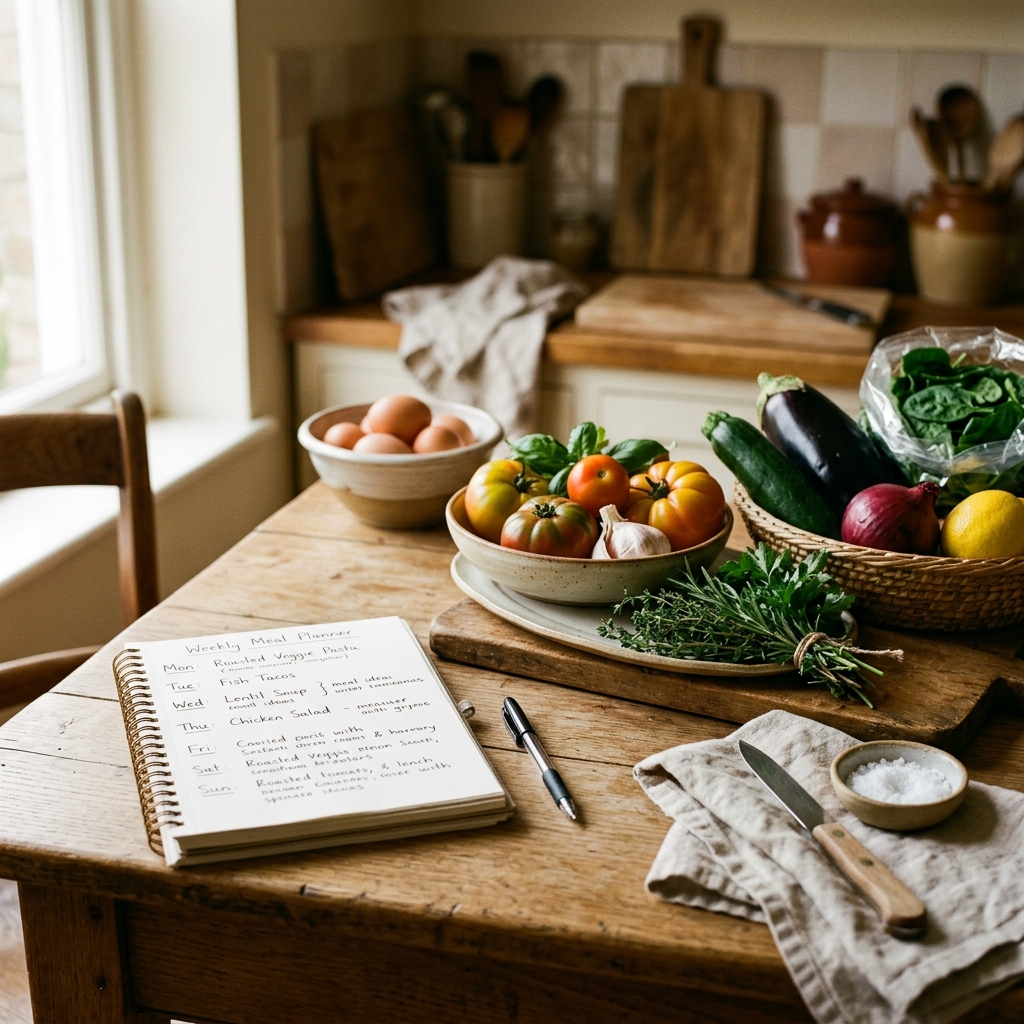
Sample days are useful but a week is what you actually shop for. This is a second trimester week, since that is the stage most people are planning in. Scale portions down and split them across more sittings for the third trimester, and swap freely toward cold and bland in the first.
- Monday: porridge with berries / tuna and butter bean salad / steak, sweet potato, greens
- Tuesday: eggs on toast with spinach / leftover steak in a wrap / lentil bolognese
- Wednesday: yogurt, granola, fruit / jacket potato with cheese and beans / salmon traybake
- Thursday: peanut butter toast and banana / leftover salmon with cous cous / chicken and chickpea curry
- Friday: overnight oats / hummus and vegetable wrap / whatever you fancy, genuinely
- Saturday: proper cooked breakfast / cheese and cracker plate / roast chicken with vegetables
- Sunday: shakshuka / roast chicken sandwich / chicken soup from the carcass
Notice the design: the steak reappears on Tuesday, the salmon on Thursday, and Sunday's roast becomes three meals. That is three actual cooking sessions producing seven dinners, which is the only reason a plan like this survives a real week while pregnant.
The Shopping List That Goes With It
Buying to a plan is what stops it collapsing on Wednesday. For the week above:
Protein: a whole chicken, two steaks or braising beef, two salmon fillets, a dozen eggs, tinned tuna, tinned chickpeas, red lentils.
Dairy: Greek yogurt, hard cheese, milk, a soft cheese for sauces.
Produce: spinach, sweet potatoes, potatoes, onions, garlic, tomatoes, cucumber, avocado, bananas, berries, apples, lemons.
Cupboard: oats, wholegrain bread, rice, pasta, cous cous, peanut butter, nuts, tinned tomatoes, stock, curry paste, olive oil.
Freezer: peas, spinach, berries. All three rescue a meal when the fresh version has gone off, which in pregnancy happens more than you would like because you forgot the fridge existed for four days.
When the Plan Falls Apart
It will, and the failure modes are predictable enough to plan for.
You go off a food you had planned three meals around. Extremely common, and it happens overnight. Do not force it. Swap the protein and keep the structure.
You are too tired to cook the thing. This is what the emergency shelf is for, and beans on toast with cheese is a genuinely respectable pregnancy dinner: protein, fibre, iron and calcium in six minutes.
You eat badly for four days straight. Nothing happens. Your baby draws on stores built over weeks, not on Tuesday's dinner. Pick the plan back up on the next shop and stop keeping score.
Clinical Sources & Research
Meet the Editorial Team
The researchers and experts behind PregnancyPlate.

Fiza Izra
Founder & Tech Researcher
A UK-based mother of 3 with a background in tech and data synthesis, Fiza brings real-world experience navigating hyperemesis gravidarum and postnatal depression. She engineers complex clinical guidelines (NHS, ACOG) into accessible tools, ensuring rigorous fact-checking with deep empathy.

Emma Davies
Senior Nutrition Editor
A mum and writer, Emma runs our food safety desk. She is the one who rings the restaurant to ask how long the lettuce sits out, checks every claim against CDC, FDA and NHS guidance, and rewrites the answer until it is usable at 9pm in a drive-thru queue.