Second Trimester Meal Plan: 7 Days of Easy, High-Iron Meals
A realistic second trimester meal plan: 7 days of easy, high-iron meals with a shopping list, three cooking sessions and the iron pairing rules that matter.
In this article
Editorial note: This article is researched from official public health and pregnancy food safety guidance, then edited by the PregnancyPlate team for clarity. It is not medical advice. If you are worried about symptoms or a specific exposure, contact your midwife, GP or healthcare provider.
The Fast Answer: The second trimester is the one stretch of pregnancy where eating well is genuinely achievable, so this plan uses it deliberately. Seven days of easy meals built around iron, because your 27mg daily target is nearly double the non-pregnant number and your blood volume is expanding by about half. Three real cooking sessions cover the whole week, everything else is assembly or leftovers, and the extra energy you need is about 340 calories a day, which is a decent snack, not a second dinner.
Track your iron against your daily target in the PregnancyPlate AppSafety is step one. Nutrition helps your baby thrive.
Knowing a meal is safe does not tell you whether you are getting enough iron, folate, calcium and choline. PregnancyPlate tracks all of it from a photo of your plate.
- See nutrient progress
- Scan meals instantly
- Nourish with confidence
 Scan to download
Open with iPhone camera
Scan to download
Open with iPhone camera
A second trimester meal plan has a different job from the survival eating of early pregnancy. Somewhere around week 14, nausea lifts for most women, food starts tasting like food again, and you get roughly fourteen weeks of genuine appetite before the baby begins compressing your stomach and reflux complicates everything. This is the building window, and the single most useful thing you can build in it is iron stores.
When I put this week together, I cross-checked every dinner against the NIH iron numbers, because the pattern in the research is blunt: iron deficiency is the most common nutritional shortfall in pregnancy, demand peaks in the second half, and it is far easier to build stores now, while you can eat properly, than to correct a deficit in the third trimester when your stomach has the capacity of a teacup.
The Iron Rules That Shape This Plan
Four rules run underneath the week below. They matter more than any individual meal.
The target is 27mg a day. That is the NIH recommendation for pregnancy, up from 18mg. Your prenatal vitamin typically covers a chunk of it, but not all, and the iron in food comes in two forms that behave very differently.
Heme iron absorbs several times better than plant iron. Red meat, dark poultry meat and fish deliver heme iron, of which you absorb roughly 15 to 35 percent. Lentils, beans, spinach, tofu and fortified cereals deliver non-heme iron, absorbed at more like 2 to 20 percent depending on what you eat alongside it. Plant iron still counts, it just needs help.
Vitamin C is the help. Pairing plant iron with vitamin C can multiply absorption several times over. In practice that means peppers with your lentils, tomatoes with your beans, a glass of orange juice with fortified cereal, lemon squeezed over greens. The plan below does this pairing for you.
Tea and coffee are the saboteurs. The tannins and polyphenols in both bind iron and can cut absorption sharply when drunk with a meal. You do not need to give them up. Just move them at least an hour away from your iron-heavy meals, and keep calcium supplements away from those meals too, since calcium competes with iron at the point of absorption.
Our complete guide to iron in pregnancy goes deeper on the numbers if you want them.
The 7 Day Second Trimester Meal Plan
Snacks sit between meals wherever you need them: yogurt and berries, cheese and oatcakes, hummus with pepper sticks, a handful of nuts and dried apricots. The apricots and the peppers are not decoration, both push iron in. Aim for two snacks a day, which comfortably covers the 340 extra calories.
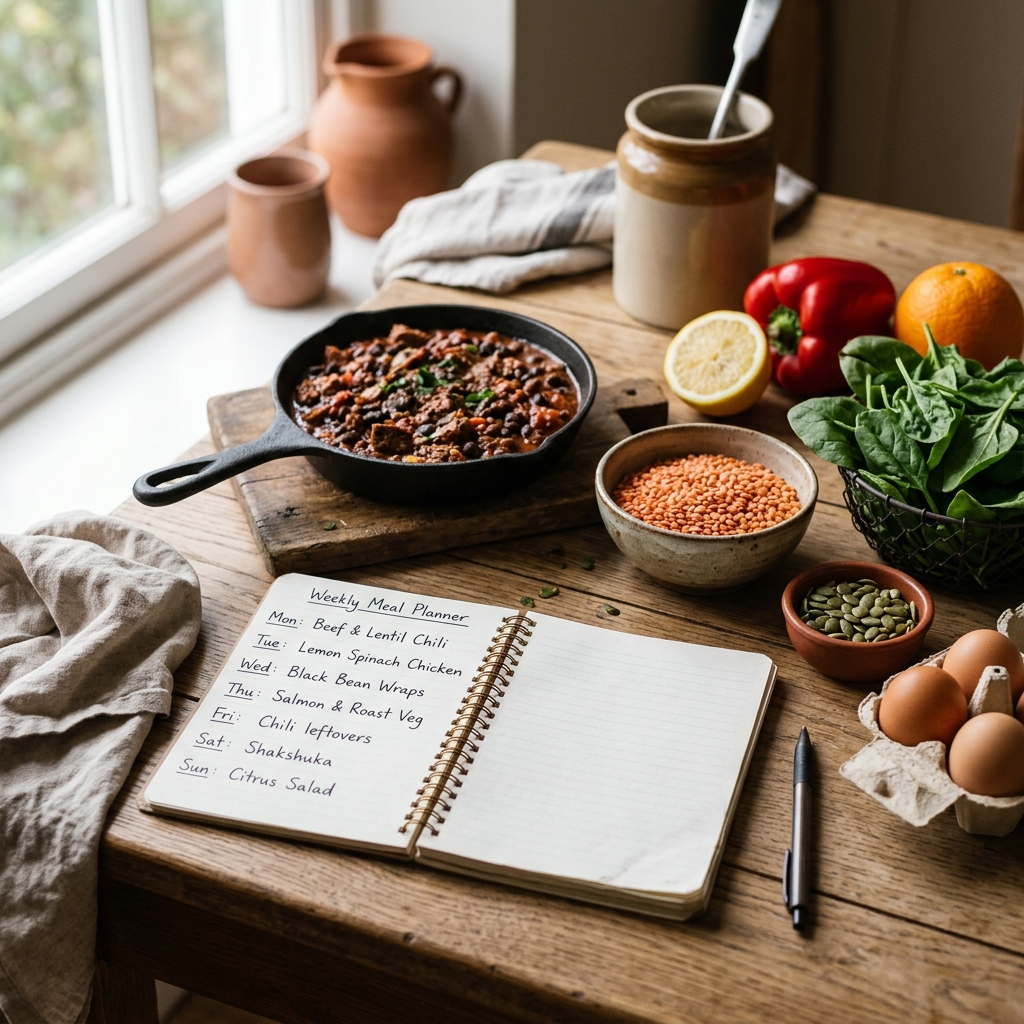
Monday. Breakfast: fortified porridge with berries and pumpkin seeds. Lunch: tuna and butter bean salad with tomatoes and a lemon dressing. Dinner: beef and black bean chilli with rice. The chilli is the week's anchor, iron from two sources, and you are making a double batch of it tonight.
Tuesday. Breakfast: eggs on wholegrain toast with wilted spinach. Lunch: leftover chilli in a wrap with a spoon of yogurt. Dinner: salmon traybake with new potatoes, broccoli and lemon. The salmon is doing double duty, DHA for the baby's brain and a steady protein hit for you.
Wednesday. Breakfast: Greek yogurt with granola and kiwi. Lunch: jacket potato with cheese and baked beans. Dinner: lentil and red pepper bolognese with wholewheat pasta. The pepper is there for vitamin C, cooked into the sauce, so the plant iron in the lentils actually gets absorbed.
Thursday. Breakfast: peanut butter toast and a banana. Lunch: leftover lentil bolognese, which improves overnight the way all lentil dishes do. Dinner: chicken thigh and chickpea curry with rice. Thigh meat, not breast, carries roughly twice the iron.
Friday. Breakfast: overnight oats with grated apple and cinnamon, made last night in two minutes. Lunch: hummus, falafel and salad in a pitta. Dinner: whatever you fancy, genuinely. A week that never lets you off is a week you abandon by Saturday. If you are ordering in, our second trimester food guide covers the good options.
Saturday. Breakfast: proper cooked breakfast, eggs, grilled tomatoes, mushrooms, toast. Lunch: cheese and cracker plate with grapes and an apple. Dinner: roast beef or a whole roast chicken with roast potatoes, carrots and greens. Cook more meat than you need, Sunday and Monday are counting on it.
Sunday. Breakfast: shakshuka, eggs poached in a rich tomato sauce, iron and vitamin C in one pan. Lunch: leftover roast in sandwiches with a sharp apple. Dinner: soup made from the roast carcass or bones with beans, kale and pasta, plus buttered wholegrain bread. The kale into hot soup trick is the easiest way to eat greens you would never face raw.
Three Cooking Sessions, Seven Dinners
Look back at the week and count the actual cooking. Monday's chilli covers Tuesday's lunch. Wednesday's bolognese covers Thursday's lunch. Saturday's roast becomes Sunday's lunch and Sunday's soup. That is three genuine cooking sessions, one mid-week pasta night, one traybake you assemble in ten minutes, and a night off. Everything else is assembly.
This is deliberate, and it is worth protecting when you swap meals in and out. The second trimester is the right time to build the cook-double habit, because every batch you freeze now is a dinner you will not have to cook in the third trimester, when standing at a hob for forty minutes stops being something you want to do.
The Shopping List
Protein: beef mince, two salmon fillets, chicken thighs, a roasting joint or whole chicken, a dozen eggs, tinned tuna, red lentils, tinned chickpeas, tinned black beans, tinned butter beans, hummus.
Dairy: Greek yogurt, hard cheese, milk, butter.
Produce: spinach, kale, broccoli, red peppers, tomatoes, mushrooms, carrots, onions, garlic, new potatoes, baking potatoes, lemons, kiwis, bananas, apples, grapes, berries.
Cupboard: porridge oats, fortified breakfast cereal, wholegrain bread, wholewheat pasta, rice, pitta, tinned tomatoes, curry paste, stock, peanut butter, pumpkin seeds, nuts, dried apricots, olive oil.
One honest note on cost: the roasting joint and the salmon are the two expensive items. Swap the joint for a whole chicken and the salmon for tinned sardines on toast and the plan loses almost nothing, the sardines actually carry more calcium.
Swaps for Aversions and Vegetarians
If meat is still off the table, which lingers from the first trimester for plenty of women, run the vegetarian line: double down on lentils, beans, tofu and fortified cereals, be religious about the vitamin C pairing, and mention it at your next midwife appointment so your iron gets checked rather than guessed at.
If fish is the problem, swap the salmon traybake for the chicken curry twice and take your DHA from your prenatal or an algae supplement.
If eggs turn your stomach, replace them with beans on toast or porridge. Nothing in this plan is load-bearing enough that one aversion breaks it.
How You Will Know It Is Working
Iron status is not a guessing game, because pregnancy comes with a built-in checkpoint. Most care providers run a full blood count around week 28, and that result is the honest scorecard for what you eat between now and then. What you might notice yourself first is energy: persistent, disproportionate tiredness, breathlessness on stairs and pale inner eyelids are the classic early flags of slipping iron. If any of those appear, do not wait for the scheduled bloods, mention it. Correcting iron takes weeks, which is precisely why this plan starts the work now rather than in the third trimester.
The Plan in One Box
- Target: 27mg of iron a day, plus about 340 extra calories.
- Pair plant iron with vitamin C at every meal that relies on lentils or beans.
- Keep tea and coffee an hour away from iron-heavy meals.
- Three cooking sessions produce seven dinners. Protect that maths when you swap meals.
- Cook double and freeze half now, while cooking is still easy.
Where This Plan Sits in the Bigger Picture
This week slots into our complete pregnancy meal plan, which covers how eating changes across all three trimesters and why. The short version: you are currently in the easiest stretch, which is exactly why this is the fortnight-by-fortnight period to bank iron, bank freezer meals, and build the habits that the third trimester will lean on. Eat well while eating is easy. It is the most second trimester advice there is.
Clinical Sources & Research
Meet the Editorial Team
The researchers and experts behind PregnancyPlate.

Fiza Izra
Founder & Tech Researcher
A UK-based mother of 3 with a background in tech and data synthesis, Fiza brings real-world experience navigating hyperemesis gravidarum and postnatal depression. She engineers complex clinical guidelines (NHS, ACOG) into accessible tools, ensuring rigorous fact-checking with deep empathy.

Emma Davies
Senior Nutrition Editor
A mum and writer, Emma runs our food safety desk. She is the one who rings the restaurant to ask how long the lettuce sits out, checks every claim against CDC, FDA and NHS guidance, and rewrites the answer until it is usable at 9pm in a drive-thru queue.