7-Day Vegetarian Pregnancy Meal Plan (About 75 Grams of Protein a Day)
A week of vegetarian pregnancy meals with eggs and dairy, about 75 to 80 grams of protein a day, plus the four nutrients to watch (iron, B12, choline and DHA) and a full shopping list.
In this article
Editorial note: This article is researched from official public health and pregnancy food safety guidance, then edited by the PregnancyPlate team for clarity. It is not medical advice. If you are worried about symptoms or a specific exposure, contact your midwife, GP or healthcare provider.
At a Glance: Seven days of vegetarian meals (with eggs and dairy) that land at roughly 75 to 80 grams of protein a day, above the 71 grams recommended in pregnancy. Every day includes a legume, dairy or eggs, and a food with vitamin C to help you absorb plant iron. Iron, B12, choline and DHA are the four nutrients to keep an eye on, and the end of the plan covers each one.
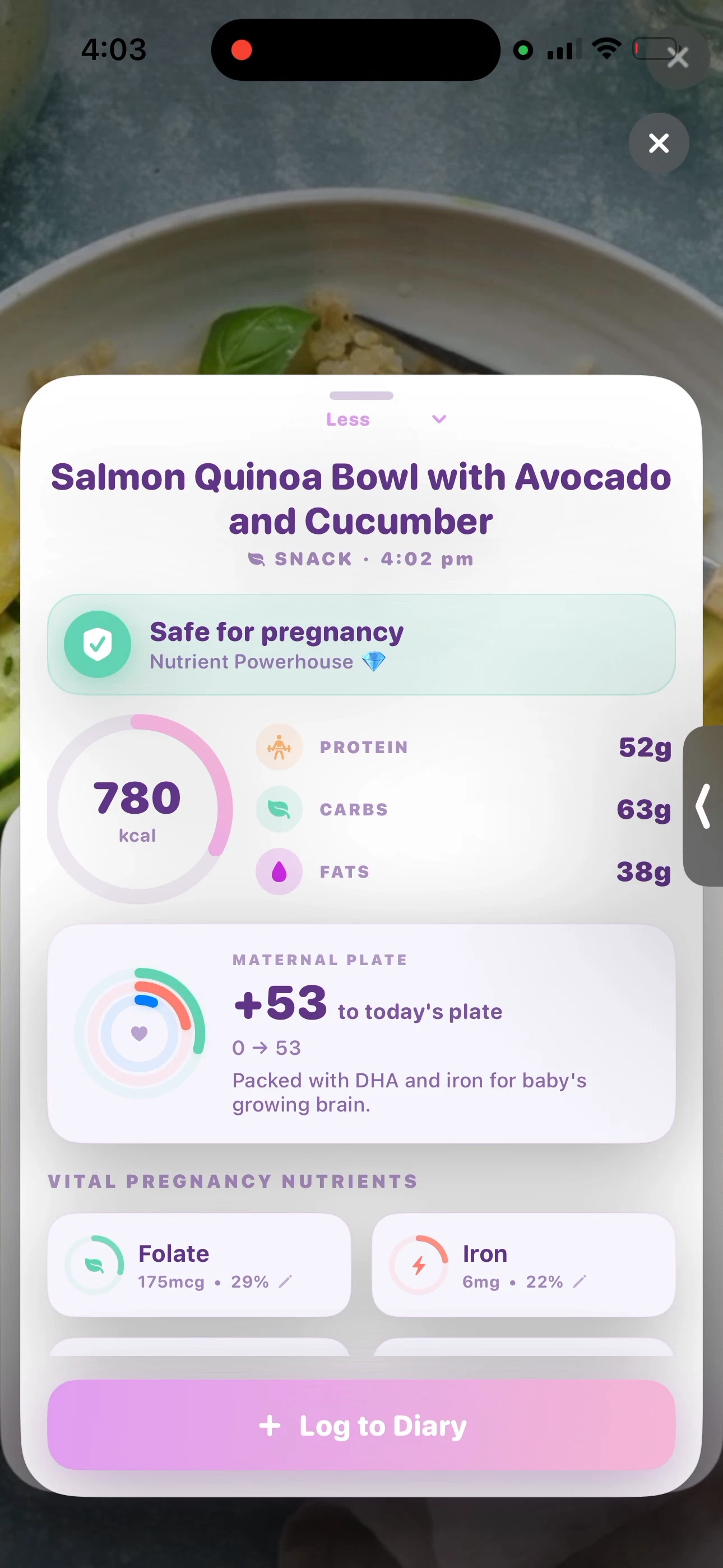
Track this plan's protein and iron in PregnancyPlateYour next meal, a little less guesswork.
Scan your plate for pregnancy food-safety guidance and a nutrition breakdown. Keep your meals and nutrient progress in one place.
 Scan with your iPhone
to get the app
A vegetarian diet can absolutely support a healthy pregnancy. The difference from an omnivore's week is that a few nutrients take a bit more planning. Protein needs a source at every meal, plant iron is harder for your body to absorb, and B12 and choline come mostly from eggs and dairy.
This plan is lacto-ovo vegetarian, so it includes eggs, milk, yogurt and cheese. If you're vegan, our guide to vegan and vegetarian protein in pregnancy covers swaps for the dairy and eggs. Protein numbers are approximate, using common portion sizes, and they'll shift with brands and how much you serve yourself.
The 7-Day Plan
Day 1
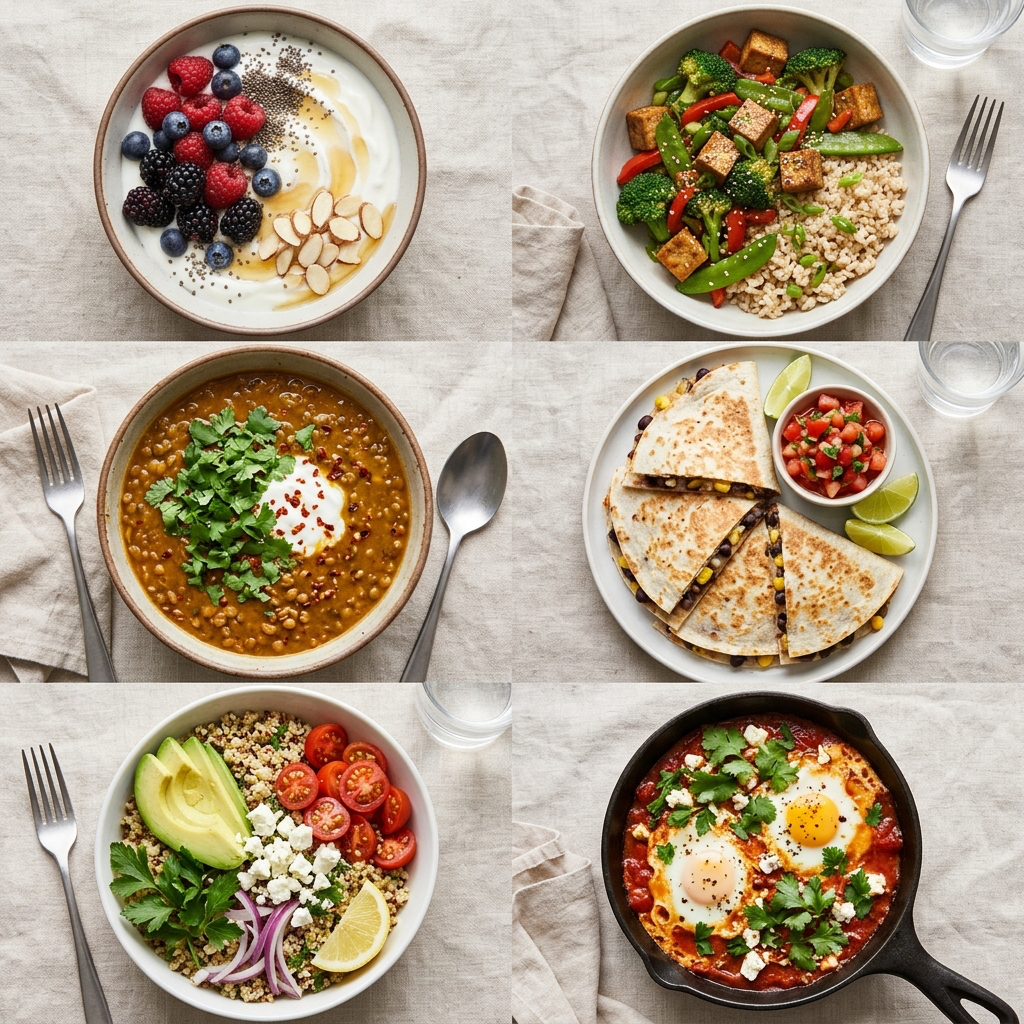
- Breakfast: 1 cup plain Greek yogurt with berries, 2 tablespoons of chia seeds and a small handful of walnuts. About 28 g protein.
- Lunch: A big bowl of lentil and vegetable soup (about 1 cup of cooked lentils) with a slice of whole-grain bread. About 22 g.
- Dinner: Black bean and cheddar quesadillas with salsa and a side salad with sliced bell pepper. About 21 g.
- Snack: An apple with 2 tablespoons of peanut butter. About 7 g.
Day total: about 78 g protein. The salsa and bell pepper bring the vitamin C that helps you absorb iron from the lentils and beans.
Day 2
- Breakfast: 2 scrambled eggs, cooked until firm, on 2 slices of whole-grain toast, with an orange. About 20 g.
- Lunch: Chickpea salad sandwich: mashed chickpeas, mayo, celery and lemon on whole-grain bread. About 17 g.
- Dinner: Extra-firm tofu stir-fry with broccoli and peppers over brown rice. About 27 g.
- Snack: ½ cup cottage cheese with pineapple. About 13 g.
Day total: about 77 g. Two eggs at breakfast cover well over half of the day's choline.
Day 3
- Breakfast: Overnight oats made with milk, a spoonful of peanut butter and sliced banana. About 19 g.
- Lunch: Quinoa bowl with black beans, corn, cherry tomatoes, avocado and crumbled pasteurized feta. About 20 g.
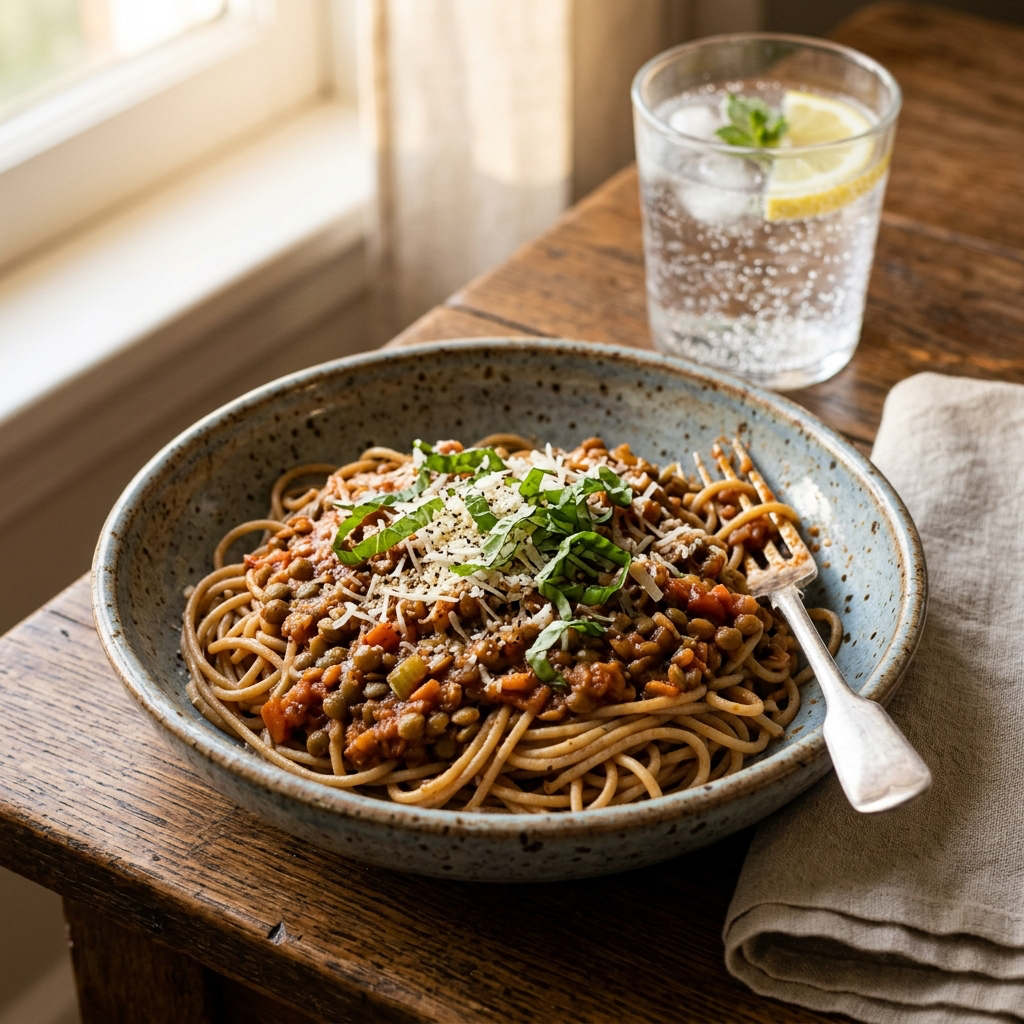
- Dinner: Lentil bolognese: lentils simmered in marinara over whole-wheat pasta, with grated Parmesan. About 25 g.
- Snack: A hard-boiled egg and a small handful of almonds. About 12 g.
Day total: about 76 g. Make a double batch of the bolognese. It freezes well and covers a dinner next week.
Day 4
- Breakfast: Smoothie with milk, ½ cup Greek yogurt, a banana, frozen berries, a handful of spinach and a spoonful of peanut butter. About 22 g.
- Lunch: Hummus and vegetable wrap with sliced cheddar and cucumber. About 17 g.
- Dinner: Shakshuka with chickpeas, with the eggs cooked until the whites and yolks are both set, and whole-grain pita for dipping. About 25 g.
- Snack: Steamed edamame and a string cheese. About 16 g.
Day total: about 80 g. The tomato sauce in the shakshuka does the vitamin C work tonight.
Day 5
- Breakfast: Cottage cheese toast: ½ cup cottage cheese on 2 slices of whole-grain toast with sliced tomato and black pepper. About 21 g.
- Lunch: Three-bean vegetarian chili topped with shredded cheddar. About 22 g.
- Dinner: Tempeh tacos with crunchy slaw, avocado and lime in corn tortillas. About 19 g.
- Snack: A single-serve cup of plain Greek yogurt with a drizzle of honey. About 15 g.
Day total: about 77 g. Make enough chili for lunch tomorrow.
Day 6
- Breakfast: 2-egg vegetable omelet with cheddar, cooked through, and a slice of toast. About 23 g.
- Lunch: Leftover chili. About 22 g.
- Dinner: Homemade pizza night: whole-wheat crust, marinara, part-skim mozzarella and vegetables, with a side salad tossed with chickpeas. About 27 g.
- Snack: Trail mix with pumpkin seeds and dried apricots. About 8 g.
Day total: about 80 g. Pumpkin seeds and dried apricots are two of the easier snack sources of iron.
Day 7
- Breakfast: Oatmeal cooked in milk, topped with peanut butter and banana. About 20 g.
- Lunch: Lentil and quinoa salad with cucumber, tomato, crumbled feta and lemon dressing, with whole-grain crackers. About 20 g.
- Dinner: Spinach and paneer curry with brown rice and a side of cucumber raita. About 25 g.
- Snack: Hummus and carrot sticks with a string cheese. About 12 g.
Day total: about 77 g. Paneer is a fresh cheese, so store-bought paneer in the US is made with pasteurized milk, and it's cooked into the curry anyway.
The Four Nutrients to Watch
| Nutrient | Daily target in pregnancy | Where it comes from in this plan |
|---|---|---|
| Iron | 27 mg | Lentils, beans, chickpeas, tofu, tempeh, spinach, pumpkin seeds, fortified cereals |
| Vitamin B12 | 2.6 mcg | Milk, yogurt, cottage cheese, cheese, eggs |
| Choline | 450 mg | Eggs (about 147 mg each), dairy, soy, beans |
| DHA (omega-3) | No official target; 200 to 300 mg is commonly advised | Very little without fish, so ask about an algae-based supplement |
Iron is the big one. The iron in plants (non-heme iron) is harder to absorb than the iron in meat, and the NIH notes that vegetarians may need up to 1.8 times as much iron as meat eaters for that reason. That's why every day of this plan pairs a legume or tofu with a food rich in vitamin C, like peppers, tomatoes, citrus or berries. It also helps to keep tea and coffee away from iron-rich meals. Even so, it's hard to reach pregnancy iron needs from food alone, which is why your prenatal vitamin and your provider's blood tests matter. Our guide to iron in pregnancy goes deeper.
B12 is found almost only in animal foods. On a lacto-ovo diet, dairy and eggs usually cover it, and most prenatal vitamins add more. It becomes a real concern if you cut back on dairy and eggs because of aversions, so mention it to your provider if that happens.
Choline supports your baby's brain and spinal cord development, and eggs are the richest everyday source. Many prenatal vitamins contain little or none of it. Our choline guide explains more.
DHA mostly comes from fish, so it's the one nutrient this plan can't really supply. Algae-based DHA supplements are made for vegetarians and vegans. Ask your provider whether one makes sense for you.
Your Shopping List for the Week
- Legumes: dried or canned lentils, black beans, chickpeas (2 cans), kidney and pinto beans for the chili, frozen shelled edamame.
- Soy: 1 block of extra-firm tofu, 1 package of tempeh.
- Dairy and eggs: a dozen eggs, a large tub of plain Greek yogurt, cottage cheese, milk, cheddar, part-skim mozzarella, pasteurized feta, Parmesan, paneer, string cheese.
- Grains: rolled oats, quinoa, brown rice, whole-wheat pasta, whole-grain bread, wraps, corn tortillas, pita, a pizza crust, whole-grain crackers.
- Produce: berries, bananas, apples, oranges, pineapple, lemons, limes, avocados, bell peppers, broccoli, spinach, tomatoes, cucumbers, carrots, celery, cabbage for slaw.
- Pantry: peanut butter, chia seeds, walnuts, almonds, pumpkin seeds, dried apricots, marinara, canned tomatoes, hummus, salsa, curry spices.
A Few Food Safety Notes
- Cheese: stick to pasteurized cheeses. Queso fresco-type cheeses are the exception: the CDC says to eat them only when heated to 165°F, pasteurized or not.
- Sprouts: skip raw or lightly cooked sprouts, a common sandwich and salad topping that the CDC lists among the foods to avoid in pregnancy. Cooked until steaming hot, they're fine.
- Eggs: no runny yolks, including in the shakshuka. Let it simmer until everything is set.
- Juice: if you add juice to smoothies, use pasteurized juice only.
Want a plan for a specific stage? We also have meal plans for the first trimester, the second trimester and gestational diabetes, and our high-protein vegetarian foods list has more swaps if a day here doesn't suit you.
Sources
This plan is a general example, not a prescription. If you have anemia, gestational diabetes, a twin pregnancy or other specific needs, a registered dietitian can tailor it to you.
Meet the Editorial Team
The researchers and experts behind PregnancyPlate.

Fiza Izra
Founder & Tech Researcher
A UK-based mother of 3 with a background in tech and data synthesis, Fiza brings real-world experience navigating hyperemesis gravidarum and postnatal depression. She engineers complex clinical guidelines (NHS, ACOG) into accessible tools, ensuring rigorous fact-checking with deep empathy.

Emma Davies
Senior Nutrition Editor
A mum and writer, Emma runs our food safety desk. She is the one who rings the restaurant to ask how long the lettuce sits out, checks every claim against CDC, FDA and NHS guidance, and rewrites the answer until it is usable at 9pm in a drive-thru queue.
Make sense of every plate.
Scan your plate for pregnancy food-safety guidance and a nutrition breakdown. Keep your meals and nutrient progress in one place.
Scan with your iPhoneto get the app