Dairy-Free Pregnancy: Covering Calcium, Iodine and Protein Without It
Going dairy-free in pregnancy removes three nutrients at once, not one. What to replace, which plant milks are fortified, and the iodine gap nobody mentions.
In this article
Editorial note: This article is researched from official public health and pregnancy food safety guidance, then edited by the PregnancyPlate team for clarity. It is not medical advice. If you are worried about symptoms or a specific exposure, contact your midwife, GP or healthcare provider.
The Fast Answer: Cutting dairy in pregnancy removes three nutrients at once, and most people only plan for one. Calcium is the obvious gap. Protein is manageable. Iodine is the one nobody mentions, because dairy is the main UK source and almost no plant milk is fortified with it. Buy fortified milk, check the label for iodine specifically, and you can cover all three without much effort.
Check your calcium and iodine in the PregnancyPlate AppSafety is step one. Nutrition helps your baby thrive.
Knowing a meal is safe does not tell you whether you are getting enough iron, folate, calcium and choline. PregnancyPlate tracks all of it from a photo of your plate.
- See nutrient progress
- Scan meals instantly
- Nourish with confidence
 Scan to download
Open with iPhone camera
Scan to download
Open with iPhone camera
People go dairy-free in pregnancy for all sorts of reasons. Lactose intolerance. A cow's milk allergy in an older child. Veganism. Or the very common one: a sudden, total aversion to milk that arrives in week seven and makes the smell of a latte unbearable.
Whatever the reason, the swap is usually handled by buying oat milk and moving on. That covers a lot of it. But dairy is doing three jobs in a typical diet, and plant milk only replaces one of them by default.
The Three Gaps
Calcium. The well-known one. You need around 1,000mg a day, and dairy is the densest everyday source. Most fortified plant milks match cow's milk almost exactly, so this is the easiest to fix.
Iodine. The one that catches people. Dairy is the main source in the UK diet, and requirements rise in pregnancy because iodine drives the thyroid hormones that shape foetal brain development. Almost no plant milk is fortified with iodine, and organic versions are not fortified with anything at all by law. So you can swap milk for milk, feel organised, and quietly remove your main iodine source.
Protein. Less dramatic. Dairy contributes a decent amount but it's replaceable, and most people cover this without trying.
Calcium: Where to Get 1,000mg
Rough figures per portion, which is more useful than a list of foods.
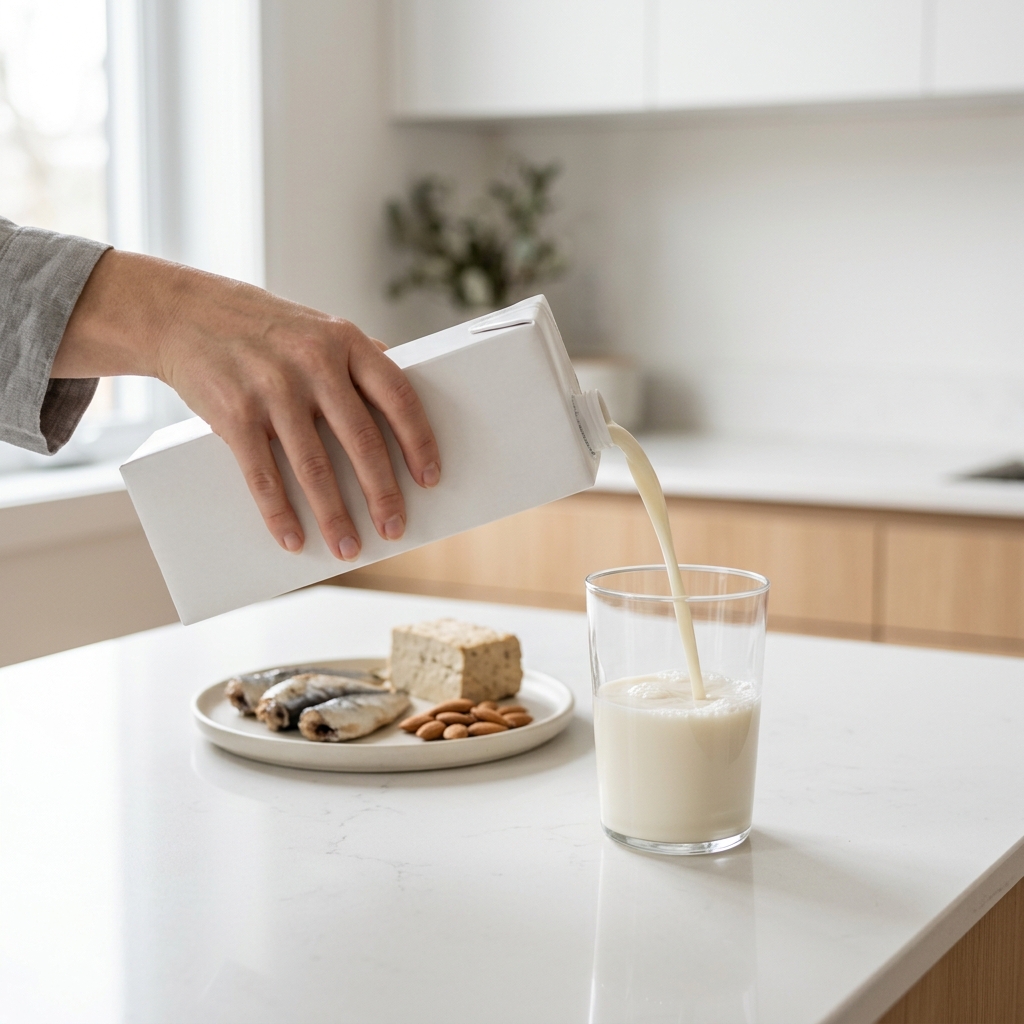
- Fortified plant milk, 200ml glass: around 240mg
- Tinned sardines with bones, half a tin: around 250mg
- Calcium-set tofu, 100g: 200 to 350mg depending on the setting agent
- Fortified plant yogurt, one pot: around 150mg
- Kale, cooked, 80g: around 120mg
- Tinned salmon with bones, 100g: around 90mg
- Almonds, 30g: around 75mg
- Baked beans, half a tin: around 60mg
- Fortified bread, two slices: around 60mg
- Dried figs, three: around 60mg
Three fortified servings plus a couple of the others gets you there comfortably. Two things worth knowing: shake the carton, because added calcium settles at the bottom and the last glass is otherwise very different from the first. And spinach is a poor source despite its reputation, since its oxalates bind the calcium and block most of the absorption. Kale, pak choi and broccoli are far better greens for this.
Our calcium in pregnancy guide covers absorption and supplements in more depth.
Iodine: The Gap Worth Actually Planning
You need around 150mcg a day, and it's genuinely important. Iodine deficiency in pregnancy is linked to effects on foetal neurodevelopment, and the UK population is not comfortably iodine-replete to begin with.
Without dairy, your realistic sources are:
White fish. Cod, haddock and similar are excellent. A portion can cover most of a day's requirement on its own.
Eggs. Around 25mcg each, so a reliable everyday contributor if you eat them.
Iodine-fortified plant milk. Rare but it exists, and worth seeking out. Read the back of the carton, not the front. If iodine isn't listed in the nutrition table, it isn't in there.
A supplement, if you eat neither fish nor eggs. Check your prenatal first, since some contain iodine and many don't. Do not use kelp or seaweed supplements to solve this, as they can deliver wildly variable and excessive doses, which causes its own thyroid problems.
If you're dairy-free and don't eat fish or eggs, this is the one gap genuinely worth raising with your midwife.
Protein, Which Sorts Itself Out
Least of your worries. You're aiming for roughly 75 to 100g a day across pregnancy and the replacements are everywhere: lentils, chickpeas, beans, tofu, tempeh, eggs, fish, meat, nuts, seeds and wholegrains.
One genuine advantage here: most plant proteins arrive with iron and fibre attached, so covering protein this way tends to improve two other things at the same time. Our vegan and vegetarian protein guide has the portion maths.
Dairy-Free in One Box
- Buy fortified, never organic plant milk, which by law isn't fortified.
- Shake the carton. Added calcium settles at the bottom.
- Iodine is the hidden gap. White fish, eggs, or check your prenatal.
- Skip spinach for calcium. Oxalates block most of it. Kale is better.
- Rice milk is not suitable for children under five, and best avoided in pregnancy.
Choosing a Plant Milk
They are not interchangeable, and the differences matter more in pregnancy than otherwise.
Soya is the closest nutritional match to cow's milk, and the only one with comparable protein at around 3g per 100ml. If you're replacing dairy properly, this is the default choice. Soya in normal food amounts is considered fine in pregnancy.
Oat tastes best to most people and behaves well in coffee, but has little protein. Fine as a drink, not a nutritional replacement.
Almond is very low in protein and calories. Fortified versions still deliver calcium, but treat it as flavoured water nutritionally.
Coconut is low in protein and higher in saturated fat. A flavour choice rather than a nutritional one.
Rice milk should be avoided. It's not recommended for children under five due to arsenic content, and it's sensible to skip it in pregnancy for the same reason.
And check for added sugars while you're reading the label. Sweetened versions carry a surprising amount, which matters if you're also managing blood sugar. Our blood sugar guide covers why that's worth watching.
Reading Labels Without Losing an Afternoon
Two habits make the whole thing quick once you've done it once.
Ignore the front of the pack. "Enriched", "with added vitamins" and "goodness of" mean nothing specific. The nutrition table on the back is the only place that tells you what's actually in there and how much.
Check for calcium and iodine separately. They're different fortifications and a product can have one without the other. Most fortified plant milks add calcium, B12 and vitamin D. Very few add iodine.
Do this once per brand you buy regularly and you're done. Take a photo of the back of the carton you settle on, and you never have to stand in the aisle reading again.
One trap worth naming: organic plant milks are not fortified. UK organic regulations don't permit added vitamins and minerals, so the organic oat milk that feels like the healthier choice contains essentially no calcium at all. This catches a lot of people who are otherwise doing everything right.
If It's an Aversion Rather Than a Choice
Worth separating, because the advice differs.
Dairy aversions in pregnancy are usually temporary and often specific. Going off milk doesn't always mean going off cheese, and plenty of women who can't face a glass of milk manage yogurt or hard cheese without trouble. It's worth testing the category rather than writing it all off.
Aversions also frequently ease after the first trimester. So if you're avoiding dairy purely because it turns your stomach, treat the substitutions above as a temporary system rather than a permanent diet, and try dairy again in a few weeks.
If it's lactose intolerance rather than aversion, lactose-free cow's milk is worth knowing about: it's real dairy with the lactose broken down, so it keeps the calcium, iodine and protein intact. Hard cheeses and yogurt are also naturally low in lactose and often tolerated.
A Dairy-Free Day That Works
Putting it together, so you can see it's not complicated.
Breakfast: porridge made with fortified soya milk, topped with almonds and berries. Mid-morning: a boiled egg. Lunch: jacket potato with tinned sardines and salad. Afternoon: hummus with vegetable sticks, and a few dried figs. Dinner: tofu and vegetable stir fry with brown rice. Evening: fortified plant yogurt.
That lands comfortably over 1,000mg of calcium, covers iodine through the eggs and sardines, and passes 75g of protein without effort. No supplements beyond a standard prenatal, and nothing that needs a health food shop. Our guide to prenatal vitamin gaps covers what your pill is and isn't doing alongside this.
What About Breastfeeding Afterwards
Worth thinking about before the birth rather than in week two, because the requirements shift again.
Calcium demand stays around 1,000mg while breastfeeding, and iodine demand actually rises, since your milk is the baby's only source of it. So the fortified milk and the fish or eggs matter more after the birth, not less. Everything above carries over.
The other question people ask is whether going dairy-free themselves prevents allergy in the baby. It doesn't, and current guidance is clear that avoiding allergens during pregnancy or breastfeeding is not recommended for prevention. The exception is if a breastfed baby is diagnosed with cow's milk protein allergy, in which case a dietitian will guide the exclusion properly and you'd be given calcium and iodine advice as part of it.
Clinical Sources & Research
Meet the Editorial Team
The researchers and experts behind PregnancyPlate.

Fiza Izra
Founder & Tech Researcher
A UK-based mother of 3 with a background in tech and data synthesis, Fiza brings real-world experience navigating hyperemesis gravidarum and postnatal depression. She engineers complex clinical guidelines (NHS, ACOG) into accessible tools, ensuring rigorous fact-checking with deep empathy.

Emma Davies
Senior Nutrition Editor
A mum and writer, Emma runs our food safety desk. She is the one who rings the restaurant to ask how long the lettuce sits out, checks every claim against CDC, FDA and NHS guidance, and rewrites the answer until it is usable at 9pm in a drive-thru queue.