Pregnancy Soup Recipes: 10 Easy Soups for Nausea, Iron and Cold Days
Ten easy pregnancy soups for nausea, low iron and cold evenings, plus the cooling and reheating rules that matter more for safety than the recipe itself.
In this article
Editorial note: This article is researched from official public health and pregnancy food safety guidance, then edited by the PregnancyPlate team for clarity. It is not medical advice. If you are worried about symptoms or a specific exposure, contact your midwife, GP or healthcare provider.
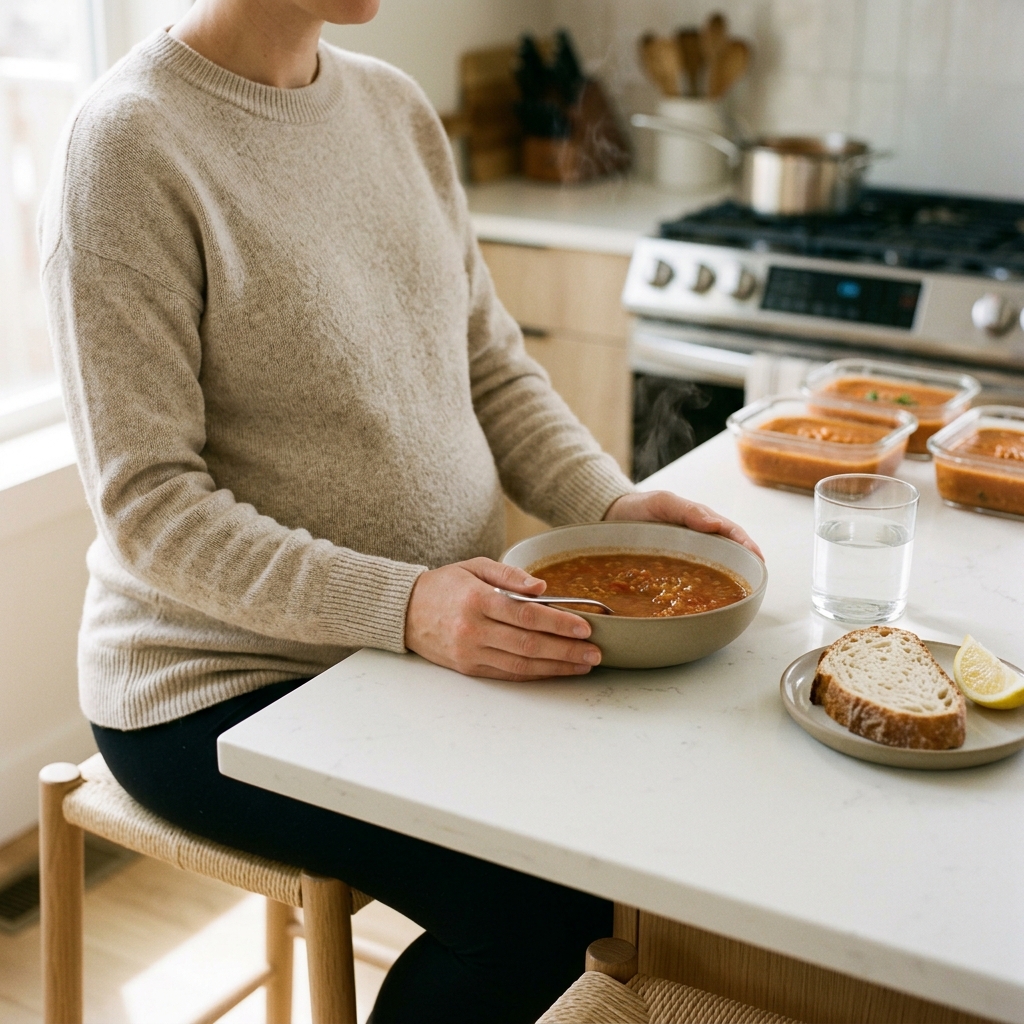
The Fast Answer: Soup is one of the easiest ways to eat well in pregnancy. It counts toward your fluids, it carries iron-rich lentils and beans without any fuss, and a broth-based soup is often the first thing that stays down on a nausea day. The rule that matters more than any recipe is temperature: split a big pot into shallow containers so it cools fast, and reheat soup to a rolling boil, not just until it feels warm.
Track your nutrition in seconds in the PregnancyPlate AppSafety is step one. Nutrition helps your baby thrive.
Knowing a meal is safe does not tell you whether you are getting enough iron, folate, calcium and choline. PregnancyPlate tracks all of it from a photo of your plate.
- See nutrient progress
- Scan meals instantly
- Nourish with confidence
 Scan to download
Open with iPhone camera
Scan to download
Open with iPhone camera
Soup rarely gets its own place in pregnancy advice because it sounds too simple to need one. But it quietly solves three of the hardest problems of the next nine months: drinking enough, getting enough iron, and eating anything at all when your stomach has opinions.
I chose the ten soups below for what they deliver, not just how they taste. Then I went back through the USDA's leftovers guidance, because how you cool and reheat a pot of soup matters more for safety than anything you put in it.
Why Soup Earns Its Place in Pregnancy
It counts toward your fluids. Your blood volume rises substantially in pregnancy, and your fluid needs rise with it. A bowl of broth-based soup is mostly water, which helps on the days a glass of plain water feels like a chore. Our hydration guide covers the full picture.
It is a vehicle for iron. Pregnancy raises your iron requirement to 27mg a day, the highest of any stage of life. According to the NIH, half a cup of boiled lentils provides about 3mg and a cup of canned white beans about 8mg. Both disappear into a soup without anyone at the table noticing.
It is gentle. Soft, mild and easy to eat in small amounts, which is exactly what the first trimester and the third trimester both ask for, for very different reasons.
It batches and freezes. One pot is four lunches and a couple of dinners, and soup freezes better than almost anything else you can cook.
The Cooling Rule That Matters More Than the Recipe
Here is the part most soup recipes skip. A large pot of soup is one of the slowest things in your kitchen to cool down. The USDA uses it as its own example: a big pot takes a long time to cool, and the longer food sits between 40°F and 140°F (4°C to 60°C), the more time bacteria have to multiply.
The bacterium most associated with this is Clostridium perfringens. The CDC notes that outbreaks most often involve food cooked in large batches and held at unsafe temperatures, with poultry, meat and gravy among the usual culprits. A meaty soup left on the stovetop to cool overnight fits that description exactly.
The fix takes about two minutes:
- Divide it. Ladle the soup into several shallow containers rather than putting the whole pot in the fridge. Shallow means it cools all the way through quickly.
- Get it into the fridge within 2 hours of cooking, or within 1 hour if your kitchen is above 90°F (32°C). You do not need to wait for it to cool completely first.
- Eat it within 3 to 4 days. Frozen, the USDA says leftovers are at their best for 3 to 4 months.
Reheating: Boil It, Don't Just Warm It
The USDA is unusually specific about soup. Most leftovers should be reheated to 165°F (74°C), but for sauces, soups and gravies the instruction is simpler: bring them to a rolling boil.
Pregnancy is the time to follow that literally. Listeria is one of the few foodborne bacteria that can keep growing at fridge temperatures, and the CDC describes it as especially harmful in pregnancy. A proper boil is the step that deals with it.
In practice: reheat only the portion you are going to eat, bring it to a bubbling boil on the stovetop, or microwave it covered and stir halfway through so there are no cold pockets in the middle. Then let it cool to a temperature you can actually eat. Our wider guide to eating leftovers when pregnant applies the same thinking to rice, pasta and everything else in the fridge.
Ten Soups That Work in Pregnancy
Chosen for iron, fiber, protein or nausea, and for how well they freeze. None of them needs more chopping than an onion and a couple of carrots.
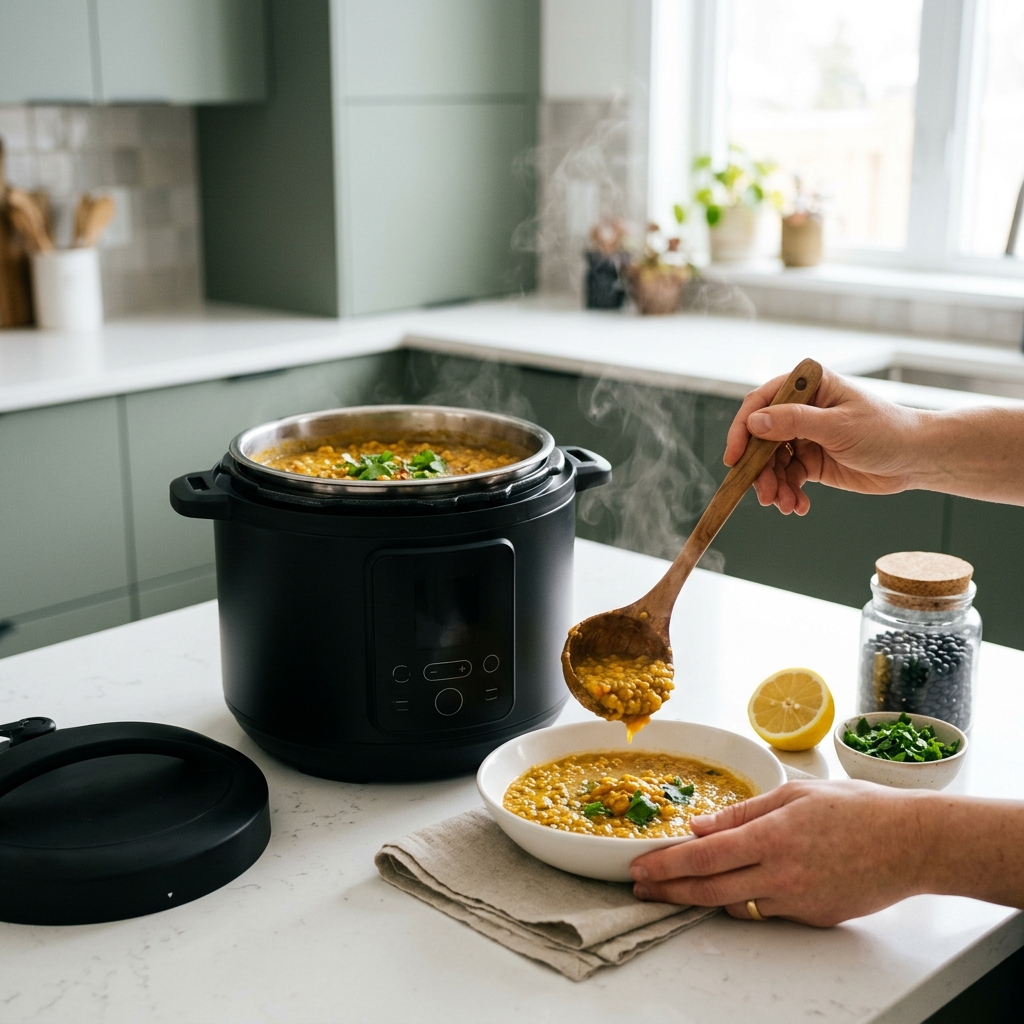
Red lentil and tomato soup. The best value soup there is. Red lentils collapse into a creamy texture in about 20 minutes with no blending, and the tomatoes add vitamin C, which helps your body absorb the plant iron in the lentils. Half a cup of canned stewed tomatoes adds around 2mg of iron on its own.
Chicken and rice soup. The classic for a reason. Gentle, savory in the way a nausea day sometimes craves, and a reasonable amount of protein. Shredded rotisserie chicken works well as long as it simmers in the soup rather than going in cold at the end.
Carrot and ginger soup. Ginger is one of the few nausea remedies ACOG suggests trying, and fresh ginger disappears pleasantly into a smooth carrot soup. Carrots are rich in beta-carotene, which is not the form of vitamin A that pregnancy guidance warns about. That caution applies to retinol, found in liver and some supplements.
White bean and kale soup. A cup of canned white beans carries about 8mg of iron, close to a third of your daily target, and kale adds vitamin C to help you absorb it. The whole pot takes about 25 minutes.
Beef and barley soup. The beef provides heme iron, the form your body absorbs most easily, and the NIH notes that meat also improves absorption of the plant iron in the rest of the bowl. Barley adds slow-release carbohydrate and fiber. Simmer until the beef is tender, which takes it well past any temperature that matters.
Black bean soup. High in fiber and folate, and very good with a spoonful of plain yogurt or sour cream on top. Both are pasteurized as standard in US grocery stores.
Miso soup with tofu. The lowest-effort soup on this list and one of the lowest in smell, which counts for a lot in the first trimester. Half a cup of firm tofu adds about 3mg of iron. Miso is salty, which makes it a good choice when you are craving salt and one to keep small if your blood pressure is being watched. A few pieces of wakame are fine. Kelp supplements are a different matter, because they can deliver very large doses of iodine.
Salmon and corn chowder. Salmon is on the FDA's "Best Choices" list for pregnancy, low in mercury and one of the richest sources of the omega-3 fat DHA. Simmer it in the chowder until it flakes easily, which means it has passed 145°F (63°C). Our omega-3 guide explains why DHA matters most in the second half of pregnancy.
Split pea soup. Very high in fiber, which helps with the constipation that slower pregnancy digestion brings. Traditional versions include ham, and cooked ham simmered in the soup is fine. Our fiber and constipation guide explains why this matters more as pregnancy goes on.
Chilled cucumber and yogurt soup, or gazpacho. The one for the first trimester. Cold food gives off far less smell than hot food, so a chilled soup can go down when nothing warm will. Wash the vegetables well, use pasteurized yogurt, and make it yourself, or choose a shelf-stable or pasteurized brand rather than a fresh, unpasteurized one.
Soup for the First Trimester
If nausea is the main event right now, how you eat soup matters as much as which soup you choose.
Go cooler. Hot food releases more smell. Letting soup cool to warm, or eating it chilled, takes the edge off for a lot of people.
Sip, don't sit down to a bowl. A mug of broth sipped over twenty minutes is easier than a full bowl at the table, and small amounts often is the approach ACOG recommends for pregnancy nausea in general.
Start plain. Clear broth first, then broth with rice or noodles, then something with vegetables in it. Our bland dinner ideas walk through bringing food back in after a bad day, and the low-odor dinner guide has more meals built around the same problem.
Let someone else cook it. Simmering soup fills a home with smell for an hour. A batch made by a partner while you are out, or a good canned soup, is a completely reasonable answer.
If you are being sick frequently and cannot keep food or drink down, that is beyond what soup can fix. The NHS advises telling your doctor or midwife as soon as possible, because dehydration in pregnancy needs proper treatment.
Store-Bought and Restaurant Soup
Canned soup is safe. Commercial canning heats food enough to make it shelf-stable, which puts a can of soup among the lowest-risk foods in your pantry. The catch is sodium. Many canned soups carry several hundred milligrams per serving, and a can often holds two servings, against an FDA daily value of 2,300mg. You don't need to avoid salt in pregnancy, but reduced-sodium versions are worth choosing if your blood pressure is being monitored.
Fresh chilled soups from the grocery store's refrigerated section are fine, brought to a boil, and eaten within the time the label gives once opened.
Restaurant soups are cooked and held hot, which is reassuring. Two exceptions are worth knowing. Pho can come with thin slices of raw beef that cook only partly in the broth, so ask for well-done beef instead, as our Vietnamese food guide explains. Ramen often comes with a soft, jammy marinated egg. In the US the advice is to choose a firm yolk unless the egg is pasteurized, while in the UK eggs with the British Lion mark are considered safe runny. Our runny eggs guide covers both sets of rules.
Chain soups are covered menu by menu in our Panera guide.
Toppings Worth a Second Look
The soup itself is almost never the problem. Occasionally the garnish is.
- Queso fresco is a special case. The FDA now lists queso fresco-type cheeses, pasteurized or not, among the foods people at higher risk should avoid. Stir it into the hot soup until it is steaming rather than scattering it cold on top.
- Other cheeses are simpler. Hard cheeses like cheddar and Parmesan are fine, and anything melted until bubbling is fine.
- Raw sprouts sometimes sit on top of Asian-style soups. The FDA advises avoiding raw sprouts of any kind, so ask for them to be left off or push them under the hot broth until they wilt.
- Cold-smoked salmon as a garnish is the refrigerated smoked seafood that pregnancy guidance flags. Cooked into a chowder, it is fine.
- Croutons, toasted seeds, a swirl of olive oil and well-washed fresh herbs are all fine.
Taking Soup to Work
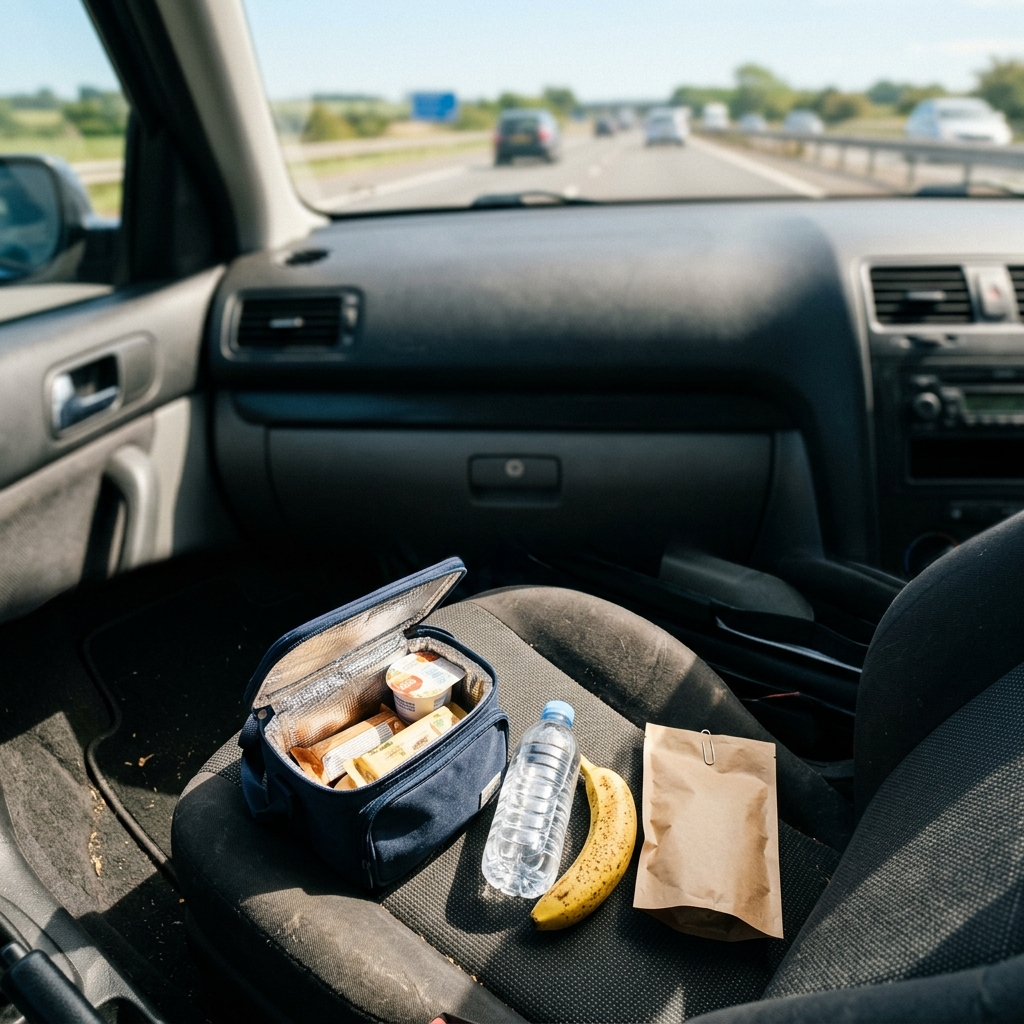
Soup is one of the best packed lunches in pregnancy, as long as it stays hot. The USDA's method is worth copying exactly: fill an insulated food jar with boiling water, let it stand for a few minutes, pour that out, then add soup that is piping hot and keep the lid closed until lunch. The goal is for it to stay at or above 140°F (60°C) until you eat it.
If there is a microwave at work, a cold container of soup reheated until it bubbles works just as well. Our pregnancy lunch ideas for work include more options built around the office microwave.
Soup Rules in One Box
- Divide big pots into shallow containers to cool.
- Fridge within 2 hours, eat within 3 to 4 days.
- Reheat to a rolling boil, one portion at a time.
- Queso fresco heated through, no raw sprouts on top.
- Well-done beef in pho, firm or pasteurized eggs in ramen.
Where to Start
If you only make one soup this month, make the red lentil. It costs very little, it carries iron and fiber, it is mild enough for most aversions, and it freezes in portions you can reheat in five minutes. Our iron in pregnancy guide explains why that matters more in the second half of pregnancy than almost any other change you could make.
For the batching side, our slow cooker pregnancy meals include several of these soups in set-and-forget form, the Instant Pot guide covers the fast version, and freezer meals to make before baby arrives explains how to build a stock of them in the third trimester. When a cold arrives with the season, our guide to eating with a cold while pregnant picks up where this one leaves off.
Clinical Sources & Research
- USDA FSIS: Leftovers and Food Safety.
- USDA FSIS: Keeping "Bag" Lunches Safe.
- CDC: About C. perfringens Food Poisoning.
- CDC: People at Increased Risk for Listeria Infection.
- FDA: People at Risk of Foodborne Illness.
- NIH: Iron Fact Sheet for Health Professionals.
- ACOG: Morning Sickness: Nausea and Vomiting of Pregnancy.
- FDA: Advice About Eating Fish.
- FDA: Sodium in Your Diet.
- NHS: Severe Vomiting in Pregnancy.
This article is general information and does not replace advice from your doctor, midwife or dietitian. If you have been advised to limit salt or follow a specific diet, check soup recipes and canned soup labels against that advice.
Meet the Editorial Team
The researchers and experts behind PregnancyPlate.

Fiza Izra
Founder & Tech Researcher
A UK-based mother of 3 with a background in tech and data synthesis, Fiza brings real-world experience navigating hyperemesis gravidarum and postnatal depression. She engineers complex clinical guidelines (NHS, ACOG) into accessible tools, ensuring rigorous fact-checking with deep empathy.

Emma Davies
Senior Nutrition Editor
A mum and writer, Emma runs our food safety desk. She is the one who rings the restaurant to ask how long the lettuce sits out, checks every claim against CDC, FDA and NHS guidance, and rewrites the answer until it is usable at 9pm in a drive-thru queue.