Eating Well in Pregnancy With No Kitchen: Hotels, Microwaves and a Kettle
A hotel mini fridge is often not cold enough for chilled food. What to buy instead, what a kettle can really make, and how to microwave safely in pregnancy.
In this article
Editorial note: This article is researched from official public health and pregnancy food safety guidance, then edited by the PregnancyPlate team for clarity. It is not medical advice. If you are worried about symptoms or a specific exposure, contact your midwife, GP or healthcare provider.
The Fast Answer: You can eat well in pregnancy with nothing but a kettle, a microwave and a mini fridge. The three rules that matter: a hotel mini fridge is often not cold enough for chilled ready-to-eat food, so check it or buy shelf-stable; microwaves heat unevenly, so stir and make sure food is steaming all the way through; and a kettle gives you more options than people realise, from porridge to couscous to proper hot meals.
Track your nutrition in seconds in the PregnancyPlate AppSafety is step one. Nutrition helps your baby thrive.
Knowing a meal is safe does not tell you whether you are getting enough iron, folate, calcium and choline. PregnancyPlate tracks all of it from a photo of your plate.
- See nutrient progress
- Scan meals instantly
- Nourish with confidence
 Scan to download
Open with iPhone camera
Scan to download
Open with iPhone camera
Plenty of pregnancies include a stretch without a proper kitchen. Work travel, a hotel stay, a house move, building work, a shared kitchen you would rather not use, or an unexpected few nights on an antenatal ward.
It is entirely doable, and living on crisps and biscuits for a week is avoidable with about ten minutes of thought.
The Mini Fridge Problem
This is the one genuine food safety issue, and almost nobody checks it.
A fridge needs to run at 5°C or below to keep chilled ready-to-eat food safe. Hotel mini fridges and minibars frequently run warmer than that, sometimes considerably, because they are designed to chill drinks rather than store food. Some are not refrigerators at all but thermoelectric coolers that only drop a few degrees below room temperature.
That matters because listeria, the bacterium pregnancy guidance is most concerned with, grows at fridge temperatures and grows faster as the fridge gets warmer. Chilled sandwiches, cooked meats, soft cheese and pre-made salads are the foods that depend on proper refrigeration.
What to do: put a drink in for an hour and feel it. Properly cold is fine. Cool but not cold means do not store perishable food in it, and buy shelf-stable things instead. If the fridge has a dial, turn it up when you arrive.
The simplest answer in a hotel is to avoid relying on the fridge at all, and to buy chilled food on the day you eat it rather than stocking up.
What a Kettle Can Actually Do
More than tea, and this is where most of the real meals come from.
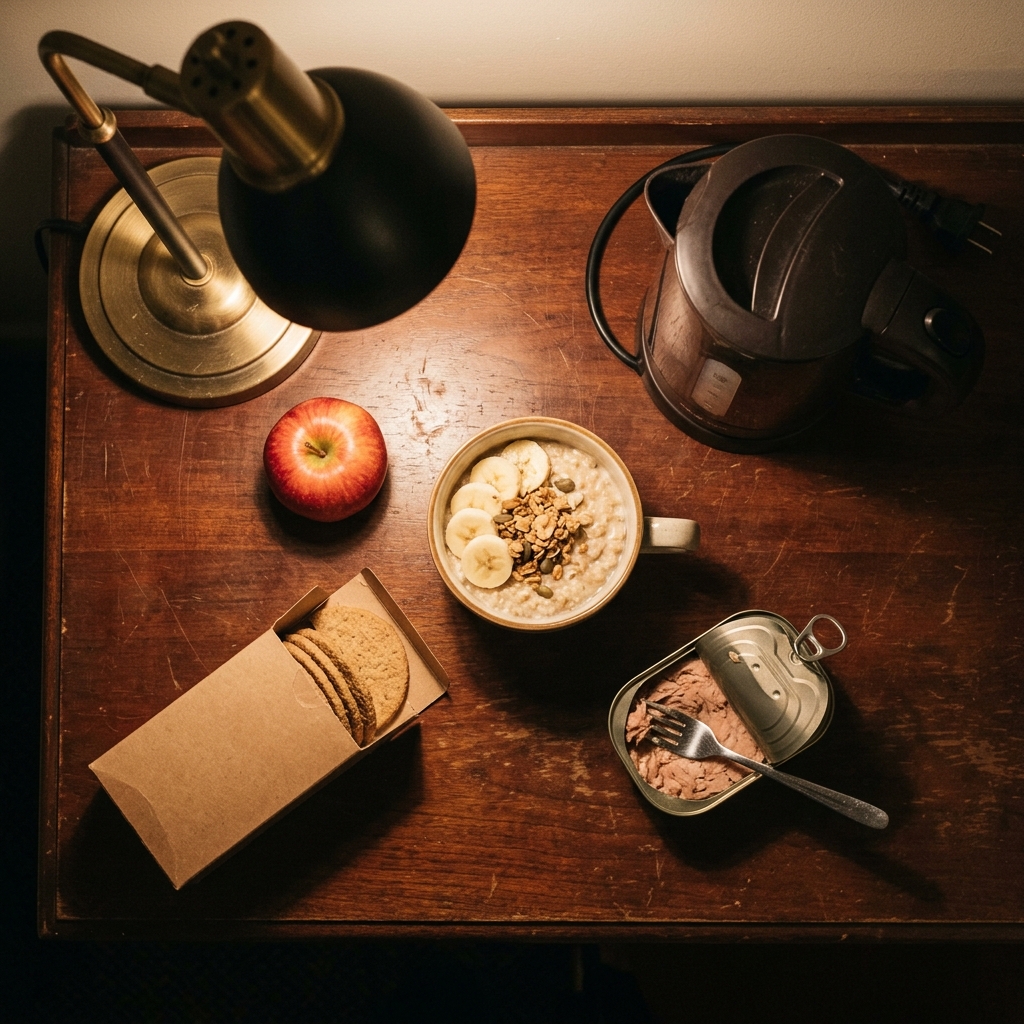
Porridge. Instant oats in a mug with boiling water, left to stand. Add nut butter, dried fruit or a banana. Genuinely filling and a good breakfast.
Couscous. Pour boiling water over, cover with a plate, wait five minutes. Stir through tinned tuna, chickpeas or cheese and it is a real lunch.
Instant noodles and soups, improved considerably by adding a boiled egg, tinned beans or a handful of spinach.
Boiled eggs, which work in a kettle if you are careful, or buy them ready cooked and shelf-stable where available.
Hot milk for a bedtime drink, or to make instant porridge richer and add calcium.
Two cautions. Do not cook anything in the kettle itself that will leave residue, since the next guest will use it for tea, and a kettle does not hold food at temperature, so eat it when it is made.
Microwave Meals Done Properly
Microwaves are the most useful appliance in a room without a kitchen, and the most commonly misused.
They heat unevenly, producing hot edges and a cool centre. For most people that is a minor annoyance. In pregnancy it matters more, because reheating is only safe if the food reaches steaming hot all the way through.
So: stir halfway, let it stand for a minute after heating so the heat spreads, and check the middle rather than the edge. Anything with meat, rice or sauce deserves particular attention.
Ready meals are fine when heated properly, and they are a far better option than skipping dinner. Choose ones with a visible protein and some vegetables rather than a bowl of pasta in sauce, and treat the salt content as the main nutritional consideration rather than anything dangerous.
Microwave rice pouches are safe and convenient. The rice safety concern is about rice left at room temperature after cooking, not about heating a sealed pouch. Eat it when it is hot and do not keep leftovers in a room without reliable refrigeration. Our leftovers guide covers the timings.
No Kitchen in One Box
- Test the fridge before trusting it with chilled food.
- Buy chilled food the day you eat it, not in advance.
- Stir and stand anything microwaved, then check the middle.
- A kettle makes real meals: porridge, couscous, soup with extras.
- Shelf-stable protein is what stops a week of toast.
The Shopping List
One trip to a supermarket covers a week. The aim is protein and iron, which are the two things that disappear first when you are living out of a bag.
Shelf-stable protein: tinned tuna, salmon or mackerel with ring pulls, tinned beans and chickpeas, nut butter, nuts, long-life milk, protein bars.
Carbohydrate: instant oats, couscous, microwave rice pouches, oatcakes, wholegrain crackers, bread.
Iron and extras: dried apricots, pumpkin seeds, fortified cereal, dark chocolate.
Fruit and vegetables: bananas, apples, satsumas, cherry tomatoes, cucumber, baby carrots. Wash what needs washing under a cold tap.
If the fridge is genuinely cold: yoghurt, hard cheese, milk, hummus.
That list builds a week of actual meals rather than snacks, and most of it needs no refrigeration at all. Our pregnancy grocery list is the full version for when you do have a kitchen.
Five Meals With No Cooking at All
For when there is not even a microwave.
Tuna and couscous, if you have a kettle, or tuna with crackers and tomatoes if not.
Nut butter on oatcakes with a banana. Protein, fibre and potassium, assembled in a minute.
Tinned beans with cheese and crackers. Iron, protein and calcium, no heat required.
Overnight oats in a cup with long-life milk, left while you sleep.
A supermarket meal deal, chosen with the usual rules: skip pate, cold cured meat and soft mould-ripened cheese, and check the sandwich has been properly chilled. Our cheese guide covers which fillings are fine.
Eating Out Every Night
If there is no kitchen because you are travelling for work, most meals will be bought rather than made, and that brings its own pattern.
Restaurant and hotel food is seasoned to be eaten immediately, which means a lot of salt. Several days of it shows up as swollen fingers and ankles, particularly in the second half of pregnancy, and our swelling guide covers what helps. Drinking properly does more than cutting salt at any individual meal.
Breakfast is the meal worth taking seriously on a trip, because it is usually the one with the most control. A cooked breakfast with eggs, or porridge with fruit and nuts, sets the day up far better than pastries, and hotel breakfasts almost always have both.
The buffet rules apply to hotel breakfasts as much as anywhere: take things that are steaming hot, be wary of anything cold that has sat out, and skip cold cured meat and soft cheese from the display. Our buffet guide goes through it, and our eating out guide has the questions that work on any menu.
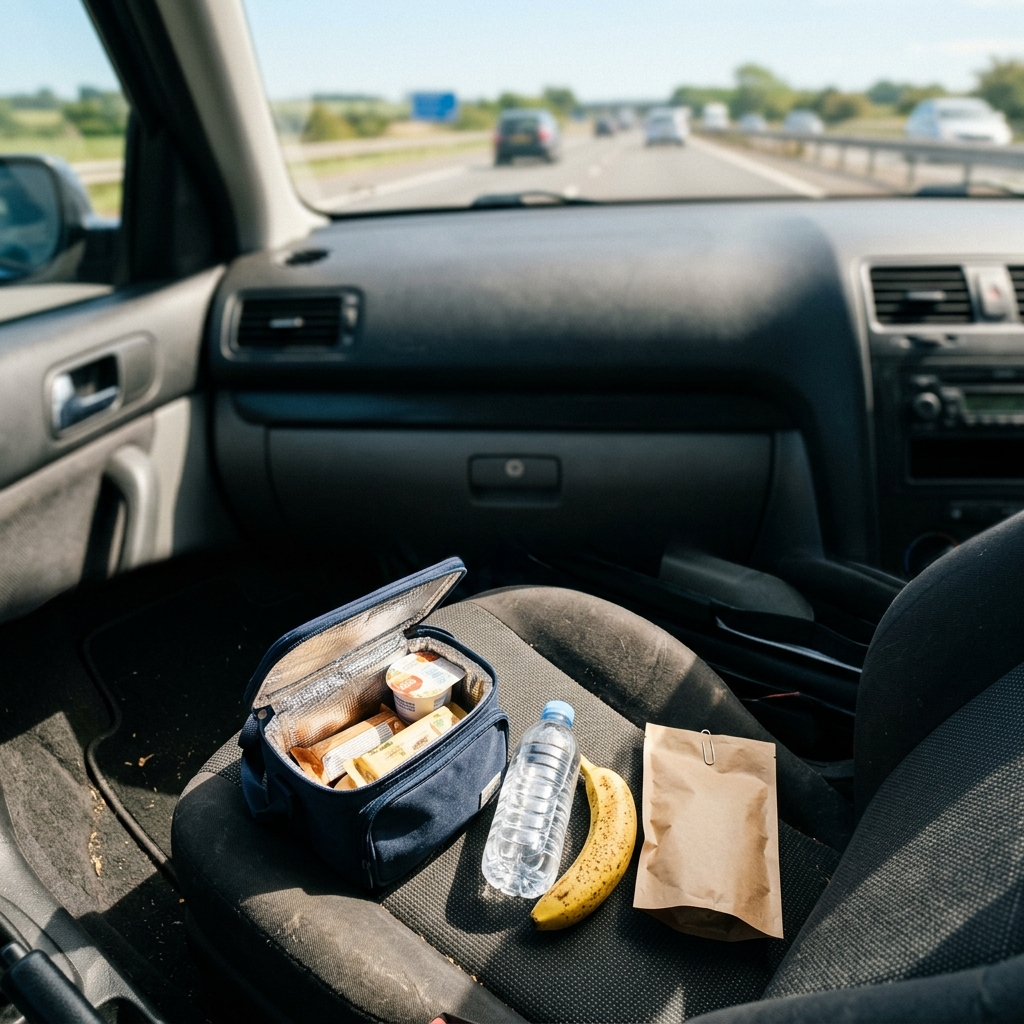
One practical habit for a long trip: buy fruit and nuts on the first day and keep them in the room. It stops the four o'clock gap turning into whatever the vending machine has.
Hospital Stays Specifically
Worth its own section, because an unexpected antenatal admission is one of the most common versions of this problem.
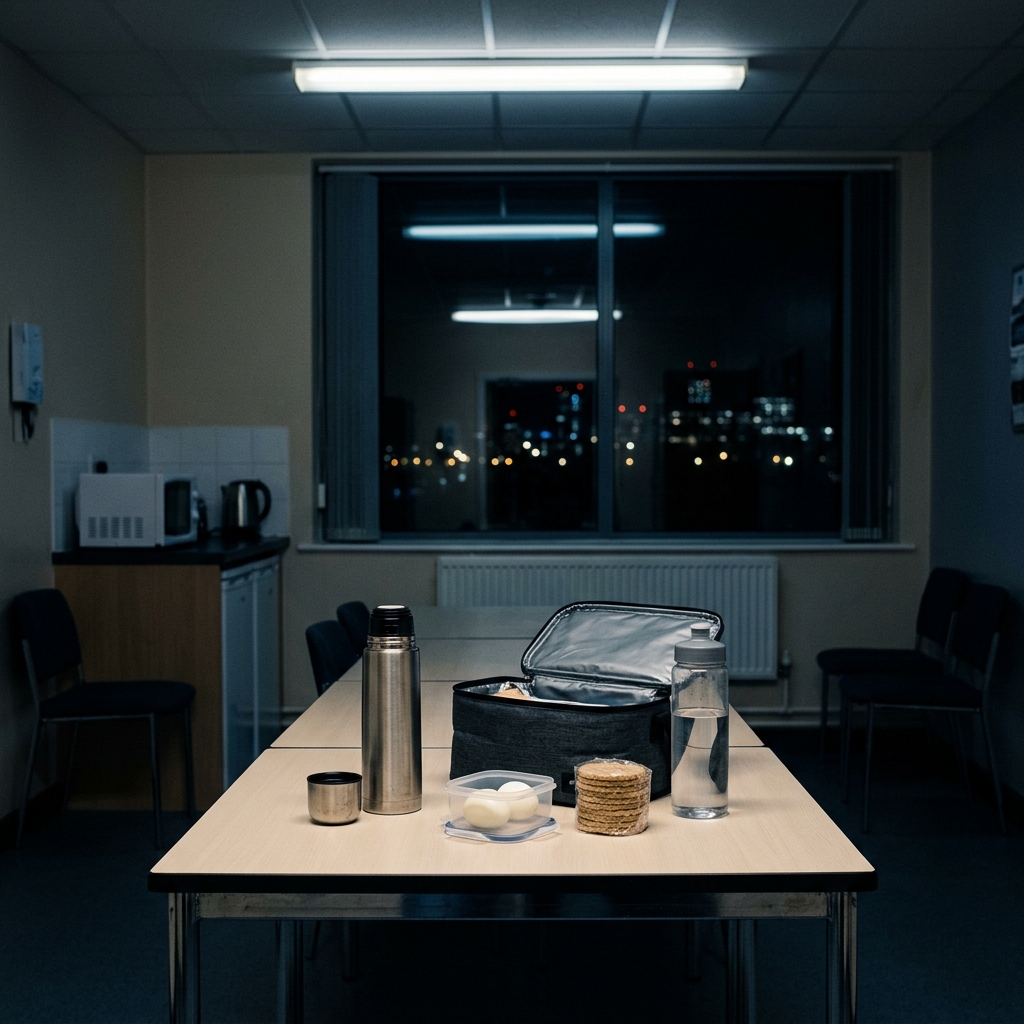
Hospital food arrives at set times and may not match when you can face eating, particularly with nausea. Wards usually have a fridge, though it is shared and things go missing, and there is often a kettle or hot water available.
What helps: ask a visitor to bring shelf-stable snacks rather than chilled ones, keep something dry by the bed for the night, and tell the staff if you are vegetarian, have gestational diabetes or cannot keep food down, because the catering can usually be adjusted and nobody will offer if you do not ask.
Our hospital bag snack list was written for labour but the contents work just as well for an antenatal stay, and our guide to night-time hunger covers the three in the morning problem that hospital routines create.
Keeping the Nutrition Up
A week of convenience food is not a problem. Several weeks starts to matter, and the gaps are predictable.
Iron is the first to slip, because the easy shelf-stable foods are mostly carbohydrate. Tinned fish, beans, dried apricots, pumpkin seeds and fortified cereal all travel and all help. Pair them with something containing vitamin C, like a satsuma or tomatoes, to absorb more. Our iron guide explains why that pairing matters so much.
Calcium goes next if you are not eating dairy. Long-life milk, cheese, fortified plant milks and tinned fish with bones all cover it.
Fibre matters because disrupted routines and convenience food make pregnancy constipation worse. Fruit, oats, beans and wholegrain crackers do the work.
Keep taking your prenatal vitamin, which matters more than usual during a stretch where your diet is narrower than you would like.
None of this requires a kitchen, and none of it requires being impressive about it. Getting protein, iron and some vegetables into most days is enough, and the rest can wait until you are home.
Clinical Sources & Research
This article is general information and does not replace advice from your midwife, GP or dietitian. If you are in hospital, tell staff about any dietary needs rather than managing alone.
Meet the Editorial Team
The researchers and experts behind PregnancyPlate.

Fiza Izra
Founder & Tech Researcher
A UK-based mother of 3 with a background in tech and data synthesis, Fiza brings real-world experience navigating hyperemesis gravidarum and postnatal depression. She engineers complex clinical guidelines (NHS, ACOG) into accessible tools, ensuring rigorous fact-checking with deep empathy.

Emma Davies
Senior Nutrition Editor
A mum and writer, Emma runs our food safety desk. She is the one who rings the restaurant to ask how long the lettuce sits out, checks every claim against CDC, FDA and NHS guidance, and rewrites the answer until it is usable at 9pm in a drive-thru queue.