What to Eat When You Have a Cold While Pregnant
You can't take most cold remedies in pregnancy, so food, fluids and rest do more of the work. What genuinely helps, what doesn't, and when a cold isn't a cold.
In this article

Editorial note: This article is researched from official public health and pregnancy food safety guidance, then edited by the PregnancyPlate team for clarity. It is not medical advice. If you are worried about symptoms or a specific exposure, contact your midwife, GP or healthcare provider.
The Fast Answer: Colds hit harder in pregnancy and last longer, because your immune system is deliberately damped down. Since most cold remedies are off the table, fluids, food and rest are doing far more of the work than usual. Honey and lemon genuinely helps a cough. Vitamin C taken once you're already ill does very little. And flu is not the same as a cold in pregnancy, which is the part worth reading.
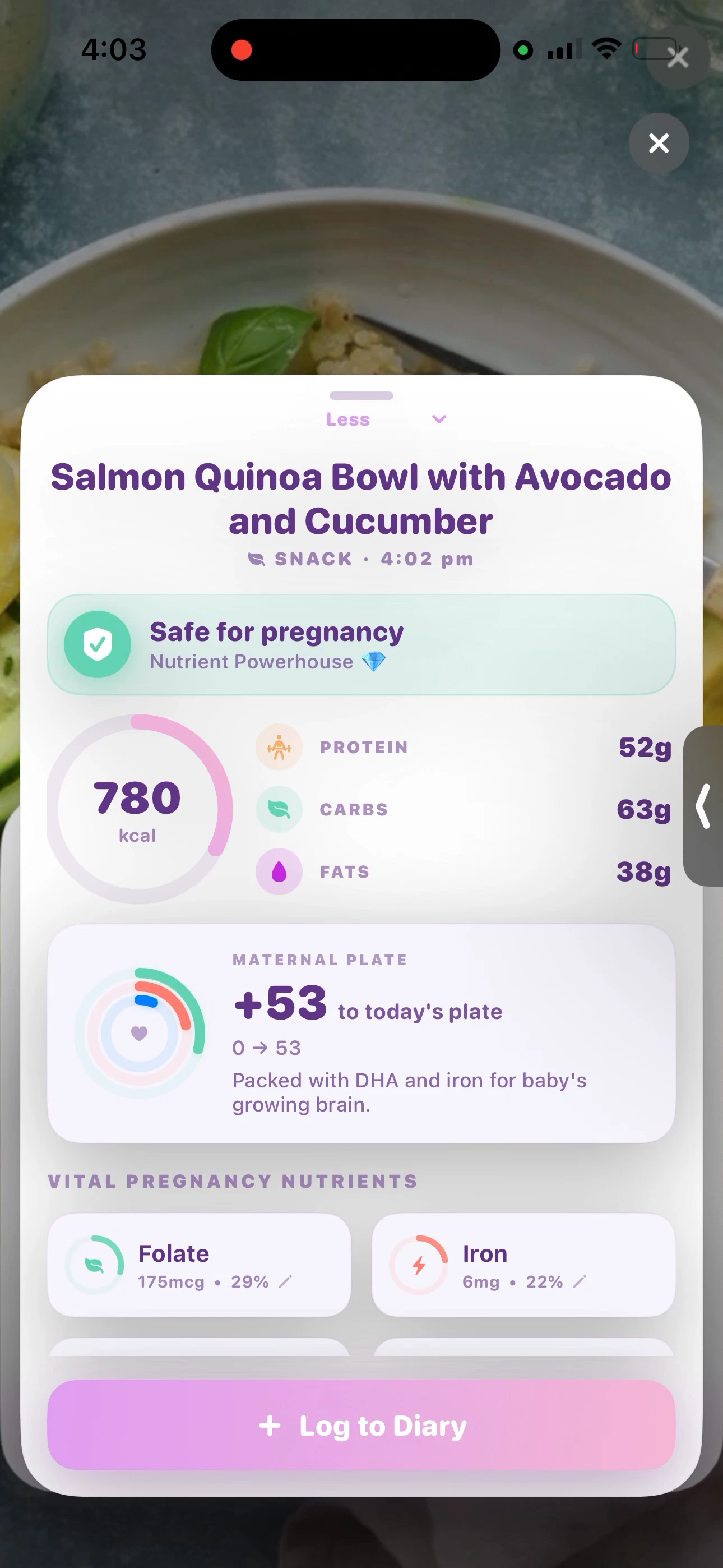
Keep track of what you manage to eat in the PregnancyPlate AppYour next meal, a little less guesswork.
Scan your plate for pregnancy food-safety guidance and a nutrition breakdown. Keep your meals and nutrient progress in one place.
 Scan with your iPhone
to get the app
Being ill while pregnant is a particular kind of miserable, because the usual response is unavailable. No hot lemon sachets, no decongestants, no nightcap, and a long list of things to check with a pharmacist before you take them.
What's left is food, fluid and rest. Which sounds like a consolation prize, but when medication is restricted these genuinely are the intervention rather than the supporting act.
Why Colds Hit Harder Now
Not your imagination, and not weakness.
Pregnancy deliberately alters your immune system so your body doesn't reject the baby. The practical consequence is that you catch things more easily, symptoms often last longer, and congestion is worse because pregnancy increases blood volume and swells the nasal lining anyway. Plenty of women have a permanently blocked nose in pregnancy before catching anything at all.
So a cold that would have been a two-day inconvenience can run for a week or more. That's expected rather than a sign something is wrong.
Fluids Do the Most Work
The single highest-value thing, and the easiest to under-do when you feel awful.
Fluid thins mucus, which makes congestion and coughs more manageable, and you lose more than usual through a raised temperature and mouth-breathing all night. Dehydration also worsens headaches and fatigue, so it compounds quickly.
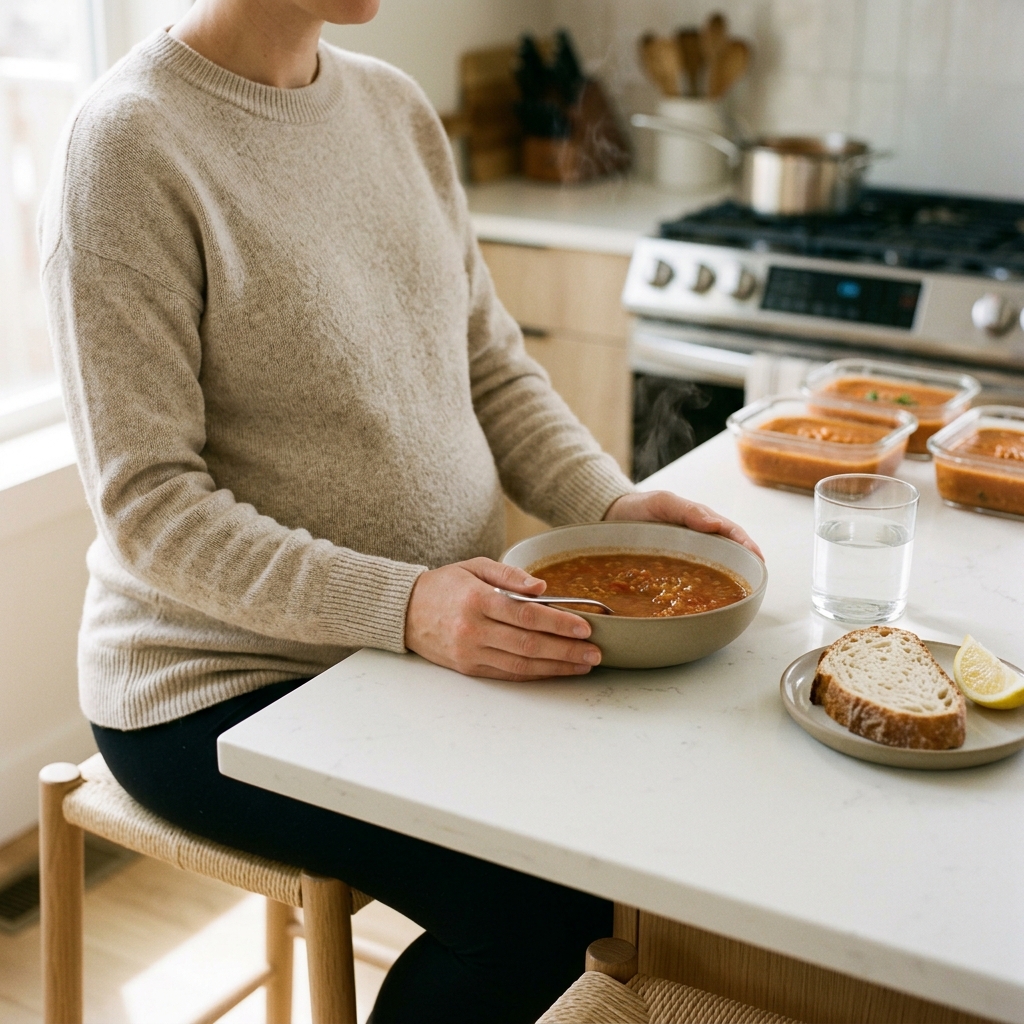
What counts: water, warm squash, milk, and caffeine-free teas. Broth and soup count too, and bring salt and fluid together, which is why they've been the standard answer for centuries. Our pregnancy soup recipes include ten that freeze well for exactly these weeks.
Watch the caffeine. The 200mg daily limit still applies when you're ill, and a day spent on tea and Lemsip-style drinks adds up faster than you'd think. Our hydration guide covers what you need normally.
Honey and Lemon Actually Works
One of the few home remedies with real evidence behind it.
Honey has been shown to reduce cough frequency and severity, and in some comparisons performs comparably to over-the-counter cough preparations. It coats the throat and is genuinely soothing. It's safe throughout pregnancy, since the botulism concern applies only to babies under one, and our honey in pregnancy guide explains why.
Lemon adds vitamin C and cuts through the sweetness. Warm, not boiling, since very hot water degrades some of the vitamin C and is harsher on a sore throat.
Ginger is worth adding if you like it. The evidence for it in colds is thinner than for honey, but it's safe in food amounts and many people find it helps with the general grimness.
Vitamin C, Honestly
The reflex is to reach for high-dose vitamin C the moment your throat tickles. The evidence doesn't really support it.
Regular ongoing supplementation slightly shortens colds in most people. Starting it once symptoms have already begun makes little measurable difference. So the orange juice isn't wasted, it just isn't the cure it's marketed as.
More importantly, don't go megadosing in pregnancy. Very high doses aren't recommended, and your prenatal already contains a sensible amount. Getting vitamin C from food is a better route: peppers, citrus, kiwi, strawberries, broccoli.
Zinc is a similar story. There's some evidence it shortens colds when started very early, but high-dose zinc supplements aren't recommended in pregnancy without advice, and zinc from food is perfectly adequate. Our prenatal gaps guide covers what your supplement is already giving you.
Being Ill in One Box
- Fluids first. They thin mucus and you're losing more than usual.
- Honey and lemon genuinely works for a cough. Warm, not boiling.
- Vitamin C started mid-cold does little. Don't megadose.
- Check every medicine with a pharmacist, including herbal ones.
- A temperature over 37.8C needs a call, not a wait-and-see.
Eating When You Can't Face It
Appetite disappears with a cold, and that's fine for a couple of days. Your baby draws on stores built over weeks rather than on today's lunch.
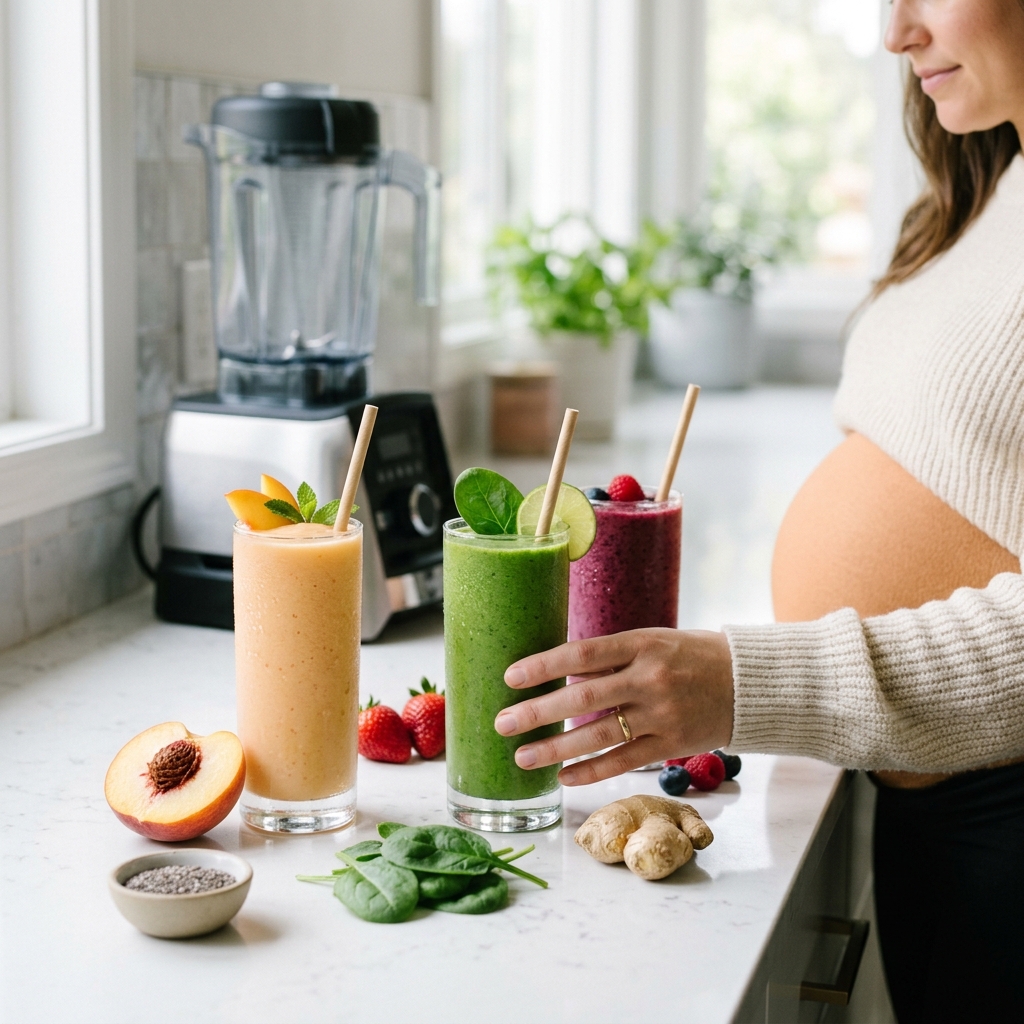
What tends to go down: soup, broth, porridge, yogurt, scrambled egg, toast, bananas, ice lollies for a sore throat. Small and frequent, same principle as first trimester nausea, and our nausea foods guide transfers directly here.
If you can manage protein, do. It's what your immune system builds antibodies from, and it's the thing most likely to be skipped when you're living on toast. An egg, some yogurt, a bit of cheese.
Keep taking your prenatal if you can keep it down. If it's making you feel sicker, take it with food or in the evening rather than abandoning it.
The Congestion Problem
Worth its own section, because it's the symptom that lingers longest and the one you have fewest options for.
Decongestant tablets and sprays are generally not recommended in pregnancy, so the usual quick fix is out. What's left is mechanical, and it does work.
Steam. A bowl of hot water with a towel over your head, or simply a hot shower. Ten minutes loosens things more than any drink will.
Saline drops or spray, which are just salt water and widely considered safe in pregnancy. Cheap, available anywhere, and they genuinely shift congestion.
Sleep propped up on extra pillows, which reduces overnight congestion and helps the reflux you're probably also dealing with by the third trimester.
A humidifier or a damp towel on the radiator, since dry indoor air makes everything worse once the heating goes on.
Worth knowing that pregnancy rhinitis is a real thing in its own right. If your nose has been blocked for weeks with no other symptoms, that may be hormonal rather than viral, and it resolves after birth.
A Cold Is Not the Flu
This is the section that matters most, because the two get conflated and they are not equivalent in pregnancy.
Flu is significantly more serious when you're pregnant. Pregnant women are more likely to develop complications such as pneumonia and more likely to need hospital treatment, and flu is associated with a raised risk of premature birth. That's precisely why the flu vaccine is offered free to pregnant women in the UK at any stage of pregnancy, and why it's recommended rather than merely available.
Telling them apart, roughly: a cold comes on gradually, centres on the nose and throat, and you can usually still function. Flu arrives abruptly, brings a fever, aching muscles and exhaustion, and generally puts you in bed.
If you think you have flu, contact your GP or midwife promptly rather than waiting it out. Antiviral treatment exists, and it works best when started early.
Not Catching It in the First Place
Less interesting than a cure, and considerably more effective given how few treatment options you have.
Get the flu jab. Free in pregnancy in the UK, at any stage, and it also passes some protection to your baby for their first months. It's the single highest-value thing on this list.
The whooping cough vaccine is offered separately, usually from around 16 weeks, and protects your newborn before they can be vaccinated themselves.
Wash your hands more than feels necessary, particularly if you have a toddler at nursery, who is effectively a delivery service for every virus in circulation.
Vitamin D through winter. The 10mcg daily supplement is recommended for everyone in the UK from October to March, and low vitamin D is associated with more respiratory infections.
Sleep, insofar as that's available. Not much use as advice in the third trimester, but it is the thing that most affects how often you catch things.
When to Stop Self-Treating
Contact your midwife, GP or NHS 111 if you have a temperature of 37.8C or above, which needs assessing in pregnancy rather than riding out. Also for breathlessness or chest pain, coughing up blood, symptoms getting worse after a week rather than better, an inability to keep fluids down, or any change in your baby's movements.
And a specific one: check every remedy with a pharmacist before taking it, including herbal preparations, throat sprays and vapour rubs. Several common cold medicines aren't recommended in pregnancy, and "natural" doesn't mean cleared for use. Paracetamol is the usual first-line option, at the lowest effective dose for the shortest time, but confirm with a pharmacist rather than taking that as instruction. Our herbal tea guide covers which infusions are fine.
The unsatisfying truth is that a cold takes as long as it takes. What you can control is staying hydrated, eating something, resting more than feels reasonable, and knowing which symptoms mean it's stopped being an ordinary cold.
Clinical Sources & Research
This article covers food and fluids only and is not medical advice. Check any medicine, supplement or herbal remedy with a pharmacist, GP or midwife before taking it in pregnancy.
Meet the Editorial Team
The researchers and experts behind PregnancyPlate.

Fiza Izra
Founder & Tech Researcher
A UK-based mother of 3 with a background in tech and data synthesis, Fiza brings real-world experience navigating hyperemesis gravidarum and postnatal depression. She engineers complex clinical guidelines (NHS, ACOG) into accessible tools, ensuring rigorous fact-checking with deep empathy.

Emma Davies
Senior Nutrition Editor
A mum and writer, Emma runs our food safety desk. She is the one who rings the restaurant to ask how long the lettuce sits out, checks every claim against CDC, FDA and NHS guidance, and rewrites the answer until it is usable at 9pm in a drive-thru queue.
Make sense of every plate.
Scan your plate for pregnancy food-safety guidance and a nutrition breakdown. Keep your meals and nutrient progress in one place.
Scan with your iPhoneto get the app