Can You Eat Crab Legs While Pregnant? Mercury, Shellfish Safety & Best Portions
Are crab legs safe for your baby? We audit mercury levels in King and Snow crab, the 145°F heat-kill rule, and how crab's DHA can boost fetal brain development.
In this article
Editorial note: This article is researched from official public health and pregnancy food safety guidance, then edited by the PregnancyPlate team for clarity. It is not medical advice. If you are worried about symptoms or a specific exposure, contact your midwife, GP or healthcare provider.
The 2026 Shellfish Audit: Crab legs are not just safe - they are a nutritional powerhouse for fetal development. Low in mercury and high in DHA, B12, and Zinc, crab is a "Best Choice" seafood for expectant mothers. The only non-negotiable rule is that they must be fully cooked until steaming hot. Avoid raw crab appetizers or "undercooked" crab cakes.
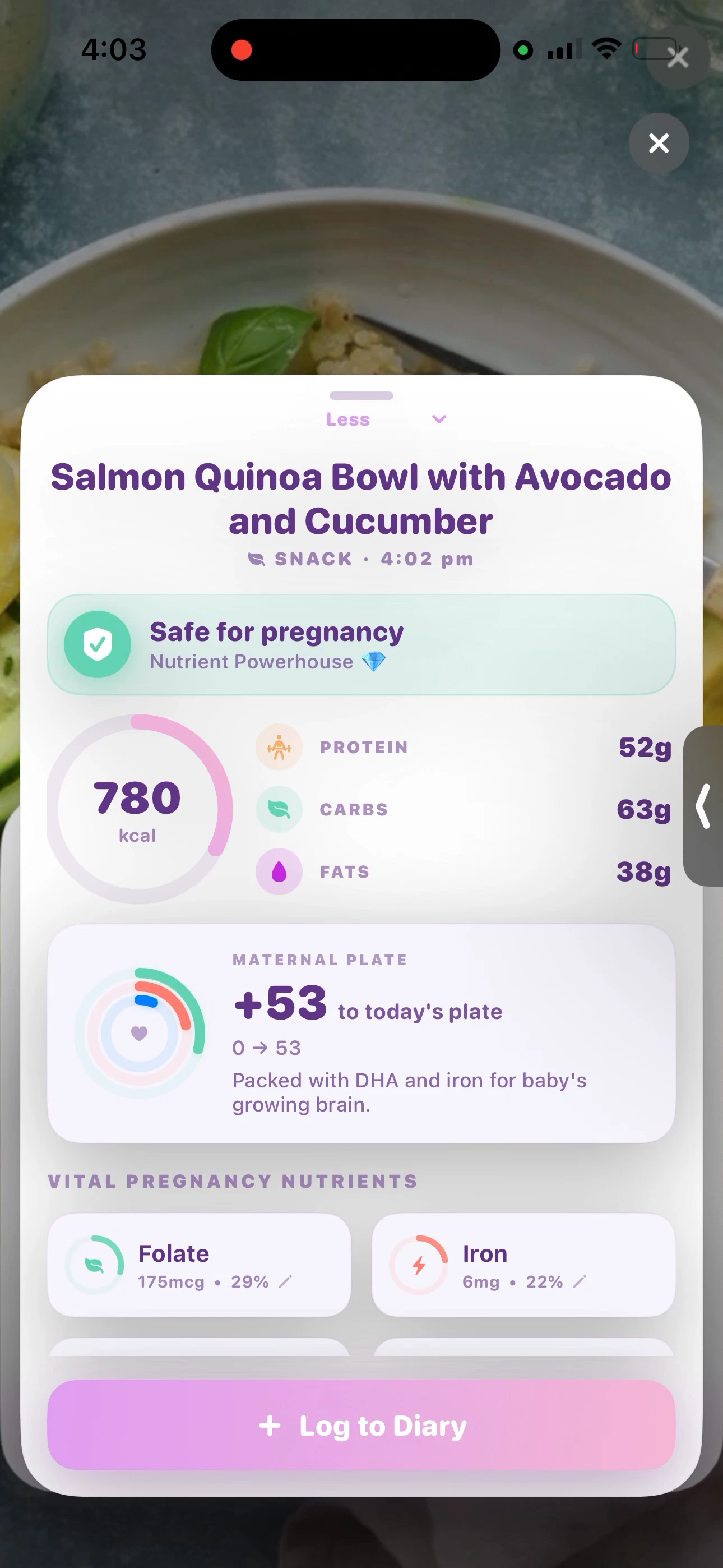
Track Your Omega-3 Intake on PregnancyPlateYour next meal, a little less guesswork.
Scan your plate for pregnancy food-safety guidance and a nutrition breakdown. Keep your meals and nutrient progress in one place.
 Scan with your iPhone
to get the app
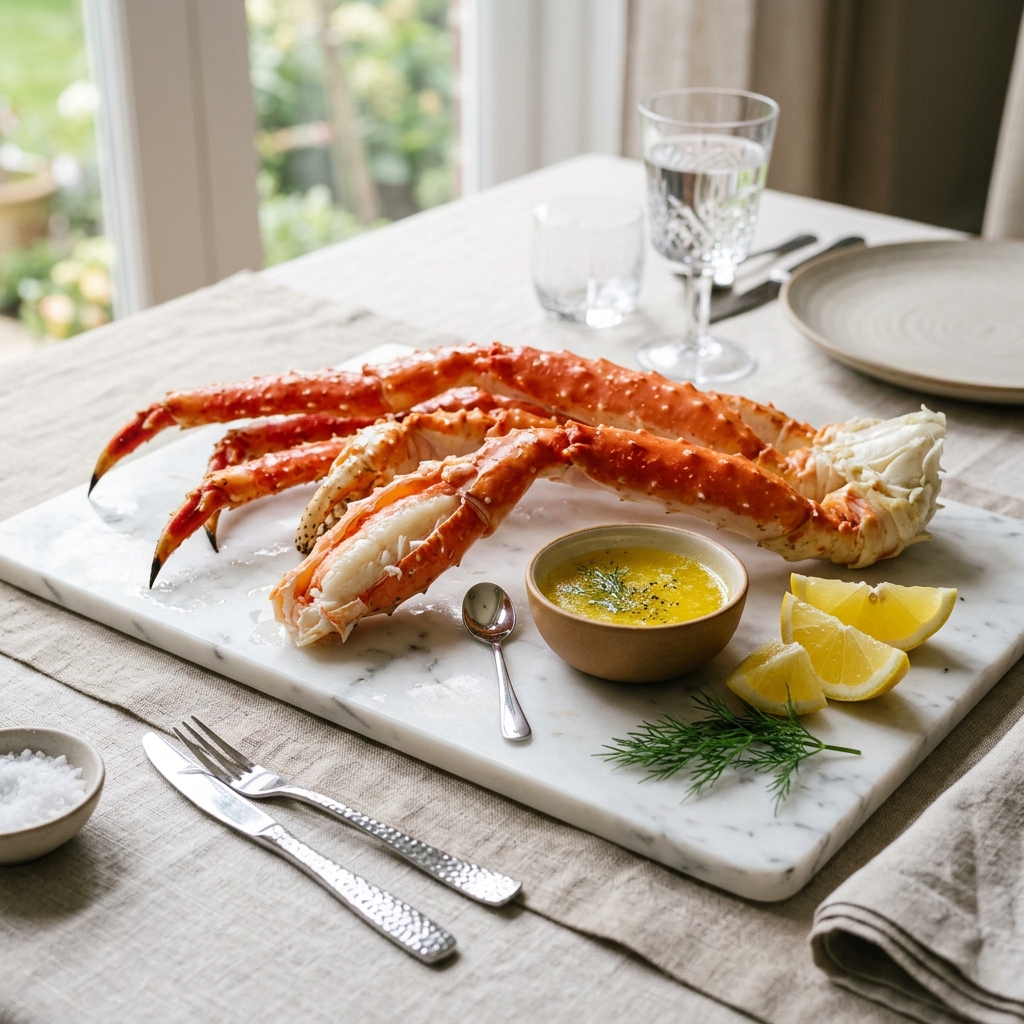
When you find yourself at a seafood boil or an upscale restaurant, the sight of a platter of King Crab or Snow Crab legs can trigger two conflicting feelings: an intense craving for that sweet, tender meat and a sudden, sharp spike in pregnancy anxiety. The historical advice around seafood has been so riddled with fear and "don'ts" that many women simply give up on the ocean entirely during their nine months. But is this conservative approach actually doing more harm than good?
In the world of 2026 prenatal nutrition, we now know that seafood - when selected correctly - is one of the single most important contributors to a baby's cognitive architecture. Crab, in particular, offers a unique profile of minerals and fats that are hard to replicate with land-based proteins. But how do you handle the mercury question? What about the safety of the dipping butter? And is there a difference between King Crab and "Dungeness" when it comes to your baby's safety?
This clinical safety audit breaks down every facet of consuming crab legs during pregnancy. We will dive into the heat-kill temperatures required to eliminate Listeria and Vibrio, rank different crab species by their mercury parts-per-million, and audit the safety of the entire "seafood boil" environment to ensure you can crack those legs with absolute peace of mind.
The Mercury Audit: Why Crab is a "Best Choice"
Mercury is the primary "boogeyman" of pregnancy seafood. Because it is a heavy metal that interferes with the developing fetal nervous system, many women mistakenly group all "expensive" seafood into the high-mercury category. However, mercury biomagnifies - meaning it accumulates in large, long-lived predatory fish like Shark and King Mackerel.
Crab, regardless of the species, sits low on the food chain. Whether it is Alaskan King Crab, Snow Crab, Blue Crab, or Dungeness, the mercury levels are consistently among the lowest in the ocean. According to the FDA’s long-term monitoring, crab typically contains less than 0.06 parts per million (ppm) of mercury. Focus on this: the "limit" for a high-mercury fish is roughly 1.0 ppm. Crab is nearly 20 times lower than the "danger zone."
FDA Classification: Best Choice
The FDA and EPA classify crab as a "Best Choice" seafood. This means you can safely consume 2 to 3 servings (8-12 ounces) of crab per week without any mercury risk to the baby.
Microbiological Safety: The Heat Kill Threshold
Mercury is a long-term risk; bacteria like Listeria and Vibrio are immediate risks. While crab is naturally low in mercury, it is a biological product that can harbor pathogens if not handled correctly. This is why the "Raw Bar" is strictly off-limits during pregnancy.
The 145°F Rule: To ensure total safety, crab meat must be cooked to an internal temperature of 145°F (63°C). The good news? It is almost impossible to eat "raw" crab legs. Crab legs are typically steamed or boiled immediately after being caught and then frozen. When you order them at a restaurant, they are reheated (steamed or boiled again). This double-heating process is a massive safety shield, virtually guaranteeing that any bacteria present has been destroyed before it reaches your plate.
The "Steaming Hot" Visual: When the crab legs are served, your indicator of safety is steam. The meat should be firm and opaque, and the shell should be hot to the touch. Avoid "chilled" crab legs or crab cocktails that have been sitting on ice for long periods in a buffet setting, as cross-contamination is a higher risk in those environments.
The Nutritional Payoff: Brain, Blood, and Bone
Why bother with crab legs at all? Because the nutritional ROI (Return on Investment) for your baby is massive. Here is what your baby is getting from every crack of that shell:
- DHA (Omega-3): Essential for the formation of the fetal retina and brain. 2026 research indicates that babies born to mothers with high seafood intake show better fine motor skills and higher IQ scores by age 5.
- Vitamin B12: Critical for neural tube development and the prevention of maternal anemia.
- Zinc: A foundational mineral for cell division and the healthy functioning of the immune system.
- Selenium: A powerful antioxidant that actually helps your body neutralize any trace amounts of mercury you might ingest from other sources.
The Butter Caveat: Calories and Saturated Fat
We cannot talk about crab legs without talking about the small bowl of melted butter that invariably accompanies them. From a bacterial perspective, melted butter is 100% safe. However, from a gestational health perspective, it requires moderation.
One small ramekin of drawn butter can contain 400-600 calories and 40 grams of saturated fat. While your baby needs healthy fats, excessive saturated fat combined with the high sodium of the crab can lead to significant pregnancy swelling (edema) and unhealthy weight gain. If you are managing Gestational Diabetes or Preeclampsia, consider swapping half the butter for a squeeze of fresh lemon and a dash of Old Bay seasoning. You'll get all the umami flavor with none of the metabolic stress.
Seafood Boils: The Environmental Audit
If you are consuming your crab legs as part of a "Low Country Boil" or a "Cajun Boil," there are a few extra safety boxes to check:
- The Spice Level: While spicy food is 100% safe for the baby, it is a notorious trigger for third-trimester heartburn. If you are already struggling with acid reflux, go easy on the Cajun seasoning.
- The Corn and Potatoes: In a boil, these are sponges for salt. If you have high blood pressure, focus on the crab meat and go light on the boiled sides.
- Cross-Contamination: Ensure the restaurant doesn't use the same "shaker" or bins for cooked seafood and raw seafood. In reputable establishments, this is standard protocol, but it never hurts to ask the server to confirm "pregnancy-safe handling."
King Crab vs. Snow Crab vs. Dungeness
Does the type of crab matter? In 2026, the clinical consensus is that all commercially available crab species are equally safe for pregnancy.
- King Crab: Thicker shells, larger chunks of meat. Very high in protein.
- Snow Crab: Easier to crack, slightly higher in sodium due to the thinner shell's ability to absorb salt from the boiling water.
- Dungeness: Often sold whole. Ensure the 'tomalley' (the yellowish "mustard" or liver/pancreas) is removed and NOT consumed. The tomalley can accumulate environmental toxins like PCBs and should be avoided during pregnancy.
The "Imitation" Question: Is Surimi Safer?
Many women ask if "Imitation Crab" (Surimi) is a safer alternative. As we audited in our Imitation Crab Guide, surimi is fully cooked and pasteurized, making it very safe. However, true crab legs are nutritionally superior, offering significantly more protein and trace minerals than the processed starch found in imitation crab. If you can have the real thing, it is the better choice for the baby.
Safe Storage and Leftovers
If you bring crab legs home from a restaurant, the 2-Hour Rule is non-negotiable. Shellfish spoils rapidly. If the crab has been sitting at room temperature for more than 2 hours, it must be discarded. If refrigerated immediately, it is safe to eat for 24 hours, but it MUST be reheated until steaming before consumption. Never eat cold leftover crab straight from the fridge during pregnancy.
Conclusion: Crack the Shell, Feed the Brain
The verdict for 2026 is absolute: Crab legs are a premier pregnancy food.
By choosing crab, you are opting for a seafood that is virtually free of mercury while being dense in the "Big Three" of prenatal brain health: DHA, B12, and Zinc. As long as you skip the raw preparations, verify that your meal is served steaming hot, and keep the dipping butter in check, you can enjoy this culinary luxury with the full knowledge that you are providing elite-tier fuel for your baby’s development.
Stop Stressing Over Your Seafood Order
The rules of seafood are complex, but you don't have to memorize them. Download the PregnancyPlate App today. Our built-in "Mercury Tracker" and "Safe Catch" database allow you to instantly verify the safety and serving limits of over 300 types of fish and shellfish. Know exactly what to eat, when to stop, and how to optimize your baby's IQ - right from your restaurant table.
Meet the Editorial Team
The researchers and experts behind PregnancyPlate.

Fiza Izra
Founder & Tech Researcher
A UK-based mother of 3 with a background in tech and data synthesis, Fiza brings real-world experience navigating hyperemesis gravidarum and postnatal depression. She engineers complex clinical guidelines (NHS, ACOG) into accessible tools, ensuring rigorous fact-checking with deep empathy.

Emma Davies
Senior Nutrition Editor
A mum and writer, Emma runs our food safety desk. She is the one who rings the restaurant to ask how long the lettuce sits out, checks every claim against CDC, FDA and NHS guidance, and rewrites the answer until it is usable at 9pm in a drive-thru queue.
Make sense of every plate.
Scan your plate for pregnancy food-safety guidance and a nutrition breakdown. Keep your meals and nutrient progress in one place.
Scan with your iPhoneto get the app