Dairy Queen, Blizzards, and McDonald's Cones: The Ultimate Soft-Serve Safety Guide
Craving a Blizzard or a McFlurry? We dive into the science of 'soft-mix' pasteurization and machine hygiene to help you enjoy your favorite frozen treats safely.
In this article
Editorial note: This article is researched from official public health and pregnancy food safety guidance, then edited by the PregnancyPlate team for clarity. It is not medical advice. If you are worried about symptoms or a specific exposure, contact your midwife, GP or healthcare provider.
The Craving No One Can Ignore
There is a specific kind of thirst that only a soft-serve cone can quench. It’s the velvety texture, the perfect swirl, and that nostalgic smell of a Dairy Queen or a McDonald’s drive-thru on a hot afternoon. When you are pregnant, that craving doesn't just "exist" - it consumes you. Many women find that ice cream is one of the few things they can stomach during the height of first-trimester nausea, while others crave the cold, creamy calories in the third trimester as their body works overtime.
But then the "pregnancy brain" kicks in. You remember hearing a snippet of news once about Listeria in a soft-serve machine. You wonder: "Is the mix pasteurized? Are those machines actually cleaned? Does a Blizzard count as 'raw' dairy?" Fear not. At PregnancyPlate, we’ve done the investigative work. We’ve looked into the supply chains of the biggest chains and the mechanics of the machines to give you the ultimate soft-serve safety guide. Spoiler alert: You can probably go to the drive-thru today.
The "Soft-Mix" Science: Is It Pasteurized?
The most important question for any pregnant woman when it refers to dairy is: "Is it pasteurized?" Pasteurization is the process of heating milk to a specific temperature to kill off dangerous bacteria like Listeria, Salmonella, and E. coli.
The good news is that at almost every major national chain, including Dairy Queen, McDonald’s, Wendy’s, and Burger King, the soft-serve "mix" (the liquid that goes into the machine) is 100% pasteurized. These companies use ultra-pasteurized liquid dairy mixes that are shelf-stable or refrigerated in sealed containers. In fact, many of these "ice creams" are technically "soft-serve" because they have a butterfat content lower than the 10% required to be legally called "ice cream" - but for safety purposes, they are thoroughly heat-treated before they ever reach the restaurant.
🍦 The "Ice Cream" Secret
Did you know that Dairy Queen soft serve is officially a "reduced-fat ice cream"? Because it only contains 5% butterfat, it doesn’t meet the FDA's "10% rule" for ice cream. However, this lower fat content doesn’t make it any less delicious (or safe!).
The Real Risk: It’s Not the Dairy, It’s the Machine
If the dairy mix is pasteurized and safe, why is there any warning at all? The risk with soft-serve during pregnancy isn't the milk - it’s the hygiene of the machine and the dispensing nozzle.
Listeria Monocytogenes is a hardy bacteria that loves cold, damp environments. If a soft-serve machine is not properly cleaned and sanitized daily, or if parts of the machine aren't disassembled and scrubbed, the bacteria can grow inside the "pipes" or on the nozzle where the treat is dispensed. When the soft-serve passes through, it picks up the bacteria on its way to your cone.
The McDonald’s "Heat Treatment" Cycle
A common urban legend is that "the McDonald's ice cream machine is always broken." The truth is often simpler: the machines are in a heat-treatment cycle. modern Taylor soft-serve machines (used by McDonald's and many others) have an automated cycle that heats the dairy mix inside the machine to a high temperature for several hours each night to kill any bacteria. This is why the machines are often "down" late at night or early in the morning - they are busy keeping you safe! If a machine fails its heat cycle, it locks the dispensing handle automatically, preventing any unsafe product from being served.
Dairy Queen Deep-Dive: Are Blizzards Safe?
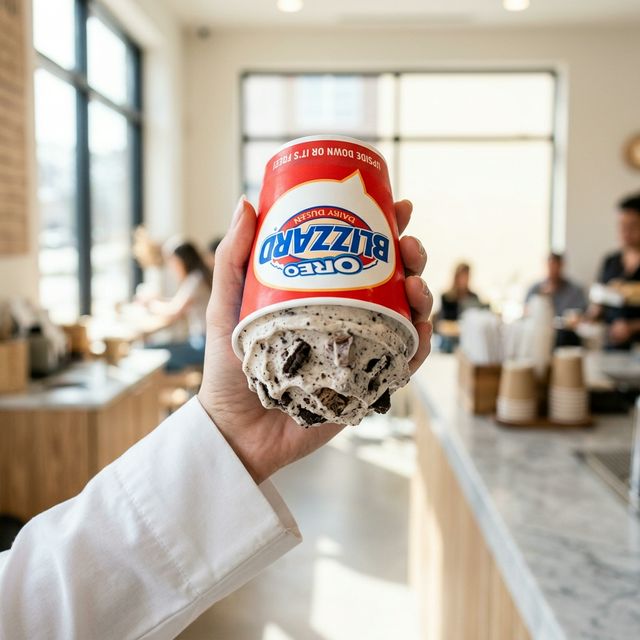
Dairy Queen is the undisputed king of soft-serve. Their signature Blizzard involves blending mix-ins (cookies, candy, fruit) into the soft serve using a high-speed spindle.
The Blizzard Blender Risk
The main concern with a Blizzard isn't the soft-serve itself, but the spindle used to blend it. If the employee doesn't wash or wipe down the metal blender between every single Blizzard, cross-contamination can occur. While this is primarily a concern for those with allergies (e.g., peanut debris getting into an Oreo Blizzard), it is also a general hygiene point.
What About the Toppings?
Standard toppings like Oreo bits, Reese’s cups, and Cookie Dough are safe because they are commercially processed and shelf-stable. However, we recommend being cautious with fresh fruit toppings if the store looks busy or untidy, as raw fruit can carry its own risks if not washed properly before being added to the bin.
✅ The DQ Safety Verdict
Safe. DQ uses pasteurized mix and has strict machine-cleaning protocols. Opt for standard cookies/candy mix-ins for the lowest risk.
Frozen Yogurt (Froyo): Probiotics vs. Pathogens
Frozen yogurt (Red Mango, Pinkberry, 16-Handle style) is often marketed as the "healthier" alternative to soft-serve. But is it safer for pregnancy?
Frozen yogurt is made using pasteurized milk and "live and active cultures" (the healthy bacteria like L. bulgaricus). These healthy bacteria are 100% safe and actually beneficial during pregnancy for gut health. However, the same machine risks apply. Self-serve froyo shops are slightly higher risk than a behind-the-counter shop because customers are constantly handling the levers and the toppings bar is open to the air (and coughing/sneezing) of the general public.
The Froyo Strategy: Choose a shop with behind-the-counter service or go to a self-serve shop right when they open to ensure the toppings haven't been sat out all day. Also, look for the "Live & Active Cultures" seal on the machine or the shop's website - this ensures you are getting the probiotic benefits that can help with the classic pregnancy struggle of a sluggish digestive system.
The Cone vs. Cup Debate: A Hygiene Perspective
When you reach the front of the line, you have a final decision: Cone or Cup? While the crunchy wafer cone is a classic part of the experience, from a strict pregnancy-safety standpoint, the cup is the winner.
Why? Think about the "touchpoints." An employee has to grab a cone from a stack, often touching the rim with their bare hands or a small tissue. Your soft-serve is then swirled on top, and you hold the cone where their hand just was. In a cup, the soft-serve is dispensed directly into a clean, disposable container. You handle the cup, and you use a clean, plastic spoon (which usually comes from a lidded dispenser or is handed to you by the employee in a sanitary way). By choosing the cup, you eliminate several potential points of cross-contamination from handling. If you simply must have the crunch, ask for a cone on the side so you can break it up into your cup!
Indulgence and Mental Health: Why You Shouldn't Feel Guilty
Pregnancy comes with a long list of "Don'ts." You can't drink wine, you have to limit your coffee, and you are constantly checking the temperature of your steak. This "constant vigilance" can lead to significant stress and food anxiety. It is important to remember that stress is also a health factor for your baby.
Being able to say "yes" to a simple, safe indulgence like a McDonald’s vanilla cone or a Dairy Queen Blizzard can provide a necessary mental break. It is a moment of normalcy in a nine-month marathon of restrictions. As long as you are choosing reputable, high-volume chains with clear safety protocols, the risk is statistically extremely low. In fact, you are far more likely to get sick from a pre-packaged grocery store salad than from a Blizzard at a well-maintained Dairy Queen. Give yourself permission to enjoy the treat - your mental well-being is a vital part of a healthy pregnancy.
The 3 Questions for Ultimate Peace of Mind
If you are at a local "Mom and Pop" shop or a fairground and aren't sure about the safety, do a quick "Eye Test" before you order:
- Is the nozzle clean? Look at the spout where the ice cream comes out. If there is dried, crusty ice cream around the nozzle, it’s a sign that the machine hasn't been cleaned recently. Skip it.
- Is the machine making a lot of noise? Machines that are struggling to stay cold or are leaking fluid are more likely to have internal "cold spots" where bacteria can hide.
- Is the wait staff practicing good habit? If the person making your cone is also handling cash and then touching the cone without washing their hands or using a tissue, the ice cream doesn't matter - you’re at risk for external bacteria.
DIY Safety: The "Homemade Soft-Serve" Hack
If your anxiety is just too high to enjoy a drive-thru treat, you can make 100% safe "frozen soft-serve" at home. Simply freeze ripe bananas (peeled and sliced), then blend them in a food processor with a splash of pasteurized milk and a teaspoon of vanilla extract. The texture is remarkably similar to soft-serve, and you have 100% control over the environment.
Knowledge Check: Quiz
🧠 Scenario Quiz
Q: You are at McDonald's and the soft-serve machine is working. You notice the employee is refilling the machine with a large bag of liquid mix. Should you be worried?
A: No! That bag is the commercial soft-serve mix which is ultra-pasteurized and sealed. Seeing a fresh refill actually means the product is moving quickly and hasn't been sitting in the machine for days.
Summary Checklist for Your Next Order
🍦 The "Safe Treat" Checklist
- Stick to high-volume chains (McDonald's, DQ, Wendy's) where machines are cleaned on a strict corporate schedule.
- Choose simple flavors (Vanilla/Chocolate) which move faster and are refreshed more often than "limited edition" flavors.
- Ensure mix-ins are shelf-stable (Cookies/Candy) rather than fresh fruit that may have been sat in an open bin.
- If in doubt, order it in a cup instead of a cone to reduce the surface area touched by the employee's hands.
The Final Verdict
Yes, you can absolutely enjoy soft-serve during pregnancy! The "Listeria in the machine" fear is a real consideration, but it's largely mitigated by the rigorous cleaning cycles and heat-treatment technology used by modern commercial chains. As long as the restaurant appears clean and the staff is following basic hygiene, that Blizzard or vanilla cone is a safe and well-deserved indulgence.
Related Reading
For more restaurant safety guides, check out: The Subway Deep-Dive, The Chipotle Deep-Dive, and our guide on Cheesecake Safety. If you are tracking your nutrients, remember to check our guide on Omega-3 Benefits.
Download the PregnancyPlate App to use our "Smart Search" for over 1,000 foods. Not sure if that specific McFlurry topping is safe? Just type it into the app and get an evidence-based answer in under 3 seconds!
Meet the Editorial Team
The researchers and experts behind PregnancyPlate.

Fiza Izra
Founder & Tech Researcher
A UK-based mother of 3 with a background in tech and data synthesis, Fiza brings real-world experience navigating hyperemesis gravidarum and postnatal depression. She engineers complex clinical guidelines (NHS, ACOG) into accessible tools, ensuring rigorous fact-checking with deep empathy.

Emma Davies
Senior Nutrition Editor
A mum and writer, Emma runs our food safety desk. She is the one who rings the restaurant to ask how long the lettuce sits out, checks every claim against CDC, FDA and NHS guidance, and rewrites the answer until it is usable at 9pm in a drive-thru queue.