Is Halloumi Safe During Pregnancy? (Yes, With One Caveat)
Halloumi is safe in pregnancy: semi-hard, pasteurised and usually cooked. The label check that settles it, and why salt matters more than listeria here.
In this article
Editorial note: This article is researched from official public health and pregnancy food safety guidance, then edited by the PregnancyPlate team for clarity. It is not medical advice. If you are worried about symptoms or a specific exposure, contact your midwife, GP or healthcare provider.
The Fast Answer: Yes, halloumi is safe in pregnancy, and it is one of the easiest cheeses to say yes to. It is semi-hard, almost always pasteurised, and nearly always eaten cooked, which is three separate reasons it clears the bar. The soft cheese warning that worries people does not apply to it. The only thing genuinely worth watching is the salt.
Check any cheese for pregnancy safety in the PregnancyPlate AppSafety is step one. Nutrition helps your baby thrive.
Knowing a meal is safe does not tell you whether you are getting enough iron, folate, calcium and choline. PregnancyPlate tracks all of it from a photo of your plate.
- See nutrient progress
- Scan meals instantly
- Nourish with confidence
 Scan to download
Open with iPhone camera
Scan to download
Open with iPhone camera
Cheese is where pregnancy food rules feel most confusing, because the categories people use in shops are not the categories the safety guidance uses. Halloumi is a good example: it looks soft-ish, it comes in brine, it squeaks, and none of that tells you anything useful about whether it is safe.
The good news is that halloumi is genuinely one of the most clear-cut yeses in the cheese aisle.
Why Halloumi Is Safe
Three separate things work in its favour, and any one of them would be reassuring on its own.
It is semi-hard, not soft. The pregnancy cheese warning is about soft cheeses with a high moisture content and low acidity, which is the environment listeria likes. Halloumi is firm, low moisture and heavily salted in brine, which is close to the opposite. It sits with the halloumi-and-feta family of firm brined cheeses rather than with brie and camembert.
It is almost always pasteurised. Virtually all halloumi sold in UK and US supermarkets is made from pasteurised milk. Pasteurisation kills listeria before the cheese is even made, which removes the risk at source.
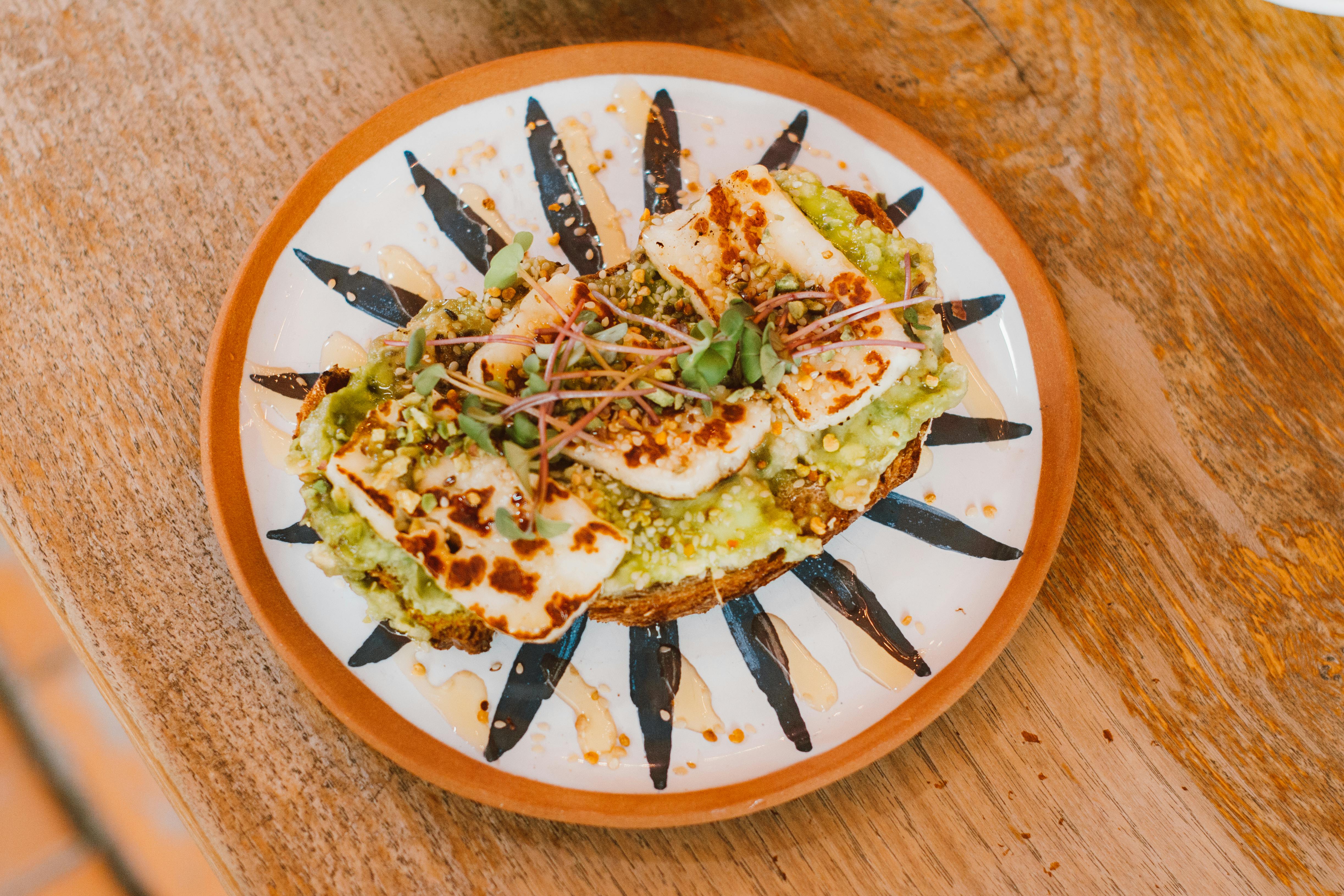
You almost always cook it. Halloumi has an unusually high melting point, which is why it is a grilling and frying cheese rather than a spreading one. Cooking it until it is hot and golden kills anything that might theoretically have been present. Most people eat it hot without thinking about it, which means most people are already eating it in its safest form.
The One Thing Worth Checking
Look for the word pasteurised on the label. This takes three seconds and settles it entirely.
The rare exceptions are traditional or artisan halloumi bought from a deli counter, a market, or brought back from Cyprus or Greece, where unpasteurised versions genuinely exist. If you cannot confirm it is pasteurised, cooking it thoroughly makes it safe anyway. Between those two checks there is essentially no scenario where halloumi is a problem.
The Salt, Which Is the Real Consideration
Here is the thing nobody mentions, and it matters more in practice than the listeria question ever will.
Halloumi is very salty. It is stored in brine and typically contains somewhere around 2.5 to 3g of salt per 100g, which makes a generous portion a meaningful chunk of the 6g daily limit that general guidance suggests. In late pregnancy, when swelling in the hands, feet and ankles is already common, a high salt meal can noticeably make it worse.
Practical fixes rather than avoidance: rinse the slices under cold water before cooking, which genuinely removes a surprising amount of surface salt, keep the portion moderate, and pair it with potassium-rich foods like tomatoes, spinach or avocado, which help counterbalance sodium.
None of this makes halloumi unhealthy. It is a solid source of protein and calcium, both of which pregnancy needs. Just treat it as a salty food rather than a neutral one.
Eating Out: The One Situation to Think About
Restaurant halloumi is nearly always grilled or fried to order, which is ideal. The situation worth a moment's thought is cold halloumi in a salad or mezze platter that has been sitting out, particularly at a buffet or a long lunch. The issue there is not the halloumi itself, it is time at room temperature and possible cross contamination from other items on the platter. Freshly grilled and hot is always the better order. Our pregnancy buffet guide covers that whole scenario.
How Halloumi Compares to Other Cheeses
Since the halloumi question usually arrives alongside a general cheese question, here is the quick map.
- Safe, no caveats: all hard cheeses (cheddar, parmesan, gouda, manchego), halloumi, paneer, and pasteurised cream cheese, mozzarella, ricotta and cottage cheese.
- Safe if pasteurised: feta, which is halloumi's closest relative in the brined family, plus mozzarella and ricotta. Check the label.
- Avoid cold, safe cooked: soft mould-ripened cheeses like brie and camembert, and soft blue cheeses. Cooked until steaming they are fine.
- Avoid: any unpasteurised soft cheese.
Our feta guide covers the closest comparison in detail, and the halloumi and feta safety guide puts them side by side.
Common Questions
Q: Can I eat halloumi raw, straight from the packet?
A: If it is pasteurised, yes, that is safe. Most people find it unpleasantly squeaky and salty uncooked, but there is no safety reason to avoid it.
Q: Is grilled halloumi in a wrap from a food van okay?
A: Yes, if it is served hot and freshly cooked. That is the ideal version.
Q: What about halloumi fries?
A: Safe, cooked, and delicious. Salt and fat rather than safety are the only considerations.
Q: Does halloumi count towards my calcium?
A: Yes, meaningfully. Roughly 70mg of calcium per 30g alongside a good amount of protein, which is useful given the 1,000mg daily target in pregnancy.
Q: I ate halloumi from a market stall and cannot confirm it was pasteurised.
A: If it was cooked, you are fine, cooking resolves it. If it was cold and unverified, the realistic risk is still very low. Watch for flu-like symptoms over the following weeks and mention it to your midwife if a fever appears.
The Verdict
- Halloumi: Safe. Semi-hard, pasteurised, and usually cooked. Three reasons it clears the bar.
- Check the label for "pasteurised", which takes three seconds and settles it.
- Unverified or artisan? Cook it and it is safe regardless.
- Watch the salt, not the listeria. Rinse before cooking, keep portions moderate.
- Grilled and hot beats cold on a platter when eating out.
Why the Soft Cheese Rule Confuses People
Worth explaining properly, because once the underlying logic is clear you can work out any cheese yourself rather than googling each one.
The pregnancy cheese warning is not really about softness in the everyday sense. It is about two things: whether the milk was pasteurised, and whether the cheese has a high moisture content with low acidity, which is the environment listeria can multiply in. Mould-ripened cheeses like brie and camembert also have a less acidic surface layer, which is why they get named specifically.
Halloumi fails to meet almost any of those criteria. It is brined rather than mould-ripened, low in moisture, high in salt, and made from pasteurised milk in virtually every commercial case. Squeakiness has nothing to do with it. This is also why feta, which people often lump in with the risky cheeses, is fine when pasteurised.
The Nutrition Side, Since You Are Eating It Anyway
Halloumi earns its place in a pregnancy diet beyond just being safe. A 60g portion, which is a couple of decent slices, gives you roughly 13g of protein and around 140mg of calcium, against a daily calcium target of about 1,000mg. That is a genuinely useful contribution from something you are eating for pleasure.
It is also a practical answer to a specific pregnancy problem: meat aversion. Plenty of women go off meat entirely in the first trimester and struggle to hit protein targets, and halloumi is one of the few high-protein foods that stays appealing when chicken has become unthinkable. Grilled halloumi with a grain salad is a complete meal that requires no meat and takes ten minutes.
The counterweights are the salt, covered above, and the saturated fat, which is reasonably high. Neither is a reason to avoid it, both are reasons to treat it as a component rather than the whole plate.
Cooking Halloumi Well (Since You Should Be Cooking It)
Given that cooking is what removes any lingering doubt, it is worth doing properly rather than ending up with the rubbery version that puts people off.
Slice it about a centimetre thick, any thinner and it dries out before it colours. Pat the slices dry with kitchen paper, because the brine moisture is what stops it browning. Use a hot dry pan or a very lightly oiled one, since halloumi releases its own fat, and give it two to three minutes a side until it is properly golden. Then eat it promptly, because halloumi is at its best hot and turns squeaky and tough as it cools.
An air fryer does the job well at around 200C for eight minutes, shaking halfway. And if the salt has been bothering you, that rinse before cooking genuinely helps without hurting the flavour.
What to Serve It With in Pregnancy
Since halloumi is salty and rich, the pairings that work best are the ones that bring water content, potassium and fibre, all of which happen to be useful in pregnancy anyway.
- Watermelon and mint. The classic pairing, and the potassium and water content directly offset the salt.
- Roasted vegetables and a grain. Couscous or bulgur with peppers and courgette makes it a complete meal with fibre attached.
- Tomato, avocado and lemon. Vitamin C, potassium and healthy fats, and the acidity cuts the richness.
- In a wrap with hummus and salad. A genuinely good packed lunch that needs no reheating, which our pregnancy lunch guide covers more of.
What to go lighter on alongside it: additional salty things. Halloumi with olives, bacon and salted feta is a lot of sodium in one sitting, particularly in the third trimester when swelling is already an issue.
Clinical Sources & Research
Meet the Editorial Team
The researchers and experts behind PregnancyPlate.

Fiza Izra
Founder & Tech Researcher
A UK-based mother of 3 with a background in tech and data synthesis, Fiza brings real-world experience navigating hyperemesis gravidarum and postnatal depression. She engineers complex clinical guidelines (NHS, ACOG) into accessible tools, ensuring rigorous fact-checking with deep empathy.

Emma Davies
Senior Nutrition Editor
A mum and writer, Emma runs our food safety desk. She is the one who rings the restaurant to ask how long the lettuce sits out, checks every claim against CDC, FDA and NHS guidance, and rewrites the answer until it is usable at 9pm in a drive-thru queue.