Pregnancy Breakfast Ideas: 20 That Survive Morning Sickness
Twenty pregnancy breakfast ideas grouped by how rough the morning is, from eat-before-you-sit-up crackers to proper protein breakfasts once appetite returns.
In this article
Editorial note: This article is researched from official public health and pregnancy food safety guidance, then edited by the PregnancyPlate team for clarity. It is not medical advice. If you are worried about symptoms or a specific exposure, contact your midwife, GP or healthcare provider.
The Fast Answer: Breakfast is the hardest meal in early pregnancy for a specific reason: you have just gone eight hours without eating, and low blood sugar makes nausea worse. So the rule is eat something small before you get out of bed, then eat again properly an hour later. Cold food smells less than hot, which matters more than it sounds. Twenty ideas below, grouped by how rough the morning actually is.
Track what actually stays down in the PregnancyPlate AppSafety is step one. Nutrition helps your baby thrive.
Knowing a meal is safe does not tell you whether you are getting enough iron, folate, calcium and choline. PregnancyPlate tracks all of it from a photo of your plate.
- See nutrient progress
- Scan meals instantly
- Nourish with confidence
 Scan to download
Open with iPhone camera
Scan to download
Open with iPhone camera
Breakfast takes the worst of pregnancy nausea, and the name morning sickness is only half the reason. The mechanism is that you wake after the longest fast of your day with blood sugar at its lowest point, and low blood sugar reliably intensifies nausea. Then you stand up, walk into a kitchen, and encounter the smell of coffee.
Which means the fix is mostly about sequence and temperature rather than recipes. Eat before the fast breaks you, and eat things that do not announce themselves from three rooms away.
The Two Rules That Change the Morning
Eat before you sit up. Keep something dry and plain on the bedside table and eat it while still lying down, then wait ten or fifteen minutes before moving. This is the single most repeated piece of advice from midwives and one of the few nausea strategies that reliably helps, because it interrupts the low blood sugar spiral before it starts.
Cold beats hot. Heat carries aroma, and aroma is the trigger. The same food that is unbearable warm is often perfectly manageable straight from the fridge. This one principle explains why overnight oats, yogurt and cold toast survive pregnancy while a cooked breakfast does not.
Eat Before You Sit Up
Nothing here needs preparation beyond putting it on the bedside table the night before.
1. Plain crackers or oatcakes. The classic, and it works. Dry, bland, no smell.
2. A handful of dry cereal. Choose a fortified one and you have taken on iron and folate before your feet touch the floor.
3. Ginger biscuits. Ginger has genuine evidence behind it for pregnancy nausea, and the biscuit format handles the blood sugar side at the same time.
4. A few salted nuts or a small pot of almonds. Protein and salt, which some women find helps more than carbohydrate alone.
5. Dried apricots or dates. Sweet, dry, and quietly delivering iron and fibre.
Cold, No Cooking, No Smell
For the mornings where you can get to the kitchen but cannot face turning anything on.
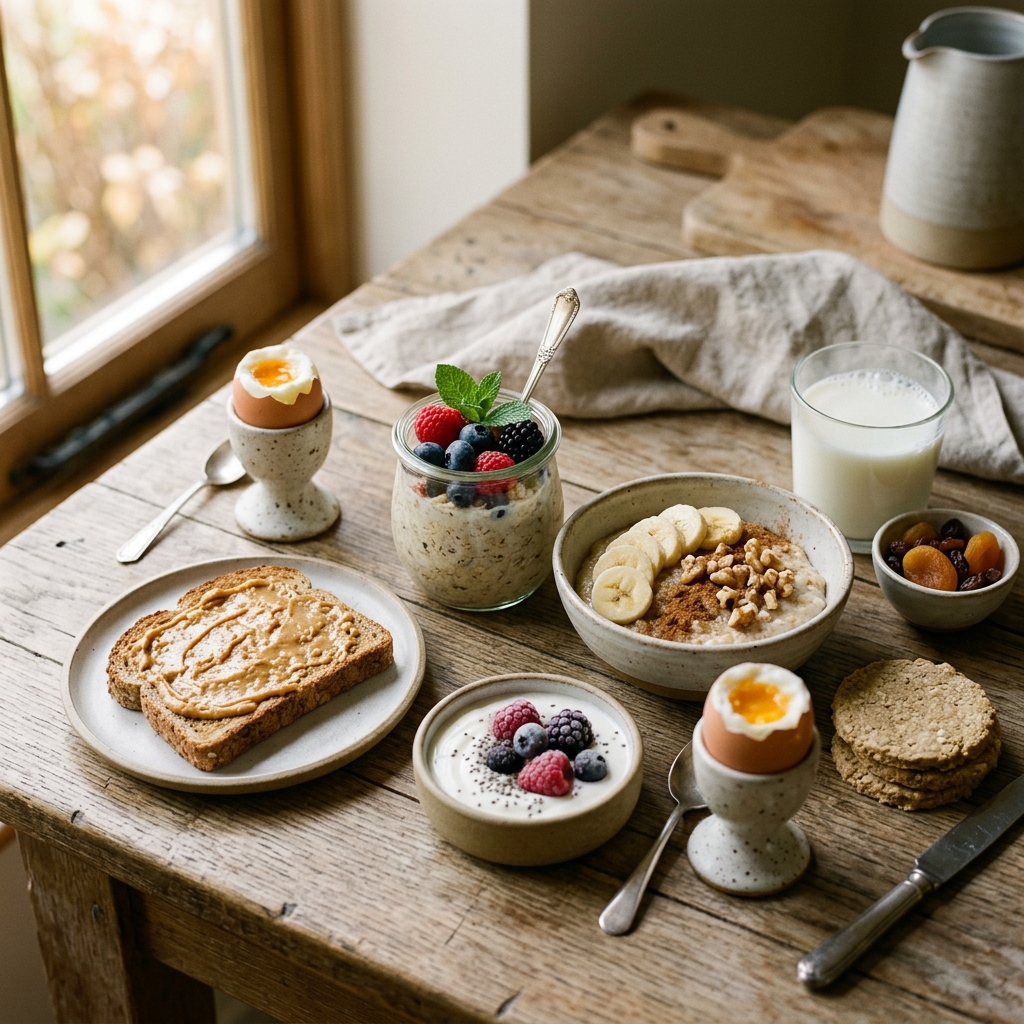
6. Overnight oats. The best breakfast in early pregnancy by some distance. Made the night before when you felt fine, eaten cold, and endlessly variable. Oats, milk or yogurt, a spoon of chia, fruit on top.
7. Greek yogurt with frozen berries. Protein and calcium, and the berries thaw into it while you brace yourself for the day.
8. Cold wholegrain toast with peanut butter. Toast it, let it go cold, then eat. Protein, slow carbohydrate, minimal aroma.
9. A cheese and cracker plate. Not conventional at 7am, but nothing says breakfast has to be breakfast food, and hard cheese is a solid calcium hit.
10. Cottage cheese with tinned peaches. High protein, cold, mild, and it goes down when almost nothing else will.
11. A smoothie sipped slowly. Blend the night before. Sipping over twenty minutes works far better than drinking it in one go, and keep it modest on fruit so it is not a sugar spike that drops you an hour later.
12. Cold cereal with milk. Obvious, but a fortified cereal is one of the easiest iron and folate wins available and requires nothing of you.
When You Can Face the Kitchen
Five to ten minutes of effort, for mornings that are merely difficult rather than impossible.
13. Porridge with banana and cinnamon. Gentle, warm without being aromatic, and steady blood sugar for hours. This one also becomes the reflux-safe standard later in pregnancy.
14. Scrambled or boiled eggs on toast. Choline, which most people undershoot badly and which matters for foetal brain development. British Lion stamped eggs can be eaten runny in the UK.
15. Beans on toast. Iron, fibre and protein in six minutes, and genuinely one of the better pregnancy breakfasts despite its reputation.
16. Avocado on toast with an egg. Folate, healthy fat and protein. Add lemon and salt, which also helps if your mouth tastes metallic.
17. Shakshuka, on a good weekend. Eggs poached in tomato sauce, so iron plus the vitamin C to absorb it, in one pan.
On the Way Out of the Door
18. Overnight oats in a jar. Same as above, transported. Eat it at your desk when the nausea has settled.
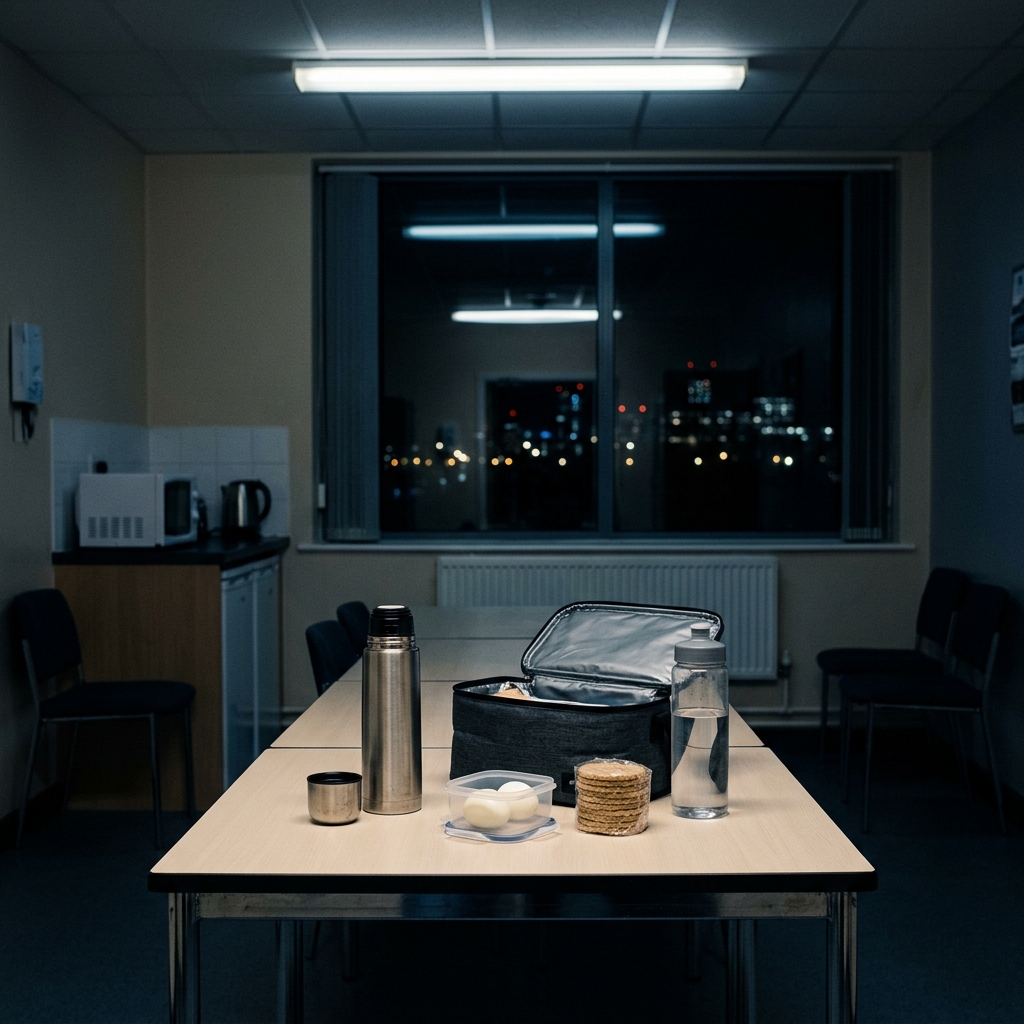
19. A hard boiled egg and a banana. Boil a batch on Sunday. Protein and potassium, no packaging, no smell to speak of.
20. Wholegrain toast and cheese, wrapped in foil. Deliberately eaten cold, which by now you will have noticed is the entire theme of this article.
Build Your Own: The Formula
Twenty ideas are useful until the morning you fancy none of them, which is why the underlying formula matters more than the list. Every breakfast above is some version of the same three parts.
A slow carbohydrate for blood sugar that holds rather than spikes: oats, wholegrain bread, fortified cereal. A protein to flatten the curve further and keep you full past 10am: egg, yogurt, cheese, nut butter, beans, milk. Something cold or mild so smell does not sabotage it before you start.
Carbohydrate alone is the common mistake, and it is an understandable one because dry toast and plain cereal are what you can face. The problem is that carbohydrate on its own spikes blood sugar and drops it again inside an hour, and that drop brings the nausea straight back, which sends you looking for more toast. Adding even a small protein breaks the cycle: peanut butter on the toast, milk on the cereal, a boiled egg alongside.
Once you can see the pattern, anything in the fridge becomes a candidate, and you stop needing a list at all.
When You Go Off Your Usual Breakfast
Aversions in pregnancy arrive without warning and frequently target the exact food you have eaten every morning for years. Coffee, eggs and porridge are the three that come up most, and losing all three at once is not unusual.
Two things worth knowing. First, do not try to push through it. Forcing a food you have gone off tends to entrench the aversion, and some women find it does not come back for the rest of the pregnancy. Second, aversions are usually specific rather than categorical: going off scrambled eggs does not always mean going off boiled ones, and going off hot porridge often leaves overnight oats perfectly acceptable. It is worth testing the same ingredient in a different temperature or texture before writing it off entirely.
Rotating breakfasts on purpose, rather than eating the same thing daily, also seems to reduce how often you burn out on one. Our pregnancy recipes collection has more to rotate through.
The Breakfast Problem Changes in the Third Trimester
Once nausea passes, breakfast stops being about smell and starts being about capacity and reflux. The baby is compressing your stomach, so a large breakfast simply does not fit, and acidic or fatty morning food sets up heartburn that lasts hours.
What shifts: porridge and yogurt stay excellent, citrus juice and fried breakfasts become a problem, and portion size drops while frequency rises. Our pregnancy heartburn guide ranks the triggers, and the third trimester meal plan builds the whole day around it.
Breakfast in One Box
- Eat something before you sit up. Non-negotiable in the first trimester.
- Cold food smells less, and smell is the trigger. Let toast go cold on purpose.
- Pair carbohydrate with protein so blood sugar holds rather than spikes and crashes.
- Prepare the night before when you feel better than you will at 7am.
- Fortified cereal is the lazy iron win. Check the box for the per-serving figure.
What About Coffee
The guidance is 200mg of caffeine a day, roughly two mugs of instant or one strong filter coffee, and that ceiling includes tea, cola and chocolate. Two practical notes for breakfast specifically. The smell of coffee is one of the most common early pregnancy aversions, so it may resolve itself without you deciding anything. And caffeine at breakfast interferes with iron absorption from that same meal, so if your breakfast is the fortified cereal doing your iron work, move the coffee an hour later.
If Nothing Stays Down
There is a line between rough mornings and a genuine medical problem, and it is worth knowing where it sits. If you cannot keep any food or fluid down for 24 hours, are losing weight, or are passing very little dark urine, contact your midwife or GP. Hyperemesis gravidarum is a real condition with real treatment, and it is not something to endure quietly on dry crackers.
Short of that, the reassuring part is that a fortnight of eating almost nothing at breakfast does not harm your baby. Early pregnancy needs no extra calories at all, your prenatal covers the folate, and appetite reliably returns. Our first trimester breakfast survival guide goes further into the worst of it. Getting anything down at all is the win, and cold toast counts.
Meet the Editorial Team
The researchers and experts behind PregnancyPlate.

Fiza Izra
Founder & Tech Researcher
A UK-based mother of 3 with a background in tech and data synthesis, Fiza brings real-world experience navigating hyperemesis gravidarum and postnatal depression. She engineers complex clinical guidelines (NHS, ACOG) into accessible tools, ensuring rigorous fact-checking with deep empathy.

Emma Davies
Senior Nutrition Editor
A mum and writer, Emma runs our food safety desk. She is the one who rings the restaurant to ask how long the lettuce sits out, checks every claim against CDC, FDA and NHS guidance, and rewrites the answer until it is usable at 9pm in a drive-thru queue.