Ultra-Processed Foods (UPF) in Pregnancy: How to Eat Clean on a Budget
What are ultra-processed foods, why do they matter during pregnancy, and how to reduce them without breaking the bank - practical swaps, budget meal ideas, and how to read labels like a pro.
In this article
Editorial note: This article is researched from official public health and pregnancy food safety guidance, then edited by the PregnancyPlate team for clarity. It is not medical advice. If you are worried about symptoms or a specific exposure, contact your midwife, GP or healthcare provider.
Ultra-processed foods are suddenly everywhere in the headlines. "UPFs cause cancer!" "UPFs are making us sick!" It's enough to make anyone anxious - and when you're pregnant and already navigating a minefield of food rules, the last thing you need is another reason to panic in the supermarket aisle.
But here's the thing: the conversation around ultra-processed foods is more nuanced than the scary headlines suggest. Not all processed food is the enemy. A tin of chickpeas is processed. Frozen vegetables are processed. Pasteurised milk is processed. And these are all great choices during pregnancy.
What we're really talking about are ultra-processed foods - products that have been industrially manufactured with ingredients you wouldn't find in a home kitchen. And the emerging research suggests that high consumption of these products may have implications for pregnancy outcomes.
This guide cuts through the noise. We'll explain what UPFs actually are, what the science says about them and pregnancy, and - most importantly - give you practical, budget-friendly ways to reduce them without making mealtimes stressful.
What Are Ultra-Processed Foods (UPFs)?
The term comes from the NOVA classification system, developed by researchers at the University of São Paulo. It categorises all food into four groups:
Your next meal, a little less guesswork.
Scan your plate for pregnancy food-safety guidance and a nutrition breakdown. Keep your meals and nutrient progress in one place.
 Scan with your iPhone
to get the app
Group 1: Unprocessed or Minimally Processed
Foods in their natural state or altered only by drying, crushing, roasting, boiling, or pasteurisation.
- Fresh fruit and vegetables
- Eggs, meat, fish
- Milk, plain yoghurt
- Rice, oats, dried beans
- Frozen vegetables and fruit
- Nuts and seeds
Group 2: Processed Culinary Ingredients
Substances extracted from Group 1 foods, used in cooking.
- Olive oil, butter, lard
- Sugar, salt, flour
- Honey, vinegar
Group 3: Processed Foods
Group 1 foods modified by Group 2 ingredients - typically with 2-3 ingredients.
- Tinned beans (in water or brine)
- Cheese
- Home-baked bread
- Tinned fish in oil
- Salted or roasted nuts
Group 4: Ultra-Processed Foods (UPFs)
Industrial formulations made mostly from substances derived from foods and additives. They typically contain 5+ ingredients, many of which you wouldn't use at home.
Look for these red-flag ingredients:
- High-fructose corn syrup
- Hydrogenated oils
- Artificial sweeteners (aspartame, sucralose)
- Emulsifiers (polysorbate 80, carrageenan)
- Flavour enhancers (monosodium glutamate)
- Colours and dyes
- Maltodextrin, dextrose, invert sugar
- Any ingredient you can't pronounce or wouldn't buy as a standalone item
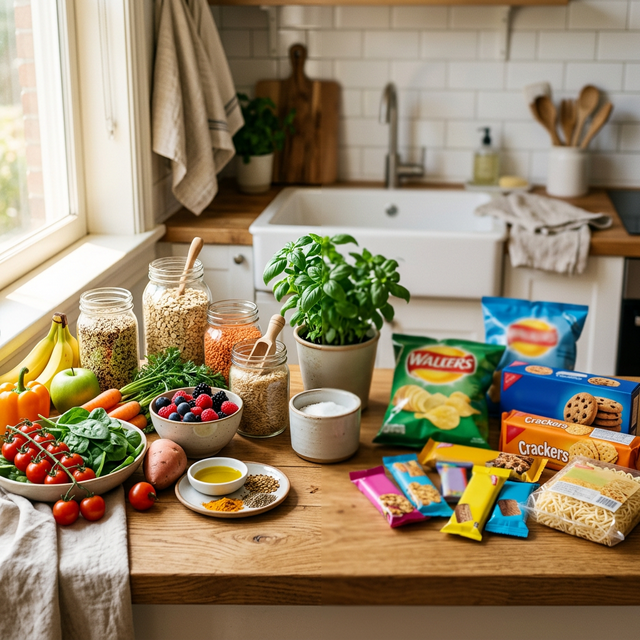
Common UPF examples:
- Supermarket sliced white bread (many varieties)
- Breakfast cereals (most sugary/flavoured types)
- Instant noodles
- Fizzy drinks and energy drinks
- Crisps and savoury snacks
- Shop-bought cakes, biscuits, and pastries
- Ready meals and frozen pizza
- Flavoured yoghurts with long ingredient lists
- Processed meats (hot dogs, chicken nuggets, some sausages)
- Protein bars and meal replacement shakes
Why UPFs Matter During Pregnancy
The research on UPFs and pregnancy is still emerging, but the findings so far are concerning enough to pay attention to:
What the Studies Show
- Gestational diabetes: A 2023 study in JAMA Network Open found that higher UPF intake was associated with increased risk of gestational diabetes
- Excessive weight gain: Multiple studies link high UPF consumption to greater gestational weight gain beyond recommended ranges
- Pre-eclampsia: Some research suggests a link between high UPF diets and increased pre-eclampsia risk
- Nutritional displacement: UPFs tend to be energy-dense but nutrient-poor - they fill you up without providing the vitamins, minerals, and protein your baby needs
- Gut microbiome: UPFs may negatively affect gut bacteria diversity, which is important for both maternal immune function and the baby's developing microbiome
The Bigger Picture
It's important to keep perspective. The research shows associations, not necessarily direct causation. Many UPF studies don't fully account for other lifestyle factors. And occasional UPF consumption is not going to harm you or your baby.
The goal isn't perfection. The goal is shifting the balance - eating more whole foods and fewer ultra-processed ones, most of the time.
Reality Check:
If the only thing you can eat during a first-trimester nausea storm is white toast and processed ginger biscuits, that's okay. Surviving early pregnancy sometimes means UPFs keep you fed. Don't add guilt to an already difficult experience. This guide is for when you have the energy and appetite to make swaps - not for making you feel bad about surviving.
How to Read Labels Like a Pro
You don't need a nutrition degree. Here's a simple system:
The "Flip and Check" Method
- Flip the packet over - ignore the front (it's marketing)
- Count the ingredients - fewer is generally better
- Scan for names you don't recognise - if you wouldn't buy it as a standalone ingredient, it's likely an additive
- Check the sugar content - look for hidden sugars (anything ending in '-ose': glucose, fructose, dextrose, maltose)
- Compare brands - the same product from different brands can vary hugely in processing level
Example - Sliced Bread:
- UPF version: Flour, water, yeast, sugar, palm oil, emulsifiers (E471, E472e), soya flour, preservative (calcium propionate), flour treatment agent (ascorbic acid)
- Better version: Wholemeal flour, water, yeast, salt, sunflower oil
The second bread has 5 ingredients you'd find in any kitchen. The first has emulsifiers, preservatives, and treatment agents designed for factory production.
Skip the label-reading stress.
Scan any food with the PregnancyPlate App for an instant breakdown of safety and nutrition.
Budget-Friendly Swaps: UPF → Real Food
The biggest myth about eating "clean" is that it's expensive. It can be, if you're buying organic açaí bowls and artisanal sourdough. But it doesn't have to be. Here are practical, budget-friendly swaps:
Breakfast Swaps
- Instead of: Sugary cereal (Frosties, Coco Pops) → Try: Porridge oats with banana and honey (oats cost ~£0.10/serving)
- Instead of: Flavoured instant oatmeal sachets → Try: Plain oats + your own toppings (frozen berries, a drizzle of honey)
- Instead of: White toast with Nutella → Try: Wholegrain toast with peanut butter (100% peanut varieties)
- Instead of: Fruit-flavoured yoghurt → Try: Plain Greek yoghurt + real fruit + a drizzle of honey
Lunch Swaps
- Instead of: Supermarket meal deal sandwich → Try: Homemade sandwich on real bread with simple fillings
- Instead of: Instant noodles → Try: Rice noodles + frozen veg + soy sauce + an egg (5-minute meal)
- Instead of: Crisps → Try: Salted nuts, rice cakes, or vegetable sticks with hummus
- Instead of: Diet fizzy drink → Try: Sparkling water with a squeeze of lemon or lime
Dinner Swaps
- Instead of: Ready meal lasagne → Try: Batch-cooked lentil bolognese (freezes brilliantly)
- Instead of: Frozen pizza → Try: Pitta bread pizza (pitta + passata + cheese + whatever toppings - ready in 10 mins)
- Instead of: Chicken nuggets → Try: Baked chicken thighs (cheaper cut, season simply - 30 mins, minimal effort)
- Instead of: Jar sauce for pasta → Try: Tinned tomatoes + garlic + olive oil + dried herbs (costs about £0.50)
Snack Swaps
- Instead of: Biscuits → Try: Oatcakes with cheese or peanut butter
- Instead of: Protein bar → Try: Handful of nuts + a piece of fruit
- Instead of: Shop-bought cake → Try: Homemade banana bread (uses overripe bananas - zero waste!)
- Instead of: Sweets → Try: Medjool dates or dried apricots
The Budget Kitchen Essentials
Stock your kitchen with these affordable staples and you'll always be able to make a quick, nutritious meal:
Pantry (Long-Lasting, Cheap)
- Porridge oats (50p–£1)
- Tinned tomatoes (30p each)
- Tinned beans and lentils (40-50p each)
- Tinned chickpeas (40p)
- Rice and pasta (40-60p per bag)
- Peanut butter (100% peanuts - £2)
- Dried herbs and spices
- Honey (£2–3)
- Olive oil or rapeseed oil
Fridge
- Eggs (versatile, cheap, nutritious)
- Plain Greek yoghurt
- Cheese (cheddar is affordable and long-lasting)
- Milk
- Seasonal vegetables (buy what's cheap this week)
Freezer
- Frozen vegetables (peas, spinach, stir-fry mix - often cheaper and just as nutritious as fresh)
- Frozen fruit (for smoothies and porridge)
- Frozen fish portions (often cheaper than fresh, and flash-frozen at peak freshness)
- Batch-cooked meals (soups, bolognese, curries)
5 Quick Meals Under £2 Per Portion
Proof that eating well doesn't have to cost more:
Egg Fried Rice (15 mins)
Leftover rice + 2 eggs + frozen peas + soy sauce. Scramble eggs, add rice and peas, splash of soy sauce. Done. Costs ~£0.80.
Lentil Soup (30 mins, makes 4 portions)
1 tin lentils + 1 tin tomatoes + 1 onion + garlic + cumin + stock cube. Blend or leave chunky. Freezes perfectly. ~£0.60/portion.
Bean and Cheese Quesadilla (10 mins)
Tortilla wrap + tinned kidney beans (mashed) + grated cheese. Fold and pan-fry until crispy. Serve with salsa. ~£1.00.
Pasta with Homemade Tomato Sauce (20 mins)
Pasta + tin of tomatoes + garlic + olive oil + dried basil + grated cheese on top. Add frozen spinach for iron. ~£0.70/portion.
Pitta Pizza (15 mins)
Pitta bread + passata + cheese + whatever vegetables you have. Bake at 200°C for 10 mins. ~£0.90.
The 80/20 Approach
Aim for 80% whole or minimally processed foods, 20% everything else. This means:
- Most of your meals are built around fresh or frozen vegetables, whole grains, eggs, dairy, beans, and meat/fish
- You don't stress about the occasional biscuit, ready meal, or takeaway
- You enjoy food without guilt, because you can see what you are actually getting
- You focus on adding good food IN rather than cutting bad food OUT
Pregnancy is already demanding. Food should nourish you and bring you joy. If a cheese toastie made with supermarket bread and a bag of crisps is what gets you through a rough Tuesday - that's absolutely fine.
The Bottom Line
Ultra-processed foods are worth being aware of, but they're not worth losing sleep over. The research is still developing, and the most important thing is the overall pattern of your diet, not individual foods.
Key Takeaways:
- 🛒 Not all processing is bad - tinned beans, frozen veg, and pasteurised milk are all "processed" and excellent choices
- 📋 Flip the packet: Short ingredient lists with recognisable words = better choices
- 💰 Eating well is affordable: Oats, eggs, tinned beans, and frozen veg are some of the cheapest and most nutritious foods available
- 🔄 Make simple swaps: Focus on one or two changes at a time
- 😌 80/20 is the goal: Not perfection. Not stress. Just a gentle shift toward more whole foods
Related Reading
- Healthy Pregnancy Meal Plan (First Trimester)
- Pregnancy-Safe Snacks for Any Time of Day
- Best Foods for the Second Trimester
- How to Manage Gestational Diabetes with Diet
Download PregnancyPlate to scan any food product, track your nutrition, and get personalised guidance throughout your pregnancy.
Meet the Editorial Team
The researchers and experts behind PregnancyPlate.

Fiza Izra
Founder & Tech Researcher
A UK-based mother of 3 with a background in tech and data synthesis, Fiza brings real-world experience navigating hyperemesis gravidarum and postnatal depression. She engineers complex clinical guidelines (NHS, ACOG) into accessible tools, ensuring rigorous fact-checking with deep empathy.

Emma Davies
Senior Nutrition Editor
A mum and writer, Emma runs our food safety desk. She is the one who rings the restaurant to ask how long the lettuce sits out, checks every claim against CDC, FDA and NHS guidance, and rewrites the answer until it is usable at 9pm in a drive-thru queue.
Make sense of every plate.
Scan your plate for pregnancy food-safety guidance and a nutrition breakdown. Keep your meals and nutrient progress in one place.
Scan with your iPhoneto get the app