Where Does Fast Food Lettuce Actually Come From? (Supplier Audit: Subway, Jersey Mike's, Jimmy John's, Chipotle & McDonald's)
Where does fast food lettuce come from? An honest supplier audit of the big chains, what is public, what is not, and the format question that decides risk.
In this article
Editorial note: This article is researched from official public health and pregnancy food safety guidance, then edited by the PregnancyPlate team for clarity. It is not medical advice. If you are worried about symptoms or a specific exposure, contact your midwife, GP or healthcare provider.
The Fast Answer: Almost no chain publishes its produce supplier list, so anyone giving you a confident answer for every restaurant is guessing. What you can actually know is more useful anyway: a handful of enormous processors supply most of American fast food, and the format your lettuce arrives in, pre-shredded in a bag versus sliced in store, tells you far more about risk than the grower's name ever would. Here is what is genuinely known, chain by chain, and the one question that works at any counter.
Check any meal for safety and nutrition in the PregnancyPlate AppSafety is step one. Nutrition helps your baby thrive.
Knowing a meal is safe does not tell you whether you are getting enough iron, folate, calcium and choline. PregnancyPlate tracks all of it from a photo of your plate.
- See nutrient progress
- Scan meals instantly
- Nourish with confidence
 Scan to download
Open with iPhone camera
Scan to download
Open with iPhone camera
Last updated: August 5, 2026. Supplier relationships change by season and by region. Where something is not publicly confirmed, this page says so rather than filling the gap with a guess.
Thousands of people a week are now searching things like "where does Jersey Mike's get their lettuce" and "does Jimmy John's use Taylor Farms." That is a completely new kind of question for most people to be asking, and it exists because one supplier's name ended up in a national recall.
So let us do this properly. Here is what is actually established, what is not, and why the answer you really need is a different one from the question you typed.
The Thing Nobody Tells You: Almost Nobody Publishes This
Start with the honest foundation. Restaurant chains treat produce sourcing as commercially sensitive, supply shifts with the growing season, and a chain with thousands of locations is served by multiple distribution centres drawing from different growers at the same time. Two branches of the same chain in different states can be serving lettuce from different farms on the same day.
This is why you will find articles confidently listing suppliers for every chain, and why you should be sceptical of them. What genuinely surfaces into the public record is a narrower set of things: recall notices, outbreak tracebacks, regulatory filings, lawsuits, and occasional company statements during a crisis. That is real information. Everything beyond it is inference.
The Handful of Companies Behind Most of It
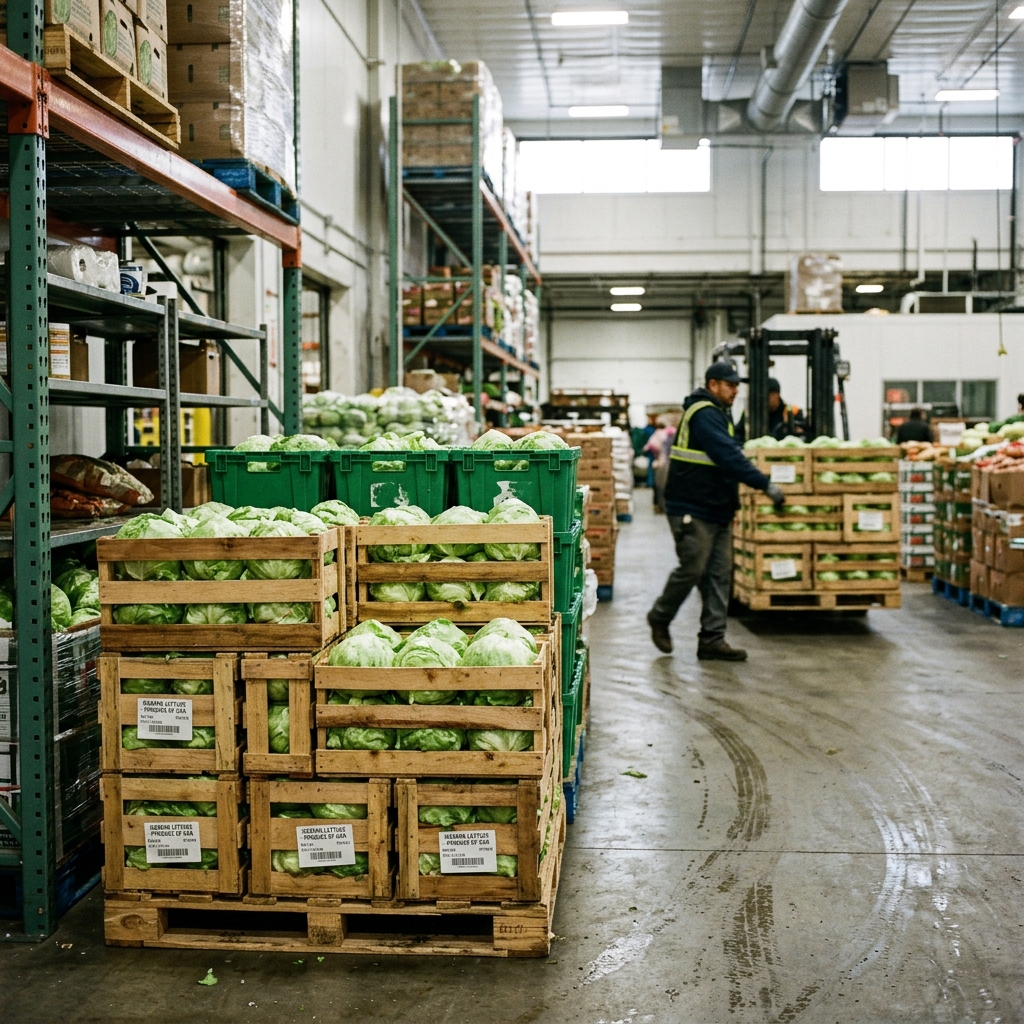
Here is the structural fact that makes outbreaks behave the way they do. American fresh-cut produce is dominated by a small number of very large processors, of which Taylor Farms is among the biggest. These companies buy from many farms, wash and cut at scale in central facilities, bag the result, and ship it to distributors who serve multiple restaurant brands.
That consolidation is why a problem at one farm can reach many states and several brands within days. It is also why "which chain is safe" is often the wrong frame. In the 2026 outbreak the implicated product was shredded iceberg from Taylor Farms de Mexico, and the recall covered both foodservice and retail, which is how the same event put Taco Bell in the headlines and pulled Marketside bagged salads off Walmart shelves in 15 states simultaneously. One supplier, two very different looking stories.
Taylor Farms has also been connected to earlier events, including the 2024 E. coli outbreak traced to slivered onions served on McDonald's Quarter Pounders, which sickened 104 people across 14 states. Naming that is not an accusation about today's lettuce, it is context for why a supplier's name carries weight when it reappears.
Chain by Chain: What Is Actually Known
| Chain | Lettuce format | What is publicly known |
|---|---|---|
| Taco Bell | Pre-shredded iceberg | Confirmed in the 2026 outbreak traceback as receiving Taylor Farms de Mexico shredded iceberg at affected locations. The only chain officially named. |
| Subway | Prepped in store from delivered produce | No public supplier list. Not named in the 2026 investigation. Sources regionally through distribution partners. |
| Jersey Mike's | Sliced in store | No public supplier list. Not named in the 2026 investigation. In-store slicing sits outside the processed shredded pipeline. |
| Jimmy John's | Shredded, sliced in store per company messaging | No public supplier list. Not named in the 2026 investigation. The chain emphasises in-store produce prep. |
| Chipotle | Romaine and supergreens, chopped in store | No public supplier list. Not named. Serves romaine rather than the recalled iceberg, and applies supplier microbial testing post-2015. |
| McDonald's | Shredded and leaf, by item | No public supplier list. Not named in 2026. Historically connected to Taylor Farms via the 2024 slivered onion E. coli outbreak. |
Notice what that table does not contain: a farm name for any chain except the one in an active recall. That is not me being cagey, it is the actual state of public information, and anyone presenting more certainty than this is inventing it.
The Question That Actually Matters
Since the grower is usually unknowable, here is the substitute that genuinely predicts risk: is the lettuce shredded at a central processing facility, or cut in the restaurant?
Processed shredded lettuce goes through more handling, more equipment, more mixing of product from multiple farms, and more time in the chain before it reaches you. Every one of those steps is an opportunity for contamination to enter and then be distributed widely. That is precisely the profile of the product in this recall, and of most large produce outbreaks generally.
Lettuce cut from whole heads in the restaurant that morning has a shorter, simpler journey. It is not magically safe, in-store handling has its own failure points, but it sits outside the specific pipeline that turns one farm's bad week into a nine state outbreak.
So the question that works at any counter, and takes about eight seconds, is: "Do you shred your lettuce here, or does it come in pre-shredded?" Staff answer this all the time. It tells you more than a supplier name would.
Pregnant? The Priorities Are Different
If you are pregnant, supplier questions are honestly not where your attention belongs at a sandwich counter. The everyday risk that actually matters is listeria in cold deli meat, which applies every single month regardless of outbreaks, and the fix is having the meat heated until steaming. Cyclospora is unpleasant but is not a listeria-style threat to the baby. Our pregnancy sandwich guide covers the real priority list properly.
How to Find Out for Yourself
If you want to check a specific chain rather than trust any article, including this one, there are three genuinely reliable routes.
- The FDA outbreak investigations page. Live tracebacks, with named products and firms when they are confirmed. This is the primary source everyone else is summarising.
- The FDA recall database. Searchable, and recall notices name the supplier and the distribution list, which is how supplier relationships usually become public.
- Ask the restaurant directly. Corporate customer service will often confirm produce prep practices even when they will not name growers, and store staff can tell you the format immediately.
What is not reliable: social media claims about supplier relationships, which spread fastest exactly when verification is hardest.
Quick Answers to the Supplier Questions People Ask Most
Q: Does Jimmy John's use Taylor Farms?
A: There is no public confirmation either way, and Jimmy John's is not named in the 2026 investigation. Given how large Taylor Farms is, plenty of chains buy from them at some point without that being newsworthy. The absence of Jimmy John's from the traceback is the meaningful fact.
Q: Where does Jersey Mike's get its lettuce?
A: Not publicly disclosed, and it will vary by region. What is known is that they slice in store rather than serving processed shreds, which is the risk-relevant detail.
Q: What kind of lettuce does each chain use?
A: Mostly iceberg at sub shops and burger chains, romaine and mixed greens at Chipotle-style places. The recall covered iceberg specifically, and Taylor Farms stated romaine and butter lettuce were not affected.
Q: Is it safer to buy lettuce at the supermarket instead?
A: Not automatically. The 2026 recall included retail bagged salad sold at Walmart, so your own fridge is part of the same supply chain. Whole heads that you wash and cut yourself sit outside the processed pipeline, same logic as in-store slicing.
The Bottom Line
- Supplier lists are mostly not public. Treat confident chain-by-chain grower claims with suspicion.
- A few large processors supply most of the market, which is why one farm's problem becomes a multi-state, multi-brand event.
- Format beats supplier as a risk signal: pre-shredded from a central facility carries the profile that outbreaks follow.
- Only Taco Bell is named in the 2026 traceback. Everything else is association.
- The FDA pages are the ground truth, and our chain by chain status hub tracks it in plain English.
Clinical Sources & Research
- Food and Drug Administration (FDA), Investigation of 9-State Outbreak of Cyclospora Illnesses: Iceberg Lettuce (July 2026).
- Centers for Disease Control and Prevention (CDC), Cyclospora Outbreak Investigation Update, July 2026.
- Food and Drug Administration (FDA), Recalls, Market Withdrawals and Safety Alerts Database.
Meet the Editorial Team
The researchers and experts behind PregnancyPlate.

Fiza Izra
Founder & Tech Researcher
A UK-based mother of 3 with a background in tech and data synthesis, Fiza brings real-world experience navigating hyperemesis gravidarum and postnatal depression. She engineers complex clinical guidelines (NHS, ACOG) into accessible tools, ensuring rigorous fact-checking with deep empathy.

Emma Davies
Senior Nutrition Editor
A mum and writer, Emma runs our food safety desk. She is the one who rings the restaurant to ask how long the lettuce sits out, checks every claim against CDC, FDA and NHS guidance, and rewrites the answer until it is usable at 9pm in a drive-thru queue.