Can Pregnant Women Eat Ice Cream? (The Complete Guide: Store-Bought, Soft Serve, Gelato & McFlurries)
Can pregnant women eat ice cream? Almost always yes. The complete guide by type: supermarket tubs, soft serve, gelato, homemade and the drive-thru cones.
In this article

Editorial note: This article is researched from official public health and pregnancy food safety guidance, then edited by the PregnancyPlate team for clarity. It is not medical advice. If you are worried about symptoms or a specific exposure, contact your midwife, GP or healthcare provider.
The Fast Answer: Yes, pregnant women can eat ice cream, and for the version most of you are asking about, the sealed tub from the supermarket, the answer is a completely unqualified yes. The questions worth actually thinking about are soft serve machines, gelato counters, and homemade custard bases. This is the full guide, type by type, so you can stop googling mid-craving.
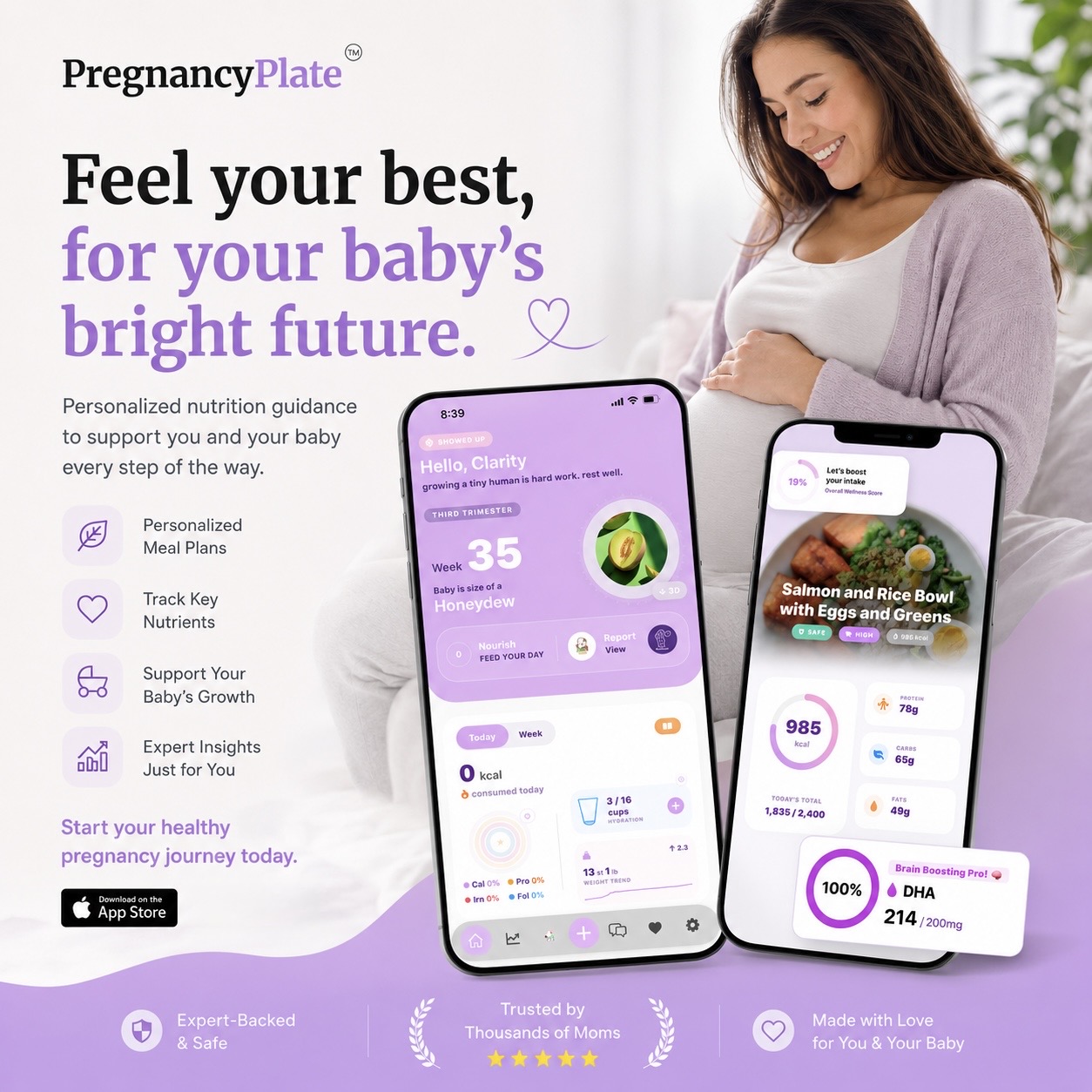
Check any craving for safety and nutrition in the PregnancyPlate AppSafety is step one. Nutrition helps your baby thrive.
Knowing a meal is safe does not tell you whether you are getting enough iron, folate, calcium and choline. PregnancyPlate tracks all of it from a photo of your plate.
- See nutrient progress
- Scan meals instantly
- Nourish with confidence
 Scan to download
Open with iPhone camera
Scan to download
Open with iPhone camera
Somewhere around week nine, ice cream stops being a dessert and becomes a support system. And then someone at a barbecue says "should you be eating that?" and now you are here, spoon in hand, looking for a verdict.
Here it is, and I will give you the good news up front: ice cream is one of the most pregnancy-friendly treats there is. Nearly every commercial version is made from pasteurized milk and pasteurized egg, which removes the classic risks before the tub ever reaches you. The exceptions are specific, avoidable, and honestly a pretty short list. Let's go through it by type.
Supermarket Tubs and Bars: Eat Freely
Ben and Jerry's, Haagen-Dazs, the supermarket own brand, the fancy little tubs, the choc ices, the Magnums. All made from pasteurized dairy in commercial facilities with tight controls, all frozen solid, which is an environment listeria genuinely hates growing in.
This includes the ones with eggy-sounding flavors. Commercial custard and vanilla bases use pasteurized egg. It includes cookie dough chunks too, because commercial cookie dough inclusions are made with heat-treated flour and pasteurized egg, a totally different thing from the raw bowl-licking dough we covered in our cookie dough guide.
Verdict: Safe. The freezer aisle is not where pregnancy risk lives.
Soft Serve: It Is About the Machine, Not the Milk
Here is the one people actually worry about, thanks to a listeria scare that has been circling group chats for a decade. The truth is more boring and more useful: soft serve mix is pasteurized before it goes anywhere near the machine. The dairy itself is fine.
The theoretical risk is the machine, which is basically a chilled tube full of dairy that needs proper daily cleaning. A well-run, busy place cleans and cycles its machine constantly. A dead quiet kiosk with one sad machine and no turnover, less certain.
So the practical rule is turnover: busy venue, confident yes. We went deep on this in our soft serve guide, and audited the big chains specifically, McDonald's machines here and Dairy Queen Blizzards here, if your craving has a logo on it.
Verdict: Safe at busy places. Skip the lonely machine at the quiet garden centre cafe.
Gelato and Artisanal Counters: Ask One Question
Proper gelato shops are usually making their base from pasteurized milk, and most modern artisan makers pasteurize their mix even when they make everything else in-house. But "artisan" sometimes means raw milk or homemade raw-egg custard, and that is the actual risk profile you are trying to avoid.
So ask. "Is your base pasteurized?" is a normal question that good shops answer instantly and proudly. If they don't know what you mean, that itself is your answer. Same logic for the scoop counter generally: a busy shop turning over tubs fast beats a sleepy one where the same tub has been open for weeks.
Verdict: Safe with a pasteurized base. One question settles it.
Homemade Ice Cream: The One Genuine Caution
Here is the version that deserves the care everyone wastes on supermarket tubs. Traditional homemade ice cream is a custard of egg yolks and cream, and if the custard is not cooked properly, that is raw egg, which is a salmonella question.
If you are making it: cook the custard to 71C (160F), until it coats the back of a spoon, and it is completely safe. Or use an egg-free, condensed-milk or no-churn recipe and skip the question entirely. If someone else made it, granny's famous recipe at the family barbecue, it is fair to ask how the base was made. Granny will cope.
Verdict: Caution. Cooked custard or egg-free recipes, yes. Raw-egg bases, not this year.
Milkshakes, McFlurries and the Drive-Thru
Fast food shakes and McFlurry-style desserts are the soft serve story again: pasteurized mix, machine hygiene, turnover. The big chains have the highest turnover machines in the business, which works in your favor. If you want the frozen yogurt comparison, our froyo vs ice cream guide covers that whole aisle.
Verdict: Safe. The drive-thru dessert is not the risky part of the trip.
The Sugar Conversation, Had Honestly
The bigger pregnancy question with ice cream was never bacteria. It is that a craving-sized serving can carry 30 to 60 grams of sugar, pregnancy naturally makes you more insulin resistant, and gestational diabetes affects up to one in ten pregnancies.
I am not going to tell you to swap your cravings for frozen banana "nice cream," because you would rightly close the tab. The honest version: a sensible serving of real ice cream, most days if you like, is a normal part of a healthy pregnancy. What moves the needle is the pattern. A bowl after dinner beats grazing the tub through the evening, pairing it with a meal blunts the sugar spike, and if you have a GD diagnosis, your dietitian's carb targets outrank anything on this page. Enjoy it on purpose rather than by accident, basically.
What I Keep in My Own Freezer
Since you asked (nobody asked): a tub of proper vanilla for emergencies, a box of mini Magnums because portion control that does not feel like portion control is the only kind that works, and a bag of frozen grapes for the nausea-adjacent days when even ice cream is too much. That is the whole system.
Ice Cream in Pregnancy: The Cheat Sheet
- Sealed supermarket tubs and bars: Safe. Pasteurized, frozen, done.
- Soft serve and McFlurries: Safe at busy venues. Turnover is the whole game.
- Gelato counters: Safe if the base is pasteurized. Ask the one question.
- Homemade: Caution. Cooked custard or egg-free only.
- Sugar: portion on purpose. A served bowl beats an evening of tub-grazing, every time.
The Sorbet, Froyo and "Healthier" Aisle
A quick tour of the adjacent freezers, since the same questions always follow. Sorbet is dairy free and egg free, which makes it one of the simplest safe desserts in pregnancy, just pure sugar, so the portion logic applies double. Frozen yogurt is pasteurized like ice cream, and the self-serve machines follow the same turnover rule as soft serve, busy shop good, deserted kiosk less good. It also is not meaningfully "healthier" once you have buried it in toppings, which is the fun of froyo, so pick it because you want it, not as a virtue move. And kulfi, mochi ice cream and the world food aisle freezers follow the same rule as everything else: commercially made and sealed means pasteurized and fine.
The Nutrition Upside Nobody Mentions
Since we spend so much time on risk, a moment for the other column. A decent serving of real dairy ice cream brings roughly 100 to 150mg of calcium, a few grams of protein, and, when nausea has stripped your appetite to nothing, calories that stay down. There are weeks of pregnancy where a milkshake is genuinely the most nutritious thing that sounds survivable, and dietitians quietly recommend exactly that to hyperemesis patients. Ice cream is not a health food, but it is not an empty one either. Context is everything.
Quick Answers to the Ice Cream Questions I Get Most
Q: Is the ice cream van safe?
A: A Mr Whippy style van is soft serve on wheels, so the turnover rule applies. A van doing brisk seaside trade on a hot Saturday is cycling fresh mix through constantly. Fine. A van that has been parked outside a quiet estate all week, use your judgment.
Q: What about ice cream at a wedding or buffet?
A: Served scoops from a catering team, fine. The melting bombe that has been on the dessert table for three hours in a warm marquee, skip. It is the sitting-warm time, not the ice cream.
Q: Rum and raisin, tiramisu flavour, anything boozy?
A: The alcohol content in commercial flavours is tiny, well under what any guideline worries about. If it bothers you, pick another flavour, but this is not a real exposure.
Q: I ate soft serve before I read this and now I am panicking.
A: Please don't. Listeria from soft serve is rare enough to make the news when it happens. Note the date, watch for flu-like symptoms over the next few weeks, and mention it to your midwife only if any appear. The overwhelming likelihood is that you had a nice cone.
Clinical Sources & Research
- Food and Drug Administration (FDA), Food Safety for Moms-to-Be.
- NHS, Foods to Avoid in Pregnancy.
- Centers for Disease Control and Prevention (CDC), Listeria Prevention.
Meet the Editorial Team
The researchers and experts behind PregnancyPlate.

Fiza Izra
Founder & Tech Researcher
A UK-based mother of 3 with a background in tech and data synthesis, Fiza brings real-world experience navigating hyperemesis gravidarum and postnatal depression. She engineers complex clinical guidelines (NHS, ACOG) into accessible tools, ensuring rigorous fact-checking with deep empathy.

Emma Davies
Senior Nutrition Editor
A mum and writer, Emma runs our food safety desk. She is the one who rings the restaurant to ask how long the lettuce sits out, checks every claim against CDC, FDA and NHS guidance, and rewrites the answer until it is usable at 9pm in a drive-thru queue.



Related posts