Can You Drink Eggnog While Pregnant? Store-Bought vs Homemade
Carton eggnog is pasteurized and fine in pregnancy. Here's when homemade eggnog is safe, a cooked 160°F recipe, what to ask about the party punch bowl, and why spiked eggnog is a skip.
In this article
Editorial note: This article is researched from official public health and pregnancy food safety guidance, then edited by the PregnancyPlate team for clarity. It is not medical advice. If you are worried about symptoms or a specific exposure, contact your midwife, GP or healthcare provider.
The Carton Test: Carton eggnog sold in the refrigerated dairy case has been pasteurized, so it's fine to drink while pregnant as long as the label doesn't list alcohol. Homemade eggnog is only safe if the eggs were cooked into a custard base that reached 160°F, or the recipe used pasteurized eggs. Spiked eggnog is the one to pass on, however long it has been "aged."
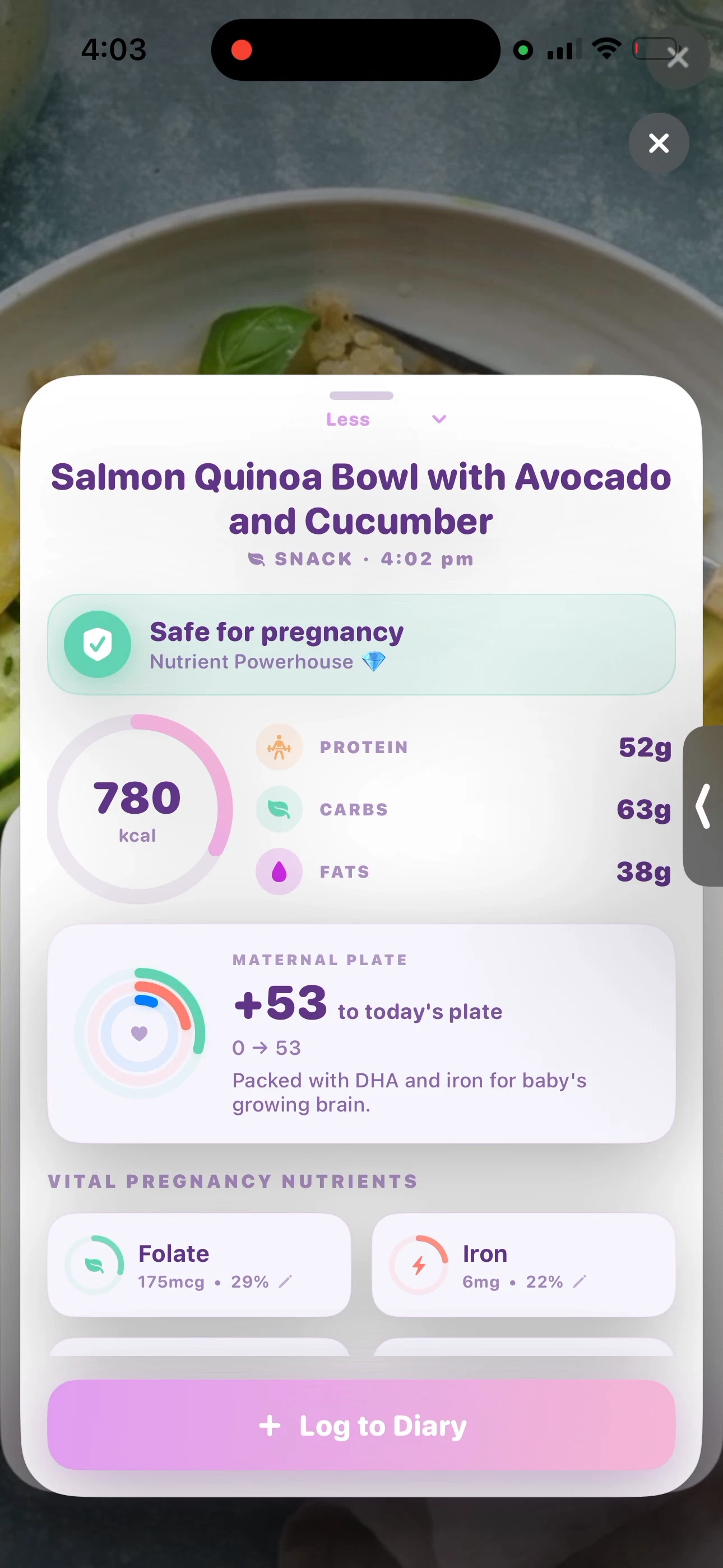
Check holiday drinks in PregnancyPlateYour next meal, a little less guesswork.
Scan your plate for pregnancy food-safety guidance and a nutrition breakdown. Keep your meals and nutrient progress in one place.
 Scan with your iPhone
to get the app
Eggnog is one of those drinks that only shows up for six weeks a year, so it's easy to forget what's actually in it. The answer is milk, cream, sugar, spices and egg yolks. That last ingredient is why it ends up on pregnancy food lists, and why the carton in your fridge and the pitcher at your aunt's house are two different questions.
Federal rules say anything sold as "eggnog" in the US has to contain at least 1% egg yolk solids and at least 6% milkfat. So yes, store-bought eggnog has real egg in it. The difference is that the whole mix has been pasteurized before it reaches the shelf, which takes care of the Salmonella risk that raw eggs carry.
Every Kind of Eggnog, Sorted
| Eggnog | OK while pregnant? | What to know |
|---|---|---|
| Carton eggnog from the dairy case | Yes | Pasteurized. Check that the label doesn't mention rum, bourbon or brandy. |
| "Light" eggnog or eggnog-flavored milk | Yes | Also pasteurized, usually with less fat and fewer eggs. |
| Plant-based nog (oat, almond, soy, coconut) | Yes | Usually egg-free. Sugar content varies a lot by brand. |
| Homemade with a cooked base | Yes | As long as the egg mixture reached 160°F. |
| Homemade with pasteurized eggs | Yes | Pasteurized eggs remove most of the risk. Cooking the base anyway is the step the FDA's own recipe uses. |
| Traditional homemade with raw eggs | No | Raw eggs can carry Salmonella. |
| Spiked eggnog, homemade or bottled | No | Contains alcohol, often a lot of it. |
| The punch bowl at a party | Ask first | Who made it, how, whether it's spiked, and how long it's been sitting out. |
Why Raw-Egg Eggnog Is the Problem
Old-fashioned eggnog recipes whisk raw yolks with sugar, stir in milk and cream, and sometimes fold in beaten raw egg whites for a frothy top. Nothing in that process gets hot. If one of those eggs carries Salmonella, so does the whole batch.
Salmonella usually causes diarrhea, fever and stomach cramps. That's rough at any time, but when you're pregnant, losing fluids to vomiting and diarrhea is harder on your body, and it's an illness worth avoiding. The FDA's holiday advice for pregnant women is simple: cook egg-containing foods thoroughly, or buy pasteurized eggs.
About the alcohol myth. Some families make a big batch of boozy eggnog and age it for weeks, believing the alcohol kills off any bacteria. Food safety experts say not to count on it. For pregnancy, it doesn't matter either way, because the drink is full of alcohol, and the CDC's position is that there's no known safe amount during pregnancy.
A Cooked Eggnog You Can Make at Home
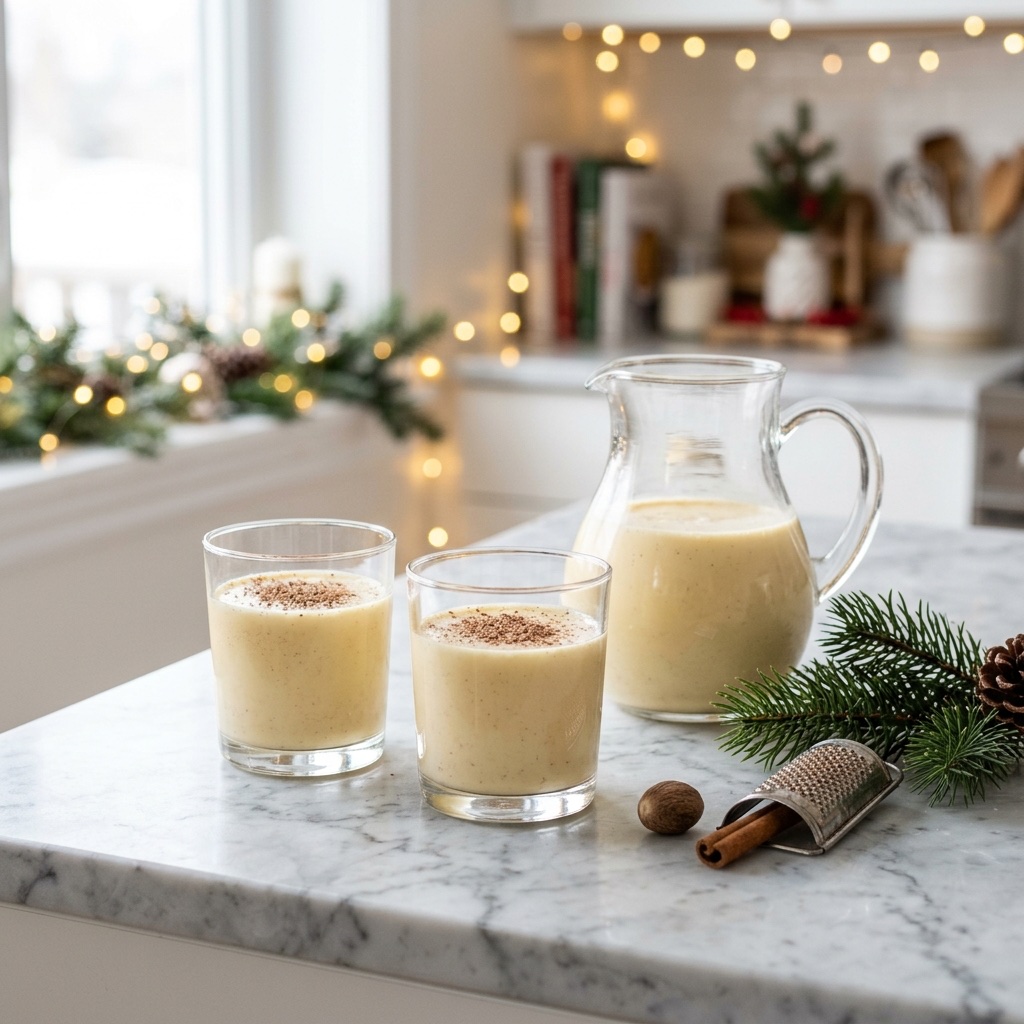
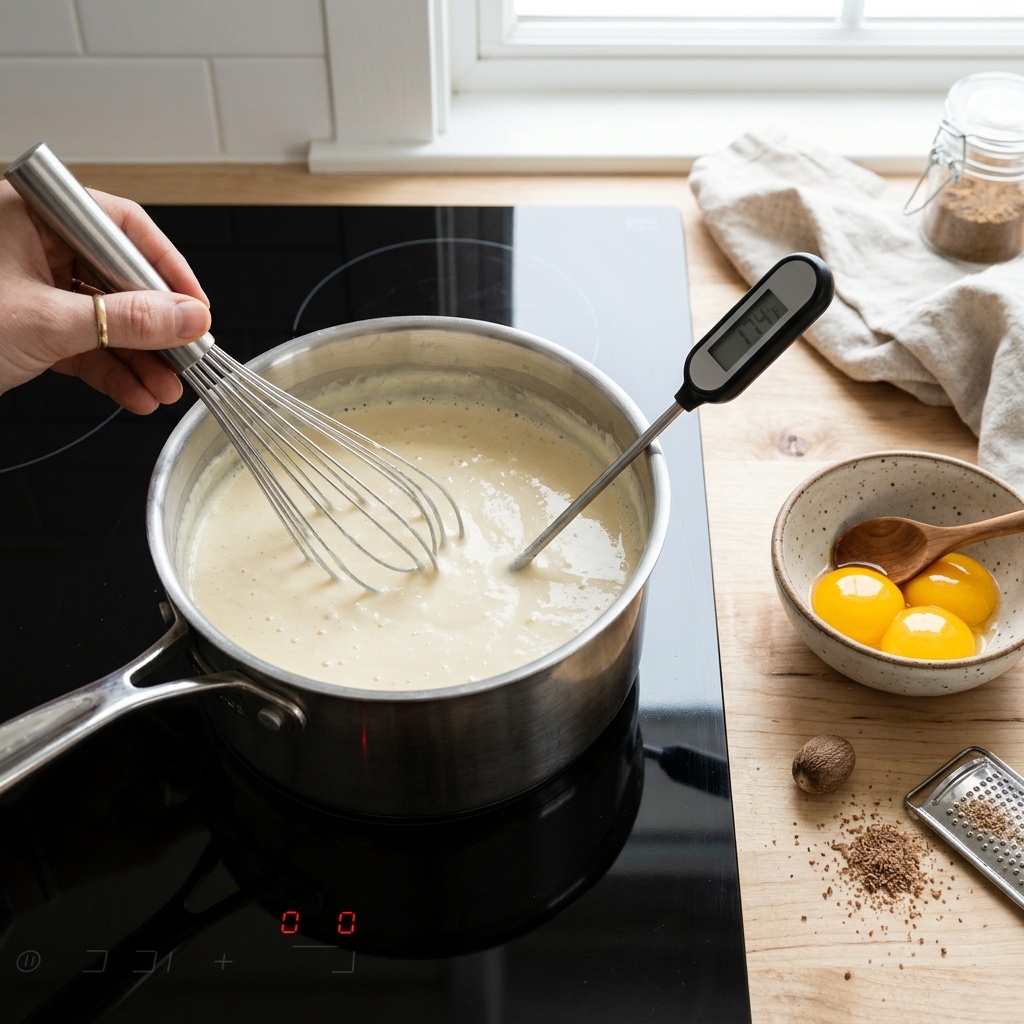
This is the custard method, the same approach the FDA uses in its own holiday eggnog recipe. It tastes richer than carton eggnog and takes about 20 minutes of hands-on time. It makes about six small glasses.
You'll need:
- 6 large egg yolks
- ½ cup sugar
- 2 cups whole milk
- 1 cup heavy cream, kept cold
- 1 teaspoon vanilla extract
- ¼ teaspoon ground nutmeg, plus more to serve
- A pinch of cinnamon and a pinch of salt
- A food thermometer
- Whisk the yolks and sugar in a bowl until pale and thick.
- Heat the milk with the nutmeg, cinnamon and salt in a saucepan until it's steaming, not boiling.
- Temper the yolks by pouring the hot milk into the bowl a ladle at a time, whisking constantly, then pour everything back into the pan.
- Cook gently over medium-low heat, stirring the whole time, until the thermometer reads 160°F and the mixture coats the back of a metal spoon. Don't let it boil, or the eggs will scramble.
- Strain and chill. Pour it through a sieve into a pitcher, stir in the cold cream and vanilla, and refrigerate for at least 3 hours.
- Serve with a little fresh nutmeg on top, and finish it within 2 to 3 days.
If a recipe tells you to fold whipped egg whites into the finished eggnog, skip that step or use pasteurized liquid egg whites from a carton. Those whites never get cooked.
Eggnog Away From Home
At a holiday party
A bowl of eggnog at someone else's house raises three questions: is it from a carton or homemade, if homemade were the eggs cooked, and is there rum in it? You can usually find out by asking the host how they make it, which most people are happy to talk about. Eggnog is also a perishable dairy drink, so the USDA's 2-hour rule applies. If the bowl has been out on the table since the party started, pour yourself something else.
At a coffee shop
Starbucks' Eggnog Latte isn't part of its US holiday lineup this year. It came back for a short run in December 2025, so it may yet reappear. Coffee shop eggnog lattes are made with commercially produced eggnog or eggnog mix, not raw eggs, so what's worth counting is the espresso. ACOG's advice is to stay under 200 mg of caffeine a day. Our Starbucks holiday drinks guide covers what is on the menu.
In desserts
Eggnog cheesecake, eggnog French toast casserole, eggnog cookies and eggnog bread pudding are all baked, so they're fine. No-bake eggnog desserts made with carton eggnog are fine too. A no-bake recipe that calls for raw eggs isn't, and our holiday baking guide covers how to handle those.
How Much Is Sensible?
Full-fat carton eggnog is closer to a dessert than a glass of milk. A half-cup serving often lands somewhere around 150 to 200 calories with close to 20 grams of sugar, though it varies by brand, so check the label. A small glass alongside a meal is a nice treat. If you're managing gestational diabetes, a light eggnog or a splash of eggnog stirred into hot coffee or tea gets you the flavor with a lot less sugar.
Quick Questions
Is the nutmeg in eggnog safe?
Yes. Nutmeg only becomes a concern in very large amounts, far more than anyone would grate over a glass. Our pumpkin spice guide has more detail on the spice itself.
I had homemade eggnog before I knew. Should I worry?
Most people who drink a little homemade eggnog don't get sick, because most eggs aren't contaminated. Salmonella symptoms usually start somewhere between 6 hours and 6 days after eating. If you get a fever, vomiting or diarrhea in that window, call your provider, and keep drinking fluids. Our food poisoning guide lists the warning signs.
Does cooking eggnog with rum cook the alcohol off?
Not fully, and most spiked eggnog recipes add the alcohol after the base is cooked and cooled anyway. If you want a "grown-up" flavor, a few drops of rum extract in a glass of carton eggnog is a common swap, since extracts are used in such small amounts.
Planning the rest of the holiday table? See our Christmas food guide and our holiday mocktails for more drinks to put in your glass.
Meet the Editorial Team
The researchers and experts behind PregnancyPlate.

Fiza Izra
Founder & Tech Researcher
A UK-based mother of 3 with a background in tech and data synthesis, Fiza brings real-world experience navigating hyperemesis gravidarum and postnatal depression. She engineers complex clinical guidelines (NHS, ACOG) into accessible tools, ensuring rigorous fact-checking with deep empathy.

Emma Davies
Senior Nutrition Editor
A mum and writer, Emma runs our food safety desk. She is the one who rings the restaurant to ask how long the lettuce sits out, checks every claim against CDC, FDA and NHS guidance, and rewrites the answer until it is usable at 9pm in a drive-thru queue.
Make sense of every plate.
Scan your plate for pregnancy food-safety guidance and a nutrition breakdown. Keep your meals and nutrient progress in one place.
Scan with your iPhoneto get the app