Is the "Carnivore" or "Keto" Diet Safe for Pregnancy? What You Need to Know
An evidence-based look at extreme low-carb and meat-heavy diets during pregnancy. Are ketosis and the carnivore diet safe for developing babies?
In this article
Editorial note: This article is researched from official public health and pregnancy food safety guidance, then edited by the PregnancyPlate team for clarity. It is not medical advice. If you are worried about symptoms or a specific exposure, contact your midwife, GP or healthcare provider.
In the world of nutrition and wellness, few diets have gained as much passionate following in recent years as the Ketogenic (Keto) diet and its more extreme cousin, the Carnivore diet. Advocates praise them for rapid weight loss, stabilized energy levels, vanished brain fog, and reduced inflammation. Naturally, women who have experienced profound health benefits from these diets prior to conception often wonder: "Can I continue eating Keto or Carnivore while pregnant?"
Pregnancy alters a woman's physiology entirely. What works brilliantly for a non-pregnant adult may not support the rapid cellular division and intense energetic demands required to grow a human brain from scratch. This comprehensive guide examines the science, the risks, and the benefits of low-carbohydrate diets during pregnancy, breaking down whether Keto and Carnivore are safe or if they pose potential risks to you and your baby.
Defining the Diets: Keto vs. Carnivore
Before diving into how these diets impact pregnancy, let's establish exactly what they entail:
Your next meal, a little less guesswork.
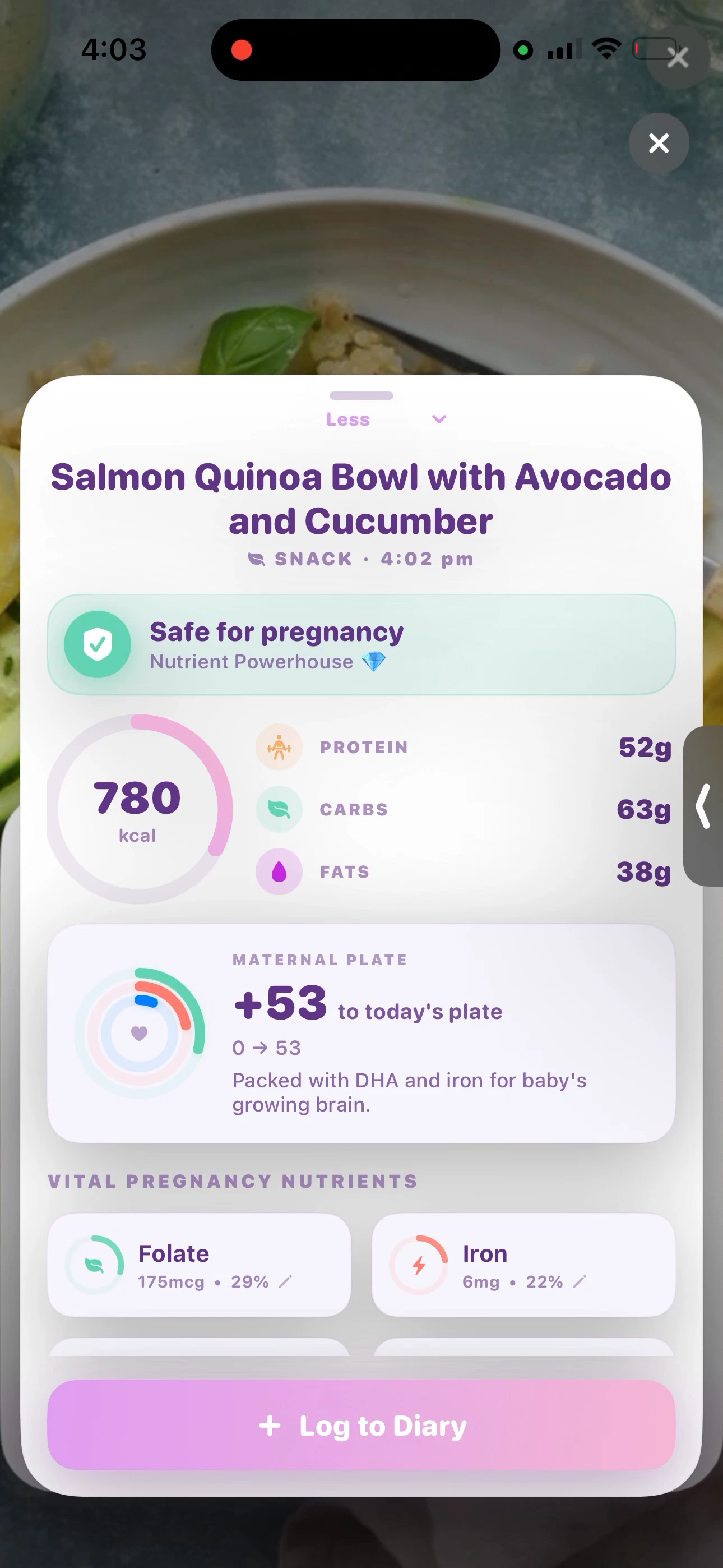
Scan your plate for pregnancy food-safety guidance and a nutrition breakdown. Keep your meals and nutrient progress in one place.
 Scan with your iPhone
to get the app
- The Ketogenic (Keto) Diet: This is a high-fat, moderate-protein, and severely restricted carbohydrate diet. Typically, carbohydrate intake is capped at 20 to 50 grams per day. By restricting carbs, the body is forced to stop using glucose (sugar) for energy and instead burns fat, producing molecules called ketones in the liver (a state known as ketosis).
- The Carnivore Diet: An extreme elimination diet that removes all plant foods. Followers eat only meat, fish, eggs, and sometimes limited dairy. There are zero carbohydrates, zero fiber, and no fruits, vegetables, grains, or legumes.
Both diets operate on the premise of keeping insulin levels meticulously low and forcing the body into fat-burning mode.
The Biology of Pregnancy: Why Carbohydrates Matter
To understand the controversy surrounding these diets, we have to look at how pregnancy changes how your body processes fuel.
Pregnancy is a state of naturally occurring, mild insulin resistance. By the second and third trimesters, your placenta secretes hormones that purposefully make your cells slightly resistant to insulin. Why? So that more glucose stays in your bloodstream, readily available to cross the placenta and feed the rapidly growing fetus.
Glucose is the primary fuel for a developing baby. While adult brains can adapt to run quite efficiently on ketones, a fetal brain relies heavily on glucose for neurodevelopment. When a pregnant person heavily restricts carbohydrates, maternal blood glucose drops, forcing the liver to produce ketones to feed the mother and the baby. This leads us to the critical question: is sustained ketosis safe for a fetus?
The Risks of Sustained Ketosis During Pregnancy
It is entirely normal for pregnant women to slip into mild ketosis overnight or during a bout of morning sickness (when keeping food down is difficult). However, there is a vast difference between brief, mild ketosis and a neurologically altering, sustained state of diet-induced ketosis.
Fetal Brain Development Concerns
While human studies on the Keto diet during pregnancy are incredibly sparse for ethical reasons (we cannot purposefully restrict nutrients to a pregnant control group to see if neurological damage occurs), animal models paint a concerning picture.
Studies conducted on pregnant mice placed on ketogenic diets have shown structural changes in the fetal brain. Offspring of keto-fed mothers showed altered brain anatomy, specifically a smaller hippocampus (the area governing memory and learning). There were also observations of behavioral changes and an increased susceptibility to anxiety later in life. While mice are not humans, the foundational mammalian requirement of glucose for early neurogenesis is widely accepted in obstetrics, making strict ketosis a significant theoretical risk to a developing human brain.
Nutrient Deficiencies
The Carnivore diet, by definition, eliminates fruits, vegetables, and grains. The standard Keto diet drastically reduces them. During pregnancy, your need for specific micronutrients skyrockets. Restricting entire food groups puts you at high risk for inadequate intake of:
- Folate/Folic Acid: Found primarily in leafy greens, citrus, and fortified grains, folate is non-negotiable for preventing neural tube defects. While some organ meats contain folate, it is immensely difficult to reach pregnancy quotas on meat alone.
- Vitamin C: Crucial for repairing tissue, fetal bone development, and maximizing the absorption of iron.
- Magnesium and Potassium: Vital for preventing preeclampsia and painful pregnancy leg cramps.
The Constipation Crisis
Pregnancy hormones relax the smooth muscles of the digestive tract, naturally slowing down digestion. Combine this physiological slowdown with a Keto diet (low in fiber) or a Carnivore diet (zero fiber), and you have a recipe for severe, excruciating constipation. Prolonged constipation frequently leads to hemorrhoids, which can become incredibly painful during vaginal delivery and postpartum recovery.
What About Gestational Diabetes?
This is where the conversation usually shifts. Many women turn to Keto or Carnivore to manage or prevent Gestational Diabetes (GD). Because carbohydrates raise blood sugar, the logical leap is that removing carbohydrates eliminates the GD problem.
While significantly reducing refined sugars and processed white carbohydrates is the cornerstone of GD management, completely eliminating complex carbohydrates is generally not recommended by maternal-fetal medicine specialists. Managing Gestational Diabetes safely involves "carb-pairing" - combining a moderate amount of high-fiber, complex carbohydrates with dense proteins and fats to blunt the blood sugar spike, rather than eliminating the carbs entirely.
Severe carbohydrate restriction can actually mask GD symptoms or, paradoxically, make the mother more insulin resistant over time due to adaptive glucose sparing.
🥑 Balance Your Blood Sugar Naturally
You don't need to cut all carbs to manage gestational diabetes.
The PregnancyPlate app acts as your pocket dietitian, helping you strategically pair complex carbohydrates with proteins and fats to keep your blood sugar perfectly stable while ensuring your baby gets the glucose they need to grow.
Get the App & Stabilize Your SugarThe Silver Lining: What These Diets Get Right
While strict Keto and Carnivore are aggressively discouraged by major health organizations (like ACOG and the NHS) during pregnancy, we shouldn't throw the baby out with the bathwater. There are principles within these diets that are incredibly beneficial:
- Prioritizing High-Quality Protein: Pregnancy massively increases protein requirements. The emphasis on eggs, fish, and meat in these diets ensures the mother gets ample bioavailable protein, iron, and B12.
- Embracing Healthy Fats: Both diets celebrate fat. Fats - especially animal fats from pastured eggs and grass-fed butter - are rich in fat-soluble vitamins (A, D, E, K2) and cholesterol, which are literally the building blocks of fetal hormones and the baby's brain.
- Eliminating Refined Junk: The best part of Keto and Carnivore is what they remove: ultra-processed foods, refined seed oils, and staggering amounts of added sugars.
The "Middle Ground" Pregnancy Approach
If you were thriving on Keto or Carnivore before pregnancy, how do you pivot safely now that you are eating for two? The goal is to retain the nutrient-dense proteins and fats while reintroducing the complex (slow-burning) carbohydrates that a fetal brain demands.
Instead of aiming for ketosis, aim for metabolic flexibility and blood sugar stabilization.
How to Modify Your Diet:
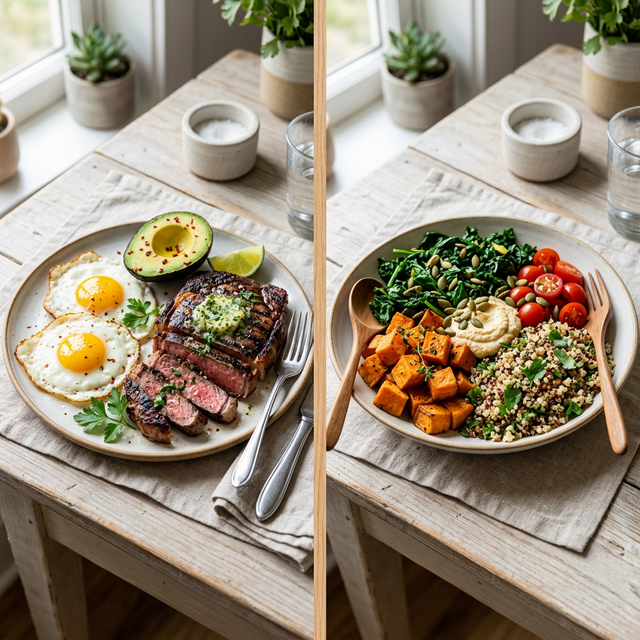
- Keep the Steaks and Eggs: Continue eating high-quality animal proteins. A grass-fed steak provides highly absorbable heme iron, and free-range eggs are the best source of choline available.
- Add Complex, Whole-Food Carbs: Reintroduce root vegetables (sweet potatoes, carrots, beetroot), starchy squash, quinoa, beans, and lentils. These provide glucose for the baby without aggressively spiking your insulin the way a bagel would.
- Re-embrace Berries and Fruit: Antioxidants are vital during pregnancy to combat oxidative stress. Berries are low-glycemic and packed with nutrients.
- Aim for 100-150g of Carbs Daily: This is generally considered a "moderate" low-carb diet. It is enough to keep you entirely out of ketosis and support fetal brain growth, but low enough to prevent excessive weight gain and blood sugar rollercoasters.
A Sample "Modified" Day (High Protein, Moderate Carb)
Here is what a deeply nourishing, blood-sugar-friendly day might look like without dipping into dangerous ketosis:
- Breakfast: 3 scrambled eggs cooked in butter, half an avocado, and a cup of mixed berries.
- Lunch: A large salad with dark leafy greens, a generous portion of leftover roast chicken, olive oil dressing, and half a cup of quinoa or chickpeas sprinkled in.
- Snack: Full-fat Greek yogurt with chia seeds and walnuts.
- Dinner: Ground beef chili (with kidney beans for fiber and carbs) topped with cheese, alongside roasted broccoli.
Navigating the First Trimester Hurdle
A final, critical reality check: the first trimester does not care about your diet plans. If you are deeply committed to eating zero carbs, nausea and food aversions will likely force your hand. Meat aversions are incredibly common early on, while bland carbohydrates (toast, crackers, plain pasta) often become the only things you can stomach.
If you suddenly find yourself unable to look at a steak and living off saltine crackers - give yourself grace. This is a survival phase. Your body is smart; if it demands plain cereal, let it have it. You can return to your nutrient-dense proteins and fats in the second trimester when the nausea lifts.
The Bottom Line
Pregnancy is a temporary biological event, not the time for extreme dietary restriction or experimentation. The fetal brain requires glucose, and severe restriction of carbohydrates forces the maternal body into metabolic states that carry unknown, potentially permanent neurological risks for the baby.
However, you do not need to abandon the principles of whole-food eating. Keep the nutrient-dense animal proteins, keep the brain-building fats, and simply add back the natural, complex carbohydrates from root vegetables, beans, and fruit. You will reap the benefits of steady energy and stable blood sugar while providing exactly the fuel your baby needs to thrive.
Track your macros without the stress
Finding the exact sweet spot between enough protein and healthy complex carbs is tricky during pregnancy. You shouldn't have to guess.
Use the PregnancyPlate App to ensure you're hitting your nutrient goals while keeping blood sugar completely stable. Just snap a photo of your meal and let our AI do the heavy lifting.
Download on the App StoreMeet the Editorial Team
The researchers and experts behind PregnancyPlate.

Fiza Izra
Founder & Tech Researcher
A UK-based mother of 3 with a background in tech and data synthesis, Fiza brings real-world experience navigating hyperemesis gravidarum and postnatal depression. She engineers complex clinical guidelines (NHS, ACOG) into accessible tools, ensuring rigorous fact-checking with deep empathy.

Emma Davies
Senior Nutrition Editor
A mum and writer, Emma runs our food safety desk. She is the one who rings the restaurant to ask how long the lettuce sits out, checks every claim against CDC, FDA and NHS guidance, and rewrites the answer until it is usable at 9pm in a drive-thru queue.
Make sense of every plate.
Scan your plate for pregnancy food-safety guidance and a nutrition breakdown. Keep your meals and nutrient progress in one place.
Scan with your iPhoneto get the app