Low Milk Supply: What Food Can and Cannot Do
An honest look at lactation foods and supplements, how to tell whether your supply is genuinely low, and what actually increases it when it really is low.
In this article

Editorial note: This article is researched from official public health and pregnancy food safety guidance, then edited by the PregnancyPlate team for clarity. It is not medical advice. If you are worried about symptoms or a specific exposure, contact your midwife, GP or healthcare provider.
The Fast Answer: Two honest things. First, most women who think their supply is low actually have a normal supply, and the signs that worry people are usually not the signs that matter. Second, when supply genuinely is low, food is not the main lever. Milk removal is. Oats and lactation cookies have very thin evidence behind them. Eating and drinking enough matters because you need to function, not because it fills the bottle.
Check you're actually eating enough in the PregnancyPlate AppSafety is step one. Nutrition helps your baby thrive.
Knowing a meal is safe does not tell you whether you are getting enough iron, folate, calcium and choline. PregnancyPlate tracks all of it from a photo of your plate.
- See nutrient progress
- Scan meals instantly
- Nourish with confidence
 Scan to download
Open with iPhone camera
Scan to download
Open with iPhone camera
Search "how to increase milk supply" and you'll get lactation cookies, oat lattes, fenugreek capsules and brewer's yeast. It's a large industry built on a small evidence base.
I went looking for the trials behind the most-recommended galactagogues, and what's there is thin. Small studies, inconsistent results, and a lot of reliance on tradition. That doesn't mean nobody should eat a flapjack. It means that if your supply is genuinely low, the flapjack is not what's going to fix it, and the weeks you spend on it are weeks you could have spent on something that works.
Is Your Supply Actually Low?
Start here, because the answer is often no.
These do NOT mean low supply, though they worry almost everyone:
- Your breasts feel soft. After the first few weeks, they stop feeling full. That's regulation, not decline.
- You leak less than you did. Same reason.
- Your baby feeds constantly. Newborns feed 8 to 12 times in 24 hours, sometimes more, and cluster feeding in the evening is normal.
- Feeds are short. An efficient baby can drain a breast in a few minutes.
- You can't pump much. A pump is not as effective as a baby, and pump output is a poor measure of supply.
- Your baby takes a bottle after a feed. Babies will usually accept a bottle regardless. It's a reflex, not evidence of hunger.
These DO warrant a same-week conversation with your health visitor, midwife or GP:
- Not enough wet nappies. From day five onward, roughly six heavy wet nappies in 24 hours.
- Poor weight gain, or not back to birth weight by around two weeks.
- Dark urine, or brick-dust coloured marks in the nappy after day three.
- A baby who is very sleepy and hard to rouse for feeds, or who never seems settled after any feed.
Nappies and weight are the measures that count. Everything else is noise.
What Actually Increases Supply
Milk production runs on supply and demand. The more effectively and frequently milk is removed, the more your body makes. That's the mechanism, and almost everything that genuinely works is a version of it.
Feed more often. Not on a schedule. Whenever the baby cues, and offer both sides.
Check the latch. A poor latch means milk isn't removed effectively, and no amount of feeding frequency compensates. This is the single most common fixable cause, and it needs someone to watch a feed rather than a video.
Add pumping sessions between or after feeds if you need to build supply, since it's extra removal.
Skin to skin, which supports the hormones involved.
Get a feed assessed. Tongue tie, an ineffective latch, a sleepy baby not transferring well: these are the things that actually limit supply, and none of them are visible from a description. Health visitors, infant feeding teams and IBCLC lactation consultants all do this.
Dips Are Normal and Usually Temporary
Supply isn't a fixed number. It moves, and several ordinary things make it dip briefly.
Growth spurts. Your baby feeds more often for a couple of days, which feels like your supply has dropped when it's actually demand rising. It resolves once production catches up, usually within about 48 hours.
Your period returning. Many women notice a dip in the few days before a period. It comes back.
Being unwell. Illness, especially with a fever or poor fluid intake, can temporarily reduce supply.
Hormonal contraception. Combined pills containing oestrogen can reduce supply, particularly if started early. Progestogen-only options are usually preferred while breastfeeding, and it's worth raising if your supply changed after starting something new.
Going back to work, where the issue is usually fewer removals rather than anything physiological.
The common thread is that most dips correct themselves if feeding continues as normal. Reacting to a two-day dip by topping up with formula can, without anyone intending it, reduce removal and turn a temporary dip into a real decline.
Causes Worth Ruling Out
If supply is genuinely low and feeding frequency and latch have both been checked, there are medical causes worth investigating rather than eating your way around.
Tongue tie, which limits how effectively a baby transfers milk. Common, fixable, and frequently missed.
Retained placental fragments, which can delay milk coming in. Usually accompanied by heavy or prolonged bleeding.
Thyroid problems, which are common postpartum and affect supply in both directions.
PCOS, diabetes and insufficient glandular tissue, all of which can affect production.
Significant blood loss at birth, which is associated with delayed or reduced supply. Relevant if you had a haemorrhage or a caesarean, which our C-section recovery guide covers.
None of these are things to diagnose yourself. They're reasons to ask for a proper assessment rather than assuming you simply need to try harder.
The Galactagogue Evidence, Honestly
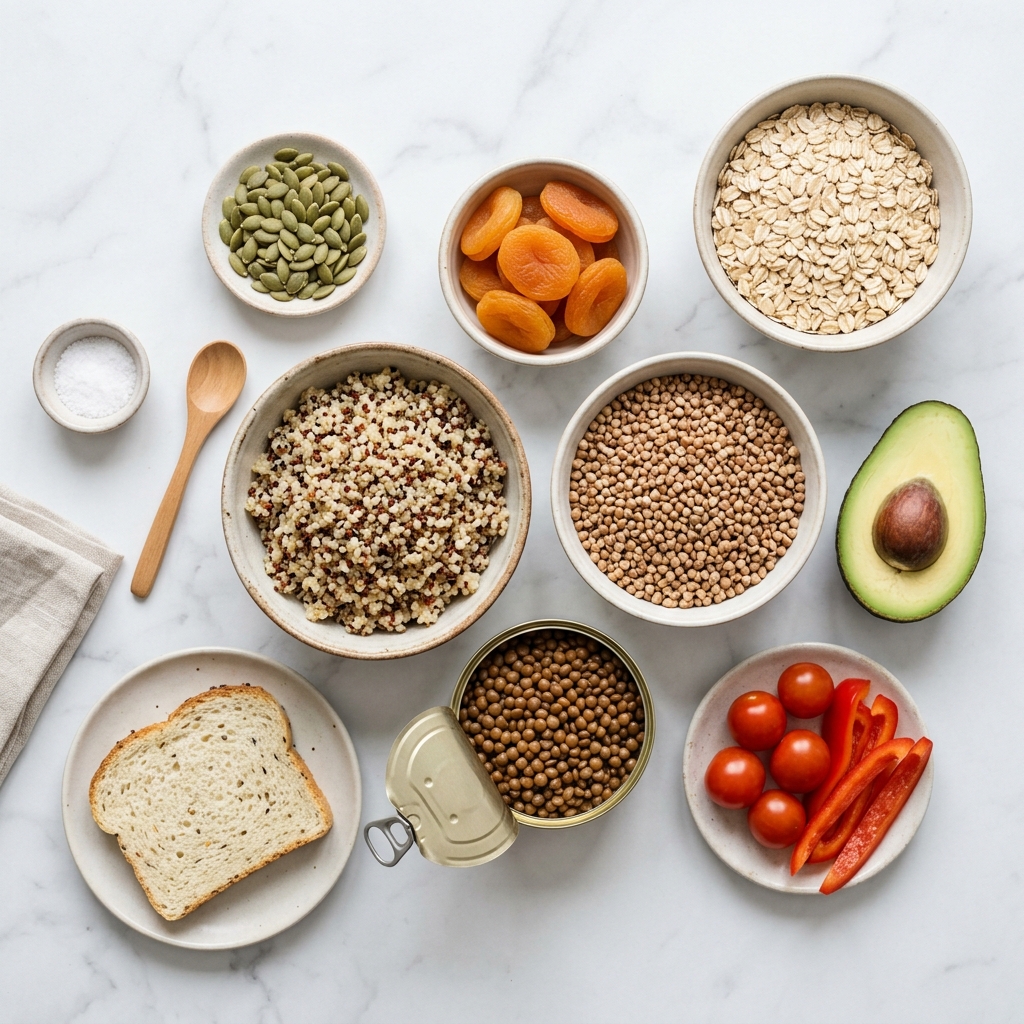
Oats. The most recommended and the least studied. There's no good trial evidence that oats increase supply. They're a decent breakfast with iron and fibre, so eat them if you like them, but not as a treatment.
Fenugreek. The most studied, and the results are inconsistent. Some small trials show an effect, others show nothing. It can cause digestive upset and a maple-syrup body odour, it may affect blood sugar, and it isn't recommended if you have thyroid issues. Worth discussing with a clinician rather than self-prescribing.
Brewer's yeast, blessed thistle, fennel, moringa. Traditional use, limited trial evidence. Generally low risk in food amounts, but that isn't the same as effective.
Lactation cookies. Oats, brewer's yeast and flaxseed in biscuit form. Pleasant, calorific, and no better than the sum of unproven parts. If they get you eating during a hard week, that's a genuine benefit in itself.
The honest summary: none of these are the thing standing between you and a full supply. Prescription medication such as domperidone does have evidence behind it, but that's a clinical decision with real considerations, not something to source yourself.
The Honest Summary
- Soft breasts and short feeds are normal. Nappies and weight are the real measures.
- Removal drives supply. Frequency and an effective latch, not food.
- Galactagogue evidence is thin. Oats especially.
- Get a feed watched before you spend weeks on supplements.
- Undereating and dehydration can affect supply, so eat and drink properly.
Where Food Does Genuinely Matter
Not for the reason it's usually sold, but it does matter.
Severe undereating can reduce supply. Not skipping lunch, but sustained heavy restriction. Breastfeeding costs roughly 450 to 500 extra calories a day, and crash dieting in the early months is a genuine risk to supply as well as to you.
Dehydration affects it too. The evidence doesn't support drinking beyond thirst, and forcing litres of water does not increase supply. Drink to thirst, keep water where you feed, and use the colour of your urine as the check.
You need the nutrients for yourself. Your milk stays remarkably consistent even when your diet doesn't, because your body will draw on your own stores to make it. That protects the baby and depletes you. Iron, B12, iodine, calcium and DHA are the ones that suffer, and running low on iron produces exactly the exhaustion that makes everything else harder. Our breastfeeding nutrition guide covers the targets.
So eat well, absolutely. Just not as a supply intervention.
The Part That Isn't About Milk
Worth saying plainly, because feeding difficulties are rarely just practical.
Being told your supply might be low, at three in the morning, with a baby who won't settle, is a genuinely painful experience. It gets tangled up with feeling like a failure fairly quickly. That's an extremely common response and it isn't a sign of anything being wrong with you.
Two things are true at once. It's worth getting proper help if you want to breastfeed, because a lot of supply problems are fixable with the right support. And a fed baby on formula, or on mixed feeding, is a good outcome, not a defeat. Both of those can be true, and neither cancels the other.
If you're struggling, the people to call are your health visitor, your GP, an IBCLC lactation consultant, or a national breastfeeding helpline. Recovering from birth while learning to feed is a lot at once, and our postpartum recovery guide covers the rest of the picture.
Clinical Sources & Research
This article is general information and does not replace individual feeding support. If you are worried about your baby's weight, wet nappies or feeding, contact your midwife, health visitor or GP the same day.
Meet the Editorial Team
The researchers and experts behind PregnancyPlate.

Fiza Izra
Founder & Tech Researcher
A UK-based mother of 3 with a background in tech and data synthesis, Fiza brings real-world experience navigating hyperemesis gravidarum and postnatal depression. She engineers complex clinical guidelines (NHS, ACOG) into accessible tools, ensuring rigorous fact-checking with deep empathy.

Emma Davies
Senior Nutrition Editor
A mum and writer, Emma runs our food safety desk. She is the one who rings the restaurant to ask how long the lettuce sits out, checks every claim against CDC, FDA and NHS guidance, and rewrites the answer until it is usable at 9pm in a drive-thru queue.