Baby Won't Eat: What Actually Works When They Refuse Everything
Why babies suddenly refuse food, why it is almost never about the food itself, and the responsive feeding approach that works better than any trick or bribe.
In this article

Editorial note: This article is researched from official public health and pregnancy food safety guidance, then edited by the PregnancyPlate team for clarity. It is not medical advice. If you are worried about symptoms or a specific exposure, contact your midwife, GP or healthcare provider.
The Fast Answer: Almost all food refusal in the first two years is normal, temporary and not about the food. The single most effective approach is the division of responsibility: you decide what is offered and when, your baby decides whether and how much. Pressure, bribery and the aeroplane spoon all reliably make it worse. A food often needs eight to fifteen exposures before it is accepted, and most parents give up after three.
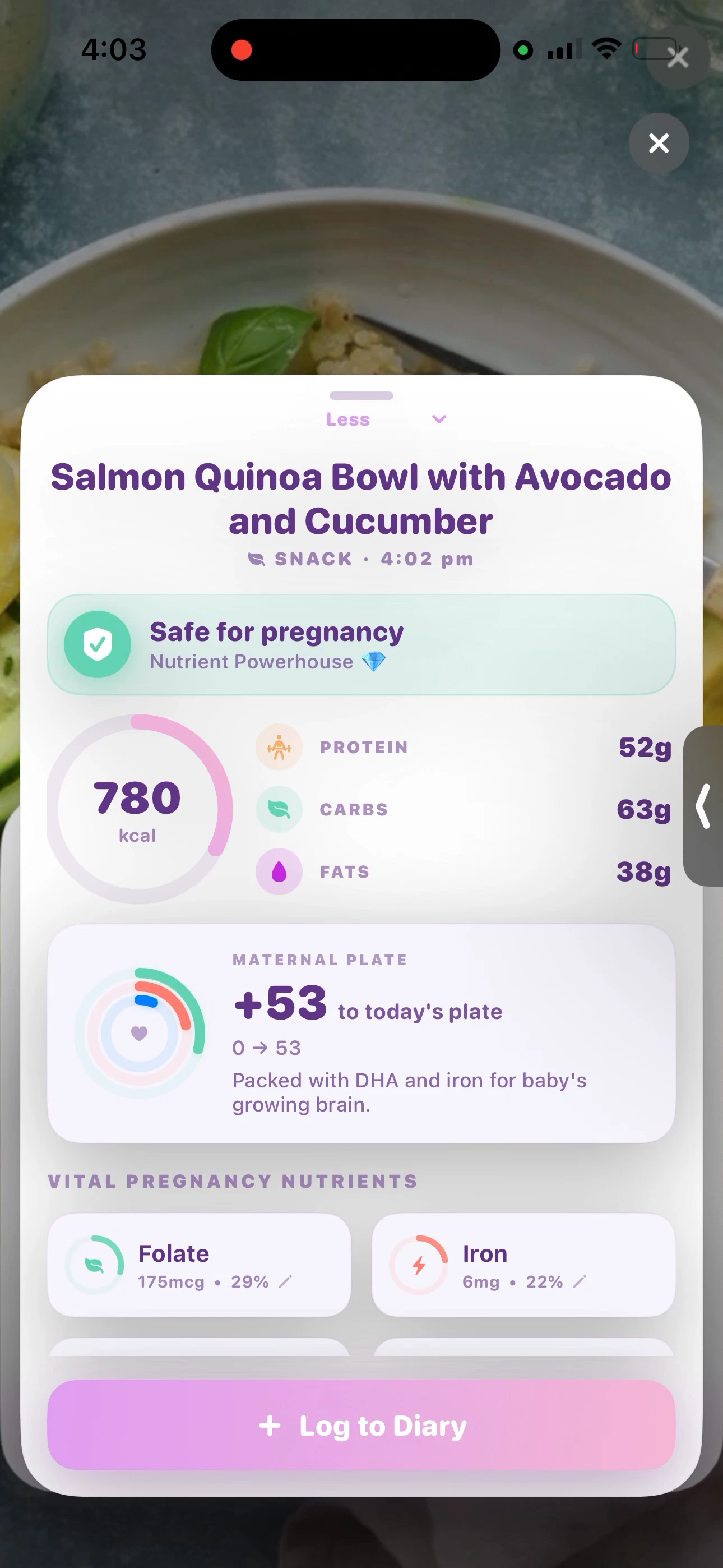
Track what is actually going in with the PregnancyPlate AppYour next meal, a little less guesswork.
Scan your plate for pregnancy food-safety guidance and a nutrition breakdown. Keep your meals and nutrient progress in one place.
 Scan with your iPhone
to get the app
There is a particular kind of panic that sets in when a baby who ate everything last week suddenly clamps their mouth shut at the sight of a spoon. It usually arrives with the assumption that you have done something wrong.
You almost certainly have not. Refusal is one of the most predictable phases of the first two years, and most of what people try in response makes it last longer.
Why It Happens
Several separate causes look identical from the outside, which is why generic advice so often misses.
Teething. Sore gums make chewing unpleasant. Refusal here is usually sudden, short-lived, and paired with wanting more milk.
Illness. Appetite drops with any bug and takes a few days to come back afterwards. Perfectly normal.
A growth plateau. Babies grow fastest in the first six months and the rate slows considerably after a year. A toddler genuinely needs proportionally less than they did, and their appetite reflects it.
Neophobia. Somewhere between twelve and eighteen months, most children become wary of unfamiliar food. This is a developmental stage rather than a behaviour problem, and it is thought to be protective in a newly mobile child. It passes.
Distraction and tiredness. A baby who has just discovered crawling has better things to do than sit still. An overtired one has no patience for anything.
Wrong shape or texture. The most fixable cause and the most missed. If pieces are too small for their grip or too firm to gum, refusal looks like fussiness but is really frustration. Our finger foods by stage guide covers what to offer when.
The Division of Responsibility
This is the framework that underpins nearly all credible feeding advice, and it is worth internalising because it resolves most mealtime conflict on its own.
Your job: what food is offered, when it is offered, and where. You choose the menu and the timing.
Their job: whether they eat, and how much.
That is the whole thing. The moment you cross into their half, by pressuring, bargaining or coaxing, mealtimes become a contest and the food itself becomes the battleground. Children who are pressured to eat reliably end up eating less and accepting fewer foods over time, not more.
It is harder than it sounds, because watching a baby refuse a meal you cooked triggers something quite deep. But the parent who calmly clears the plate away is running the more effective strategy.
Eight to Fifteen Exposures
The number worth knowing. Research on food acceptance in young children consistently finds that a new food may need to be offered eight, ten, sometimes fifteen times before it is accepted.
Most parents offer a food two or three times, conclude their child hates it, and never serve it again. That is how a varied eater quietly becomes a narrow one, and it happens through entirely reasonable decisions.
An exposure also counts even when nothing is eaten. Touching it, licking it, throwing it on the floor and watching you eat it are all part of the process. Put the broccoli back on the tray next week without comment.
One practical trick that works better than persuading: serve the new thing alongside something they already like. A plate of entirely unfamiliar food gets rejected wholesale. A familiar favourite with one new item beside it usually gets investigated.
Refusal in One Box
- You choose what and when. They choose whether and how much.
- 8 to 15 exposures before a food is accepted. Most people stop at 3.
- Pair new food with a familiar favourite rather than serving it alone.
- Check the shape first. Frustration looks exactly like fussiness.
- Milk is still the main nutrition under one, so a skipped meal matters less than it feels.
What Makes It Worse
Everything in this list is well intentioned and counterproductive.
Pressure of any kind. "Three more bites", the aeroplane spoon, waiting until they finish. All of it teaches a child to ignore their own fullness and turns eating into a negotiation.
Bribing with pudding. This raises the status of the sweet food and lowers the status of the vegetable. You are teaching precisely the opposite of what you intend.
Becoming a short-order cook. Offering an alternative the moment something is refused teaches them to hold out for the alternative. Offer one meal, include at least one component you know they will accept, and leave it at that.
Grazing all day. A child who has snacked since breakfast is not hungry at lunch. Structured meals and snacks with genuine gaps between them do more for appetite than anything on the plate.
Visible anxiety. Children read tension quickly, and a tense mealtime is one they will resist attending. Easier said than done, and worth knowing anyway.
What Actually Helps
Eat with them. The strongest single influence on what children eat is watching people they trust eat the same thing. Sit down and eat your own food, visibly and without commentary.
Keep the same food on the table even when it is being ignored. Familiarity does the work over weeks.
Let them get messy. Handling, squashing and smearing is genuine exploration and it precedes eating. A child not allowed to make a mess often will not try new textures.
Offer small portions. A loaded plate is off-putting. A tiny amount with the option of more is far less intimidating.
Keep meals short. Twenty to thirty minutes, then clear it away calmly and without a verdict.
Involve them. Once they are older, letting them pass you vegetables or stir something increases the chance of them eating it later.
Serve family style where you can. Dishes in the middle, everyone helping themselves, including a small portion your baby can be offered from. Choosing something themselves, even with your hand doing the work, gets accepted more readily than the same food arriving pre-plated.
And zoom out. Judge intake across a week rather than a meal. Toddlers commonly eat well one day and almost nothing the next, and the weekly average is usually fine even when Tuesday looked alarming. Our first 100 foods list is a useful way to see the range over time rather than the meal in front of you.
The Two Phases People Confuse
Worth separating, because they need different responses and get treated identically.
Around eight to ten months, refusal is usually mechanical or situational. Teething, distraction, the wrong texture, or simply being more interested in crawling. The fix is practical: check the shape, check the timing, check whether they are overtired.
From around twelve to eighteen months, it becomes developmental. This is neophobia proper, and it arrives alongside a child who has just worked out they can say no to things. Foods eaten happily for months get rejected. Colour and texture preferences appear from nowhere.
The second phase is the one where parents most often start bargaining, and it is the phase where bargaining does the most damage. It is also the one that resolves on its own, usually somewhere between three and five, provided nobody has turned mealtimes into a fight in the meantime.
The practical difference: at eight months, change something about the food. At sixteen months, change nothing and keep offering.
When It Is Worth Getting Help
Ordinary refusal is normal. A few patterns are not, and are worth raising with your health visitor or GP.
Faltering weight, or dropping across centiles rather than tracking along one.
A very restricted range, particularly fewer than around twenty foods total, or refusing an entire texture or food group consistently.
Gagging, choking or distress at mealtimes that is not settling with practice.
Refusal that appeared abruptly and stayed, especially alongside reflux symptoms, unexplained rashes or stomach upset, which can point to an underlying issue rather than a phase.
Ongoing mealtime distress for the child or for you. Feeding support exists and it is worth asking for.
Short of those, the honest answer is that this phase mostly requires waiting it out while doing as little as possible about it. Our 4 week weaning plan covers what normal intake looks like, and it is a good deal less than most people expect.
Clinical Sources & Research
Meet the Editorial Team
The researchers and experts behind PregnancyPlate.

Fiza Izra
Founder & Tech Researcher
A UK-based mother of 3 with a background in tech and data synthesis, Fiza brings real-world experience navigating hyperemesis gravidarum and postnatal depression. She engineers complex clinical guidelines (NHS, ACOG) into accessible tools, ensuring rigorous fact-checking with deep empathy.

Emma Davies
Senior Nutrition Editor
A mum and writer, Emma runs our food safety desk. She is the one who rings the restaurant to ask how long the lettuce sits out, checks every claim against CDC, FDA and NHS guidance, and rewrites the answer until it is usable at 9pm in a drive-thru queue.
Make sense of every plate.
Scan your plate for pregnancy food-safety guidance and a nutrition breakdown. Keep your meals and nutrient progress in one place.
Scan with your iPhoneto get the app