Postpartum Nutrition: What to Eat for Breastfeeding and Recovery
A comprehensive guide on how to nourish your body after birth, supporting recovery, energy levels, and milk production through real food.
In this article
Editorial note: This article is researched from official public health and pregnancy food safety guidance, then edited by the PregnancyPlate team for clarity. It is not medical advice. If you are worried about symptoms or a specific exposure, contact your midwife, GP or healthcare provider.
The moment your baby is born, a massive shift occurs. For the past nine months, your body has been singularly focused on growing a tiny human. But once the delivery is over, your body doesn't just bounce back to its pre-pregnancy state. Instead, it enters a remarkably demanding new phase: the fourth trimester. This period of postpartum recovery, paired with the intense physical demands of producing milk round-the-clock, means your nutritional needs are actually higher now than they were during pregnancy.
Yet, ironically, this is the exact time when eating well becomes the hardest. Between sleep deprivation, navigating a new routine, caring for a vulnerable newborn, and the sheer exhaustion of having just given birth, many new mothers end up surviving on cold toast, half-eaten granola bars, and sheer willpower. But you cannot pour from an empty cup. Nurturing the mother is just as critical as nurturing the baby.
This comprehensive guide dives deep into postpartum nutrition. We will cover exactly what your body needs to heal from birth, the specific nutrients required to establish and maintain a healthy milk supply, and practical, realistic ways to keep yourself fed when you have exactly zero time or energy to cook.
Feeding as well as recovering? Our guide to what to eat while breastfeeding covers calorie needs, the pregnancy restrictions that are now over, and the myths worth ignoring.
The Physical Toll of Birth and Why Nutrition Matters More Than Ever
To understand what to eat, we first have to understand what your body is going through. Whether you had a vaginal delivery or a Caesarean section, your body has experienced trauma and blood loss. Your uterus is shrinking back to its regular size, your abdominal muscles are finding their way back together, and your hormone levels are dropping off a sheer cliff - estrogen and progesterone plunge rapidly, which can dramatically affect your mood and energy.
Your next meal, a little less guesswork.
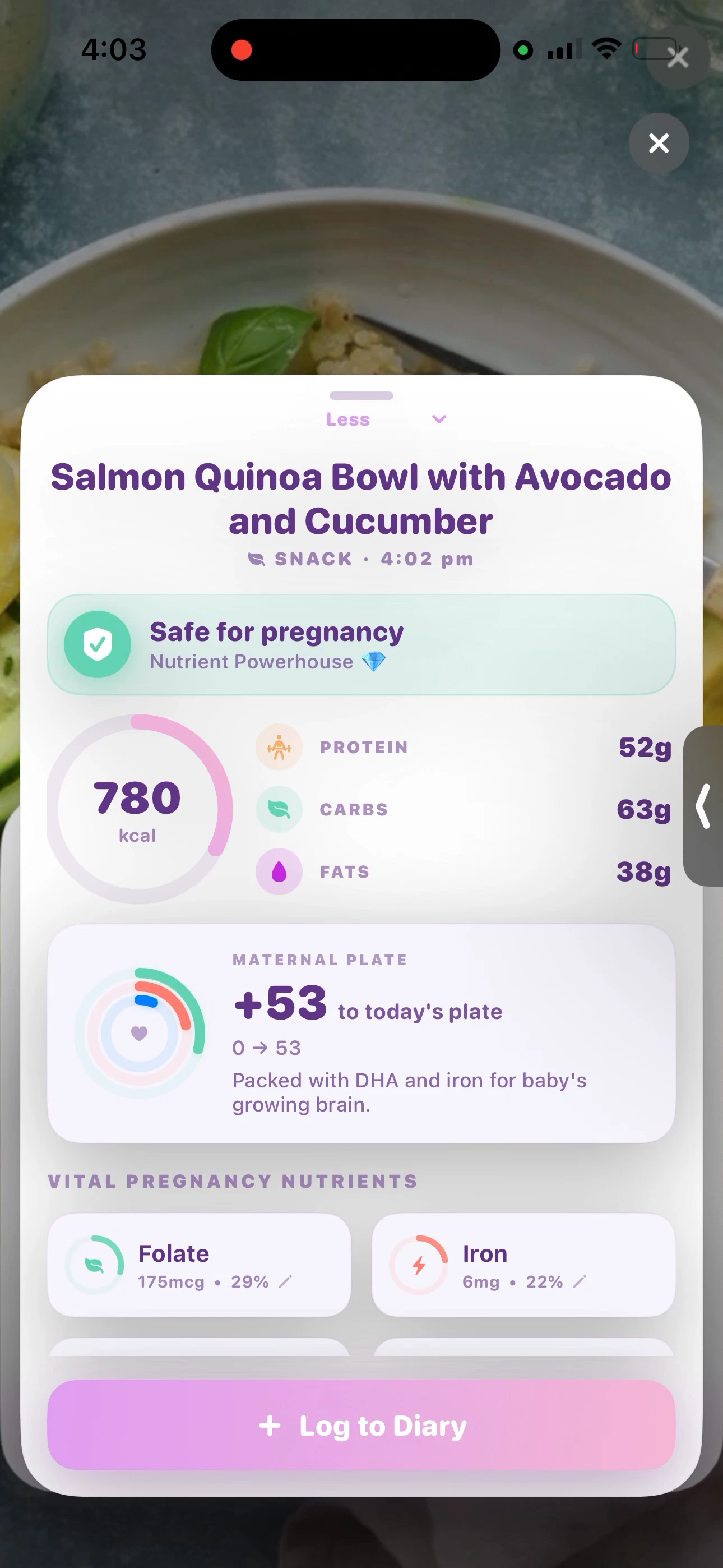
Scan your plate for pregnancy food-safety guidance and a nutrition breakdown. Keep your meals and nutrient progress in one place.
 Scan with your iPhone
to get the app
Proper nutrition during this period is not about "losing the baby weight." It is about:
- Tissue repair: Rebuilding tissues torn or surgically cut during delivery.
- Blood volume replacement: Recovering from the blood loss of birth and the ongoing bleeding (lochia) that lasts for weeks.
- Bone density protection: Breastfeeding draws calcium from your bones if you aren't consuming enough.
- Mental health support: Nutrient depletion is a significant, yet often overlooked, risk factor for Postpartum Depression (PPD) and anxiety.
- Lactation: Producing breast milk requires immense amounts of energy - between 400 and 500 extra calories a day.
The Postpartum Macronutrient Blueprint
Your postpartum plate should look different from your pregnancy plate. You need rich, dense, warming, and deeply nourishing foods.
Protein: The Ultimate Healer
Protein is the building block of human tissue. After birth, your body needs extra protein to heal the perineum or a C-section incision, repair the uterine lining, and produce milk (which contains a significant amount of protein itself). While nursing, you need roughly 70 to 80 grams of protein a day, if not more depending on your activity level and body size. (See our guide to pregnancy protein needs for comparison).
Best sources:
- Pasture-raised eggs: The perfect quick protein. Hard-boil a batch to keep in the fridge for easy 3 AM snacking. They also provide choline, essential for baby's brain development through your milk.
- Slow-cooked meats: Think beef stews, pulled pork, or shredded chicken. Slow cooking breaks down the collagen in the meat, making it incredibly easy to digest and providing the exact amino acids your body needs to rebuild its own connective tissues.
- Fatty fish: Salmon and sardines offer a dual punch of protein and DHA (omega-3s).
- Lentils and beans: Excellent plant-based proteins that also provide a hefty dose of iron and fiber to combat postpartum constipation.
Healthy Fats: Hormonal Balance and Brain Health
Do not fear fat during the postpartum period. Fat is necessary for robust hormone production, protecting your mood, and enriching your breast milk. Omega-3 fatty acids, specifically, are critical right now. During pregnancy, the baby draws DHA from the mother's brain to build its own. Depleted maternal DHA levels are heavily linked to postpartum mood disorders.
Best sources:
- Avocados: Slice them onto toast, blend them into smoothies, or eat them plain with a pinch of sea salt.
- Nuts and seeds: Walnuts, chia seeds, and hemp hearts are brilliant sources of omega-3s. Keep jars of raw nuts where you usually sit to nurse the baby.
- Olive oil and grass-fed butter: Drizzle generously over vegetables and grains. They add necessary calories and make everything taste better.
- Full-fat dairy: Whole milk yogurt and cheese provide satisfying fats alongside calcium and protein.
Complex Carbohydrates: Sustained Energy
Lactation requires energy, and carbohydrates are your body's preferred energy source. But rely on the right carbs. Refined sugars will give you a quick spike followed by a crash, making you feel even more exhausted. Complex carbohydrates provide a slow, steady release of energy and, crucially, contain the fiber needed to keep your digestion moving (because the first postpartum bowel movement is daunting enough without constipation).
Best sources:
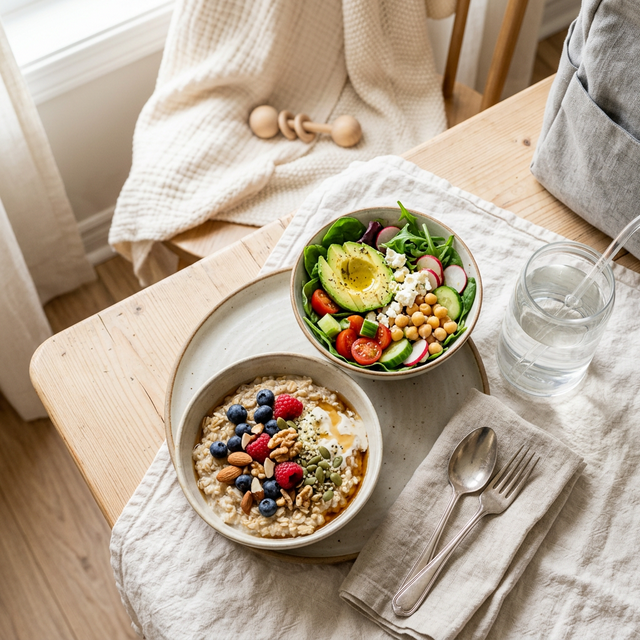
- Oats: The holy grail of postpartum foods. Oats are widely recognized as a galactagogue (a food that promotes milk production). They are high in iron, fiber, and complex carbs. Have a bowl of warm oatmeal every morning.
- Sweet potatoes: Packed with vitamin A, potassium, and slow-burning energy. You can bake several at once and reheat them.
- Quinoa and brown rice: Dense, nutrient-rich bases for leftover meats or roasted vegetables.
- Fresh fruit: Especially berries, which are high in antioxidants to reduce internal inflammation.
📱 Your Personal Postpartum Nutritionist
Too exhausted to think about macros? We've got you.
The PregnancyPlate app automatically tracks your restorative nutrients, hydration, and calories from a single photo of your food. Perfect for sleep-deprived mothers.
Download PregnancyPlate FreeCritical Micronutrients to Prioritize
While macros give you energy and substance, micronutrients act as the spark plugs for your body's recovery machinery. Do not stop taking your prenatal vitamin yet - most healthcare providers recommend continuing it as long as you are breastfeeding, or for at least six months postpartum if formula feeding, to rebuild your stores.
Iron
You lose blood during birth. If you had a postpartum hemorrhage, your iron levels might be critically low, leading to severe fatigue, dizziness, and a drop in milk supply. Unfortunately, many newborn mothers confuse the exhaustion of anemia with general newborn sleep deprivation. Prioritize iron-rich foods paired with Vitamin C (which boosts absorption).
Focus on: Red meat, dark poultry meat, spinach (squeeze lemon juice on it), lentils, and black beans.
Calcium and Vitamin D
If your diet lacks calcium, your body will literally take it from your bones to put into your breast milk to ensure the baby gets what it needs. Over time, this decreases maternal bone density. Vitamin D is required to absorb that calcium.
Focus on: Dairy products, calcium-fortified plant milks, tofu, almonds, and safely getting minutes of natural sunlight when possible.
Iodine and Choline
Both are crucial for your baby's ongoing brain and nervous system development, continuing to pass heavily through breast milk.
Focus on: Eggs (eat the yolks!), iodized salt, seaweed snacks, and white fish.
The Golden Rule of Lactation: Hydration
You cannot produce fluids without consuming fluids. Breast milk is about 87% water. When you start breastfeeding, you will likely experience a thirst so intense it feels like you've been wandering the desert for days. This is the hormone oxytocin triggering your thirst reflex.
Hydration strategies:
- Create "hydration stations": Set up a large, insulated water bottle with a straw in every single place you sit down to nurse or bottle-feed the baby. A straw is non-negotiable - you need to be able to drink one-handed securely without tipping water over your baby.
- Electrolytes matter: Plain water is great, but water infused with elements like sodium, potassium, and magnesium hydrates you on a cellular level. Adding a pinch of Celtic sea salt and a squeeze of citrus to your water, drinking coconut water, or drinking bone broth can radically improve how hydrated you actually feel.
- Warm beverages: According to Traditional Chinese Medicine and Ayurveda, postpartum bodies need warmth to heal. Ice water forces the body to expend energy to warm it up. Drink warm herbal teas (like red raspberry leaf to help the uterus contract, or fennel/fenugreek teas to support milk supply).
The Tradition of Warming Foods
Across almost every traditional culture around the globe - from the Chinese "sitting month" (Zuo Yue Zi) to Latin American "la cuarentena" and Ayurvedic postpartum diets - there is a universal consensus: postpartum women should eat warm, easily digestible, deeply nourishing foods.
Raw salads, ice-cold smoothies, and crunchy, hard-to-digest raw vegetables are universally discouraged. Why? Digestion takes immense energy. Your body's energy is currently being hoarded for healing and milk production. Soft, warm foods like broths, stews, curries, porridges, and thoroughly cooked vegetables essentially "pre-digest" the food for you, saving your body energy and providing immediate, easily absorbable nutrients.
Try these traditional postpartum superfoods:
- Bone Broth: Rich in collagen, amino acids, and minerals. Sip it like tea or use it as the base for all your soups and grains.
- Congee: A savory rice porridge cooked with heaps of ginger (which warms the body) and chicken broth.
- Golden Milk: Warm milk infused with turmeric, ginger, and black pepper to aggressively reduce systemic inflammation.
Practical Strategies: How to Actually Eat When You Have a Newborn
Knowing what to eat is only 10% of the battle. The other 90% is figuring out how to get that food into your mouth while holding a crying baby.
- The "One-Handed Rule": For the first six weeks, aim for meals that can be eaten entirely with one hand while holding a baby in the other. If it requires a knife to cut, it is too complicated. Sandwiches, wraps, muffins, energy bites, and things you can eat with a spoon from a mug are king.
- Embrace the freezer: If you are still pregnant, double whatever you are cooking right now and freeze half. Soups, lasagnas, chili, and lactation muffins freeze beautifully.
- Accept the food train: If friends ask how they can help, tell them specifically: "We would love a hot meal." Don't be shy about sharing dietary restrictions. People genuinely want to help you; give them the roadmap.
- Stash snacks everywhere: Keep non-perishable, high-calorie snacks by the bed, by the sofa, and in the nursery. Trail mix, beef jerky, granola bars, and dried fruit are lifesavers during the 2 AM feed.
Recipe: No-Bake Oatmeal Chocolate Chip Lactation Bites
These require no baking, take 10 minutes to make, and are packed with galactagogues to support milk supply.
Ingredients:
- 1 ½ cups old-fashioned rolled oats
- ½ cup ground flaxseed (excellent for omega-3s and milk supply)
- 1 cup creamy peanut butter or almond butter
- ⅓ cup raw honey
- 1 tsp vanilla extract
- 2 tbsp brewer's yeast (the secret ingredient for robust milk production)
- ½ cup dark chocolate chips (because you deserve it)
Instructions:
Mix everything in a large bowl. If it’s too dry, add a splash of water or more honey. Put the bowl in the fridge for 30 minutes to firm up. Roll into bite-sized balls. Store in an airtight container in the fridge for up to a week. Grab two every time you sit down to nurse.
The Bottom Line on Postpartum Nutrition
Healing a human body that just grew and gave birth to another human body is no small feat. It is an intense, vulnerable, and exhausting process. Food is not just fuel right now; it is medicine. It is the raw material your body desperately needs to put itself back together and to create food for your child.
Give yourself grace. If there are days where all you manage is cereal and a handful of crackers, that is okay. But whenever you have the choice - or whenever someone asks what they can bring you - choose the warm, dense, protein-rich option. Your future self will thank you for the nourishment.
Postpartum Recovery Made Simple
You don't need mental math right now. You need nourishment and rest.
The PregnancyPlate App lets you log your meals simply by taking a quick photo. It tracks your protein, hydration, and restorative calories to ensure you're getting exactly what you need for recovery and milk supply - so you can focus entirely on your baby.
Download PregnancyPlate FreeMeet the Editorial Team
The researchers and experts behind PregnancyPlate.

Fiza Izra
Founder & Tech Researcher
A UK-based mother of 3 with a background in tech and data synthesis, Fiza brings real-world experience navigating hyperemesis gravidarum and postnatal depression. She engineers complex clinical guidelines (NHS, ACOG) into accessible tools, ensuring rigorous fact-checking with deep empathy.

Emma Davies
Senior Nutrition Editor
A mum and writer, Emma runs our food safety desk. She is the one who rings the restaurant to ask how long the lettuce sits out, checks every claim against CDC, FDA and NHS guidance, and rewrites the answer until it is usable at 9pm in a drive-thru queue.
Make sense of every plate.
Scan your plate for pregnancy food-safety guidance and a nutrition breakdown. Keep your meals and nutrient progress in one place.
Scan with your iPhoneto get the app