Is Sushi Safe During Pregnancy? What You Can and Cannot Order
Most sushi is fine in pregnancy. Cooked rolls, California rolls and vegetable rolls are all safe. It is raw fish that is out, and here is exactly how to order.
In this article
Editorial note: This article is researched from official public health and pregnancy food safety guidance, then edited by the PregnancyPlate team for clarity. It is not medical advice. If you are worried about symptoms or a specific exposure, contact your midwife, GP or healthcare provider.
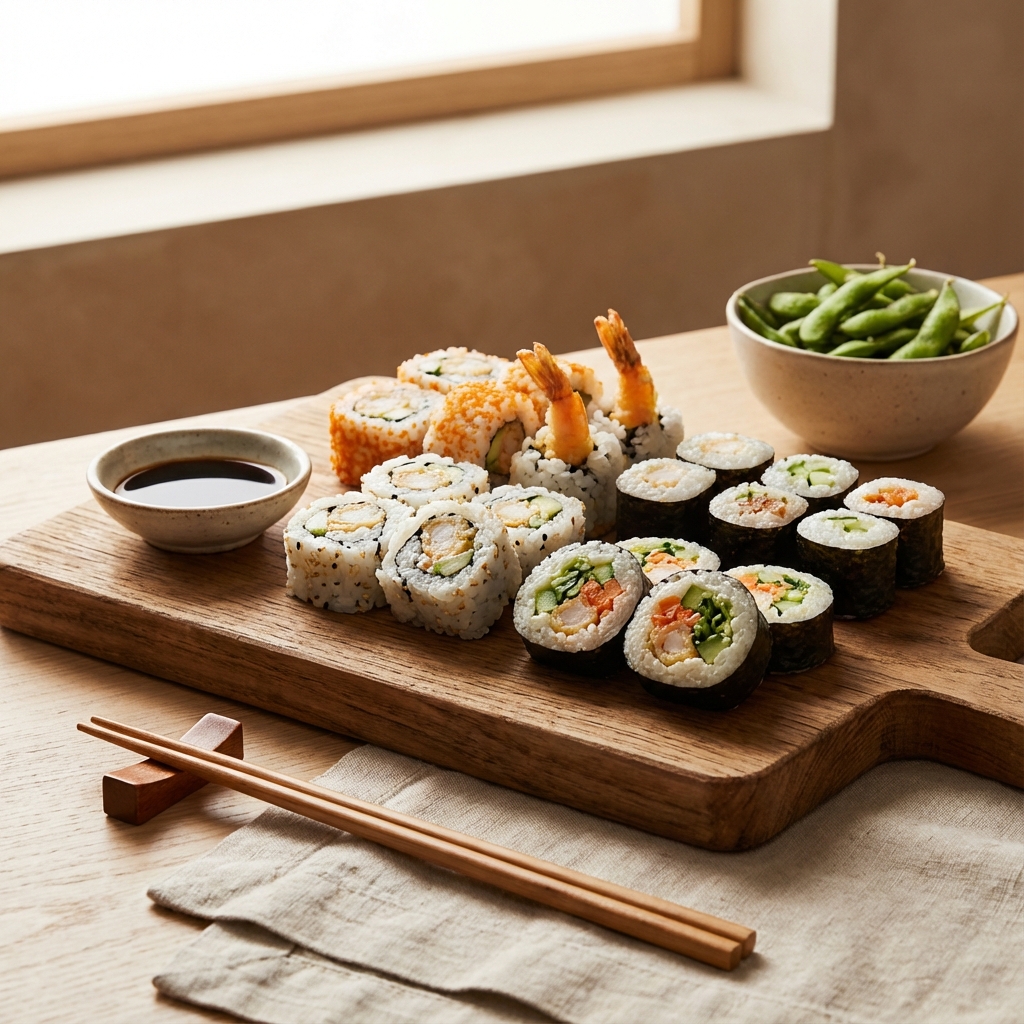
The Fast Answer: You can eat sushi while pregnant, you just cannot eat raw fish. That leaves a genuinely large menu: California rolls, cooked eel, prawn nigiri, tempura rolls, vegetable rolls, and anything labelled cooked. The rice, the seaweed, the wasabi and the soy are all fine. So the honest version of this rule is not "no sushi", it is "no sashimi", and most sushi restaurants have twenty things you can order.
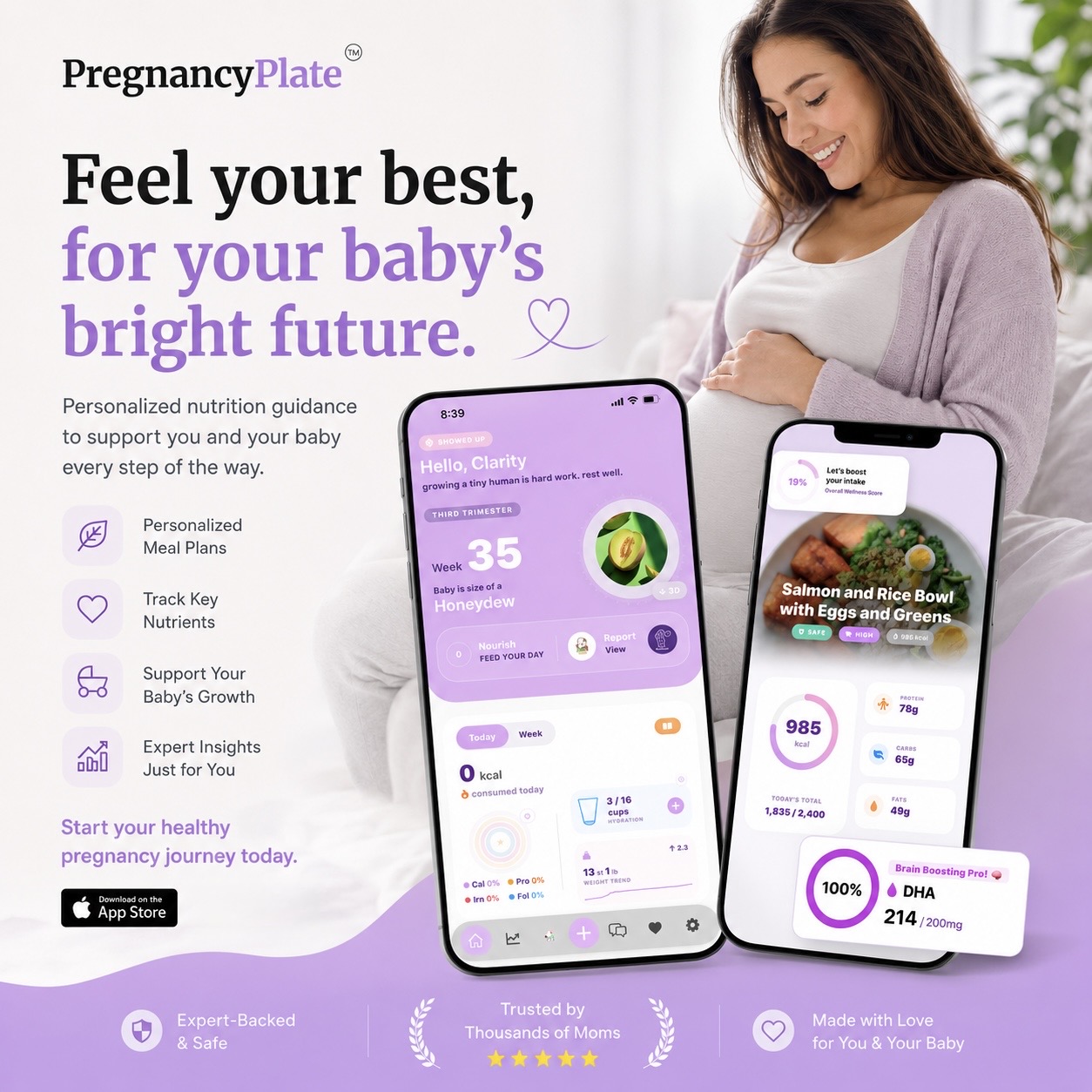
Check any menu for pregnancy safety in the PregnancyPlate AppSafety is step one. Nutrition helps your baby thrive.
Knowing a meal is safe does not tell you whether you are getting enough iron, folate, calcium and choline. PregnancyPlate tracks all of it from a photo of your plate.
- See nutrient progress
- Scan meals instantly
- Nourish with confidence
 Scan to download
Open with iPhone camera
Scan to download
Open with iPhone camera
Sushi is the pregnancy food question people feel most deprived about, and it is also the one where the blanket advice does the most unnecessary damage. "No sushi in pregnancy" has stopped countless women from ordering a California roll that was never a problem in the first place.
So let us do this properly: what the actual risk is, what it applies to, and what you can order tonight without thinking twice.
What the Risk Actually Is
Two things, and they are different from each other.
Listeria. This is the main one, and it is the reason raw fish is off the list. Listeria matters in pregnancy because you are roughly ten times more susceptible than usual and it can cross the placenta. It also grows at fridge temperatures, so chilling raw fish does not solve it.
Parasites. The more famous fear, and honestly the less important one. Commercial flash-freezing at very low temperatures kills parasites in fish destined to be eaten raw, and this is a legal requirement in the EU, UK and much of the US supply chain. Which is why the parasite argument is weaker than people think, and why the listeria argument is the one that actually decides the rule.
Mercury is a third consideration, but it applies to specific fish rather than to sushi as a category, and it applies whether the fish is raw or cooked.
What You Can Order: The Safe List
This is longer than most people expect.
- California rolls. Made with imitation crab, which is cooked processed fish, plus avocado and cucumber. Safe. Our California roll and tempura guide covers the detail.
- Cooked prawn or shrimp nigiri (ebi). The prawn is boiled. Safe.
- Unagi and anago (eel). Always cooked and glazed. Safe.
- Tempura rolls. Deep fried, so cooked through. Safe, and our shrimp tempura guide has the specifics.
- Vegetable rolls: cucumber (kappa), avocado, pickled radish, sweet potato. All safe.
- Inari, the sweet tofu pouches. Safe.
- Tamago, the sweet omelette. Cooked egg, safe.
- Cooked crab or lobster rolls, where the crab is genuinely cooked rather than raw.
- Chicken katsu or teriyaki rolls, which many places now offer.
What to Skip
- All sashimi, which is raw fish by definition.
- Raw nigiri: salmon, tuna, yellowtail, sea bream, scallop.
- Raw rolls: spicy tuna, rainbow, salmon avocado, and anything where the fish is uncooked.
- Poke bowls with raw fish, which are simply deconstructed sashimi.
- Raw shellfish: oysters, raw scallop, sea urchin (uni).
- High-mercury fish even when cooked: bigeye tuna, swordfish, marlin, shark.
The Hidden Ingredients Nobody Mentions
Worth knowing, because these appear on rolls that otherwise look completely safe.
Tobiko and masago are flying fish and capelin roe, the little orange beads on the outside of many rolls. They are raw. A modest amount is a very small exposure, but if you are being strict, rolls topped with roe are technically raw fish. Spicy mayo and eel sauce are made with commercial pasteurised mayonnaise and are fine. Wasabi, pickled ginger and soy are all fine, and the wasabi at most restaurants is horseradish and mustard anyway. Our guide to hidden sushi ingredients goes through all of them.
The other genuine consideration at a sushi counter is cross contamination, since the same board and knife handle raw and cooked. In a busy, well-run restaurant this is a small risk and not one worth agonising over. At a quiet supermarket counter at 8pm, it deserves more thought.
Already Had Some Raw Fish?
Please do not panic. Listeriosis is genuinely rare, and one salmon nigiri before you thought about it is overwhelmingly likely to be completely fine. There is nothing useful to do preemptively and no test worth asking for while you feel well. What matters is watching for flu-like symptoms, so fever, aches, chills or an upset stomach, over the following few weeks. If a fever appears, ring your midwife or OB and tell them what you ate. That single sentence gets you the right test and effective treatment if it is needed.
But Japanese Women Eat Sushi While Pregnant
They do, and it is a fair thing to raise, because the guidance genuinely differs by country rather than the biology differing.
Japanese prenatal guidance focuses heavily on mercury limits for specific fish rather than banning raw fish outright, and the supply chain, turnover and handling standards for raw fish in Japan are different from a supermarket sushi counter in Manchester or Ohio. Cultural context and food infrastructure are doing a lot of work in that comparison.
What it does tell you is that the risk is not enormous, which is worth knowing if you ate something and are frightened. What it does not mean is that the UK and US guidance is silly. We wrote this up properly in our guide to the Japanese approach to sushi in pregnancy.
Supermarket Sushi Versus a Restaurant
Freshness and turnover matter more here than the brand on the packet. A busy restaurant making rolls to order is a better bet than a chilled pack that has been in a cabinet since the morning, even if both contain the identical cooked ingredients, because time in chilled storage is exactly what listeria likes.
If you are buying prepacked, choose the freshest date, keep it properly cold, and eat it the same day rather than saving half for tomorrow.
Common Questions
Q: Is "sushi-grade" fish safer?
A: No, and this is worth knowing. "Sushi-grade" and "sashimi-grade" are marketing terms with no legal definition or regulatory standard behind them. They tell you nothing about listeria.
Q: Can I eat sushi rice? Is vinegar a problem?
A: Completely fine. Seasoned rice, nori, sesame and the vinegar are all safe.
Q: What about smoked salmon in a roll?
A: Cold-smoked salmon is not cooked, so treat it like raw fish. Hot-smoked is fine. Our salmon guide explains the difference.
Q: Does freezing at home make raw fish safe?
A: A domestic freezer does not reliably reach the temperatures used commercially, and freezing does nothing about listeria regardless. Not a workaround.
Q: How much cooked sushi can I eat per week?
A: The limit is mercury rather than sushi. Two to three servings a week of low-mercury fish is the guidance, and our tuna mercury audit covers which fish count.
The Verdict
- Cooked sushi: Safe. California rolls, eel, prawn, tempura, veg, tamago, inari.
- Raw fish: Skip. Sashimi, raw nigiri, spicy tuna, poke.
- Rice, nori, wasabi, ginger, soy, spicy mayo: all fine.
- Tobiko and masago are technically raw, so skip if you are being strict.
- "Sushi-grade" means nothing. It is not a regulated term.
- Freshly made beats prepacked, because chilled time is what listeria likes.
How to Order at a Sushi Restaurant Without a Negotiation
The practical version, because reading a list at home is different from standing at a counter with people waiting.
Say one sentence: "I am pregnant, so I need everything cooked, no raw fish." Sushi restaurants get this constantly and most will immediately point you at the cooked section. In many places the staff know the menu better than any list I could write.
Order by category, not by item. Tempura anything, eel anything, cooked prawn, vegetable rolls, katsu rolls. That framing gets you a full meal without having to interrogate each roll.
Watch for the roe garnish. The one thing that catches people out is a perfectly cooked roll arriving topped with orange tobiko. If you are being strict, mention it when ordering rather than picking it off afterwards.
Conveyor belt places need a bit more care, since plates sit out at room temperature for a while and you cannot always tell what is what. Ordering fresh from the kitchen rather than taking from the belt solves both problems at once.
The Nutrition Case for Eating Sushi
Worth flipping the framing, because sushi is not merely tolerable in pregnancy, a lot of it is actively good.
Cooked salmon rolls and eel deliver DHA, the omega-3 your baby's brain is physically built from, and most women fall well short of the 200mg a day recommendation. Nori is one of the better natural sources of iodine, which is quietly among the most under-consumed nutrients in pregnancy and matters for fetal brain development. Avocado in a California roll brings folate and healthy fats. Edamame on the side is protein, iron and fibre in one bowl.
A cooked sushi meal with a salmon roll, edamame and miso is genuinely one of the better takeaway options available to you, which is a much more useful thing to know than a list of prohibitions. If you want to see how it stacks up against your daily targets, our trimester macro guide sets those out.
Clinical Sources & Research
Meet the Editorial Team
The researchers and experts behind PregnancyPlate.

Fiza Izra
Founder & Tech Researcher
A UK-based mother of 3 with a background in tech and data synthesis, Fiza brings real-world experience navigating hyperemesis gravidarum and postnatal depression. She engineers complex clinical guidelines (NHS, ACOG) into accessible tools, ensuring rigorous fact-checking with deep empathy.

Emma Davies
Senior Nutrition Editor
A mum and writer, Emma runs our food safety desk. She is the one who rings the restaurant to ask how long the lettuce sits out, checks every claim against CDC, FDA and NHS guidance, and rewrites the answer until it is usable at 9pm in a drive-thru queue.