Baby Breakfast Ideas: What to Serve From 6 to 12 Months
Baby breakfast ideas by stage, from first spoonfuls to a proper meal, with the iron-rich options that matter most and what you can make the night before.
In this article
Editorial note: This article is researched from official public health and pregnancy food safety guidance, then edited by the PregnancyPlate team for clarity. It is not medical advice. If you are worried about symptoms or a specific exposure, contact your midwife, GP or healthcare provider.
The Fast Answer: Breakfast is the easiest meal to get iron into a baby, which makes it the one worth thinking about. Iron-fortified cereal, eggs and porridge with nut butter do most of the work. Start with a couple of spoonfuls at six months alongside a milk feed, and build to a proper meal by around a year. Nearly all of it can be made the night before.
Track first foods and iron in the PregnancyPlate AppSafety is step one. Nutrition helps your baby thrive.
Knowing a meal is safe does not tell you whether you are getting enough iron, folate, calcium and choline. PregnancyPlate tracks all of it from a photo of your plate.
- See nutrient progress
- Scan meals instantly
- Nourish with confidence
 Scan to download
Open with iPhone camera
Scan to download
Open with iPhone camera
Breakfast tends to be the meal parents overthink least and repeat most. Porridge, every day, for months.
Which is fine nutritionally, but it's a missed opportunity. Mornings are when babies are usually at their most receptive: rested, hungry, not yet fed up with being in the highchair. If you're going to introduce something new or push iron, this is the meal with the best odds.
Why Iron Belongs at Breakfast
Babies are born with iron stores that run down by around six months. From then on food has to supply it, and breast milk is naturally low in iron.
Breakfast is the easiest place to fix that, because the classic breakfast foods happen to be good vehicles. Iron-fortified baby cereal is the most concentrated source available. Eggs bring iron and choline. Fortified porridge oats and wholegrain toast contribute.
One trick that costs nothing: serve fruit alongside. Vitamin C substantially increases how much plant iron gets absorbed, so berries with the porridge or a few pieces of kiwi with the toast is doing real work rather than decoration.
6 to 8 Months: Small and Simple
Milk is still the main event. Breakfast here is a couple of spoonfuls or a strip of something to hold, offered after a milk feed rather than instead of one.
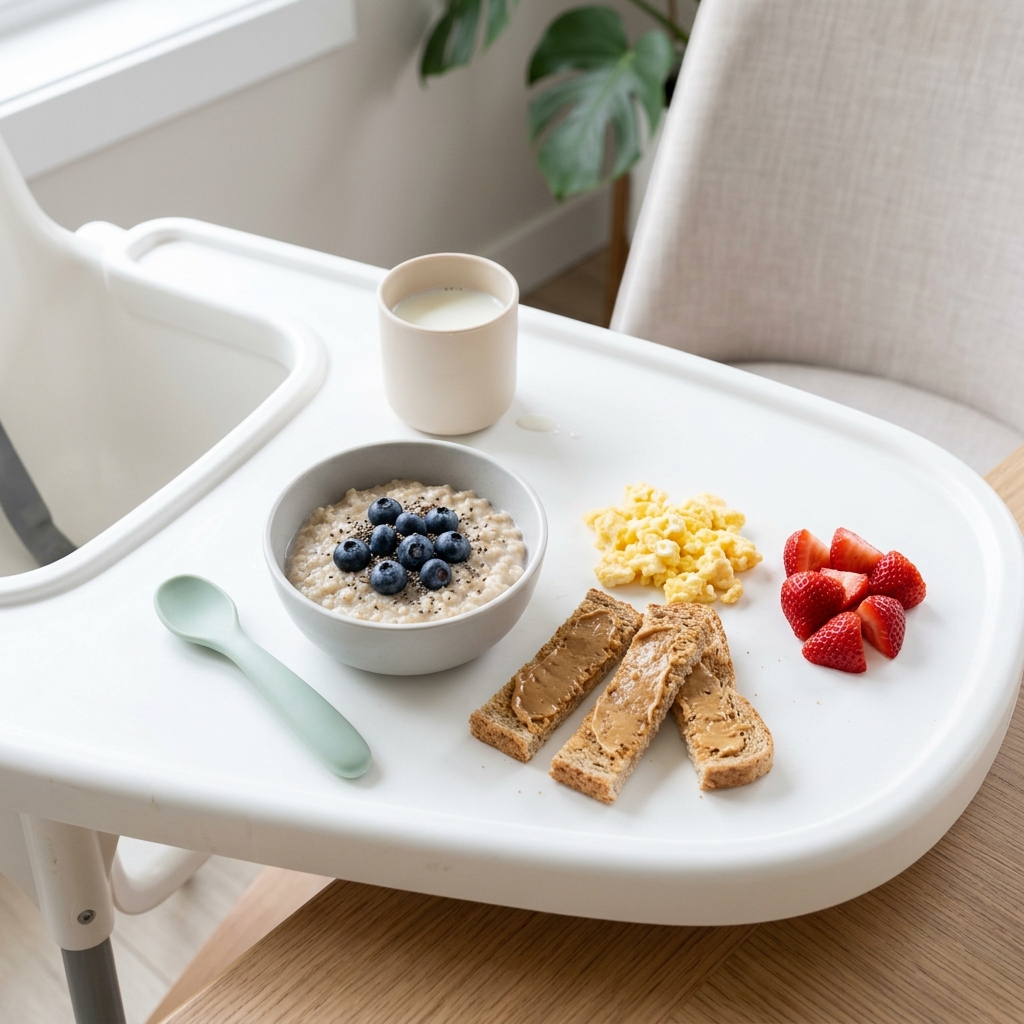
Ideas: iron-fortified baby cereal mixed with their usual milk. Smooth porridge, thinned. Mashed banana. Full-fat plain yogurt. Toast fingers with a thin scrape of nut butter. Soft-cooked egg, mashed or in strips.
Portions are teaspoons. Most of it will end up elsewhere, which is expected at this stage. Our 4 week weaning plan covers what's normal.
Egg deserves a mention here, since it's one of the main allergens and breakfast is the natural place to introduce it. Offer it in the morning so you have daylight hours to watch, and once it's in, keep it in the rotation. Our allergen guide covers the rest.
9 to 11 Months: A Real Meal
By now breakfast is a proper part of the day rather than practice, textures are lumpier, and the pincer grip means smaller pieces work.
Ideas: porridge with grated apple and cinnamon. Scrambled egg with soft toast soldiers. Greek yogurt with mashed berries and ground seeds. Wholemeal toast with mashed avocado. Fortified cereal with whole milk (fine in food from six months, just not as a main drink until one). Pancakes made with banana and egg, no sugar. Baked beans, reduced salt, on toast.
Serve some of it as finger food and some on a spoon. Both grips are in use at this stage, and our finger foods by stage guide covers the shapes.
12 Months and Beyond
Now they eat roughly what you eat, chopped small and unsalted. This is the point to stop cooking separately.
Ideas: porridge or wholegrain cereal with fruit. Eggs any way. Toast with nut butter, mashed banana or cream cheese. Yogurt with fruit and granola softened in. Leftover pancakes. Cheese on toast, cut into fingers. A small bowl of soup, which is a perfectly normal breakfast in plenty of countries.
Cow's milk can become their main drink from twelve months, whole fat until at least two.
Breakfast in One Box
- 6 to 8 months: a couple of spoonfuls after a milk feed.
- 9 to 11 months: a real meal, mixed spoon and finger food.
- 12 months plus: whatever you're having, chopped and unsalted.
- Lead with iron: fortified cereal, eggs, fortified oats.
- Add fruit for the vitamin C, which boosts iron absorption.
Make It the Night Before
Mornings with a baby are not the time for cooking, and almost all of this can be done in advance.
Overnight oats, made in seconds, keep three days, and can be served warm or cold. Egg muffins baked in a tin with cheese and vegetables reheat in thirty seconds and freeze well. Banana pancakes made at the weekend keep in the fridge for a few days. Fruit chopped the night before in a covered pot, avoiding banana and apple which brown.
And the freezer does the rest: fruit purees, pancakes, egg muffins and porridge portions all freeze in single servings. Our baby food freezer system covers the storage and reheating rules.
A Week of Breakfasts, Written Out
For anyone who would rather not decide at 7am. This is pitched at around nine to twelve months; scale portions down and mash more for a younger baby.
- Monday: porridge with grated apple and cinnamon, few berries alongside
- Tuesday: scrambled egg, wholemeal toast fingers, sliced strawberries
- Wednesday: overnight oats with mashed banana and ground seeds
- Thursday: egg muffin from the freezer, cucumber sticks, orange segments
- Friday: iron-fortified cereal with whole milk, blueberries
- Saturday: banana pancakes, Greek yogurt to dip, raspberries
- Sunday: avocado on toast, quartered cherry tomatoes, cheese cubes
Notice the pattern: an iron source and a vitamin C source every single day. That pairing is the whole nutritional point of the week, and once you can see it you can build your own without a list.
What About Milk at Breakfast?
A question that comes up constantly, and the answer changes at twelve months.
Under one: breast milk or formula stays the main drink, around 500 to 600ml a day, or breastfeeding on demand. Cow's milk is fine in food from six months, so on cereal or in porridge, just not as a drink from a cup.
From twelve months: whole cow's milk can become the main drink. Keep it full fat until at least two, since babies need the fat for brain development.
Timing matters more than people realise. A large milk feed immediately before breakfast tends to mean breakfast gets refused. If that's your pattern, try putting an hour between the two.
One thing worth knowing: cow's milk is very low in iron, and large quantities can interfere with iron absorption. That's why the guidance caps toddler milk intake at around 350 to 400ml a day, and it's another reason the iron-rich breakfast matters.
What to Keep Off the Breakfast Table
Short list, and mostly about salt and sugar rather than danger.
Honey, not until twelve months, including baked into things. This one is absolute, because of the risk of infant botulism.
Most adult cereals. The salt and sugar content is high for a baby, and the under-one salt limit is under 1g a day. Check the label rather than assuming a healthy-looking box is fine.
Fruit juice and smoothies as a drink. Water or milk only, and whole fruit rather than blended.
Added sugar generally. Not dangerous, just unhelpful. Start sweet and everything else tastes worse by comparison.
Whole nuts, which are a choking risk until five. Smooth nut butter spread thin is fine and a genuinely useful breakfast food.
Breakfast Away From Home
Nursery, grandparents, a hotel, the car. The stage rules travel; the convenience options are where it gets awkward.
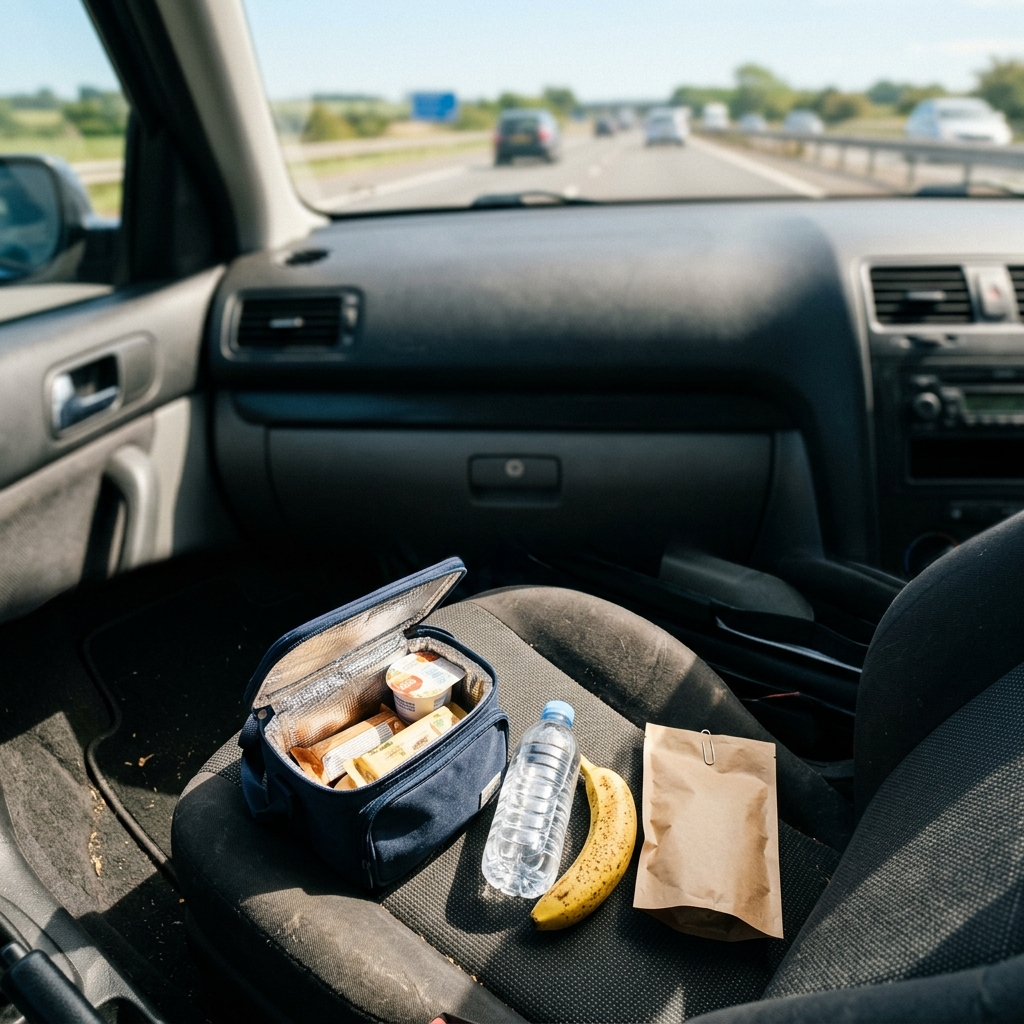
Genuinely fine on the go: banana in its skin, rice cakes, plain breadsticks, a pot of full-fat yogurt, cheese cubes, soft fruit in a tub, a cooked egg muffin. All survive a bag for a couple of hours without refrigeration.
Worth checking before you rely on them: baby breakfast pouches, which are convenient but train sucking rather than chewing and are often mostly fruit. Fine occasionally, poor as the default. And hotel or café cereals, which are usually well over the salt and sugar you'd choose.
If someone else is doing breakfast, write down what stage you're at. "Everything soft enough to squash, no honey, no salt" takes ten seconds and saves the conversation happening after the fact.
When Breakfast Is Refused
Very common and rarely a problem worth worrying about. Our guide to food refusal covers what to do when it spreads beyond breakfast.
Some babies simply aren't hungry first thing, particularly if they've had a large night feed. Milk is still doing most of the nutritional work in the first year, so a skipped breakfast is not the event it would be for an adult.
What helps: offer breakfast a little later, an hour or so after the first milk feed rather than immediately. Keep offering without pressure, since a food often needs eight or ten exposures before it's accepted. And rotate rather than serving the same thing daily, which reduces how quickly they burn out on it.
What doesn't help is turning it into a negotiation. That's the one approach that reliably makes things worse, at every age. Our first 100 foods list is a useful prompt if you're stuck for variety.
Clinical Sources & Research
Meet the Editorial Team
The researchers and experts behind PregnancyPlate.

Fiza Izra
Founder & Tech Researcher
A UK-based mother of 3 with a background in tech and data synthesis, Fiza brings real-world experience navigating hyperemesis gravidarum and postnatal depression. She engineers complex clinical guidelines (NHS, ACOG) into accessible tools, ensuring rigorous fact-checking with deep empathy.

Emma Davies
Senior Nutrition Editor
A mum and writer, Emma runs our food safety desk. She is the one who rings the restaurant to ask how long the lettuce sits out, checks every claim against CDC, FDA and NHS guidance, and rewrites the answer until it is usable at 9pm in a drive-thru queue.