Foods to Avoid During Pregnancy: The Complete List (and What Is Actually Fine)
The real avoid list is shorter than you think. Organised by the four actual risks, with what to eat instead and the foods you have been wrongly warned about.
In this article
Editorial note: This article is researched from official public health and pregnancy food safety guidance, then edited by the PregnancyPlate team for clarity. It is not medical advice. If you are worried about symptoms or a specific exposure, contact your midwife, GP or healthcare provider.
The Fast Answer: The genuine avoid list is far shorter than the internet suggests. It comes down to four risks: listeria in chilled ready-to-eat foods, mercury in a handful of large fish, raw or undercooked animal products, and a few specific extras like high-dose vitamin A and alcohol. Almost everything else you have been warned about is either fine, or fine with one adjustment. Here is the whole list, with what to eat instead.
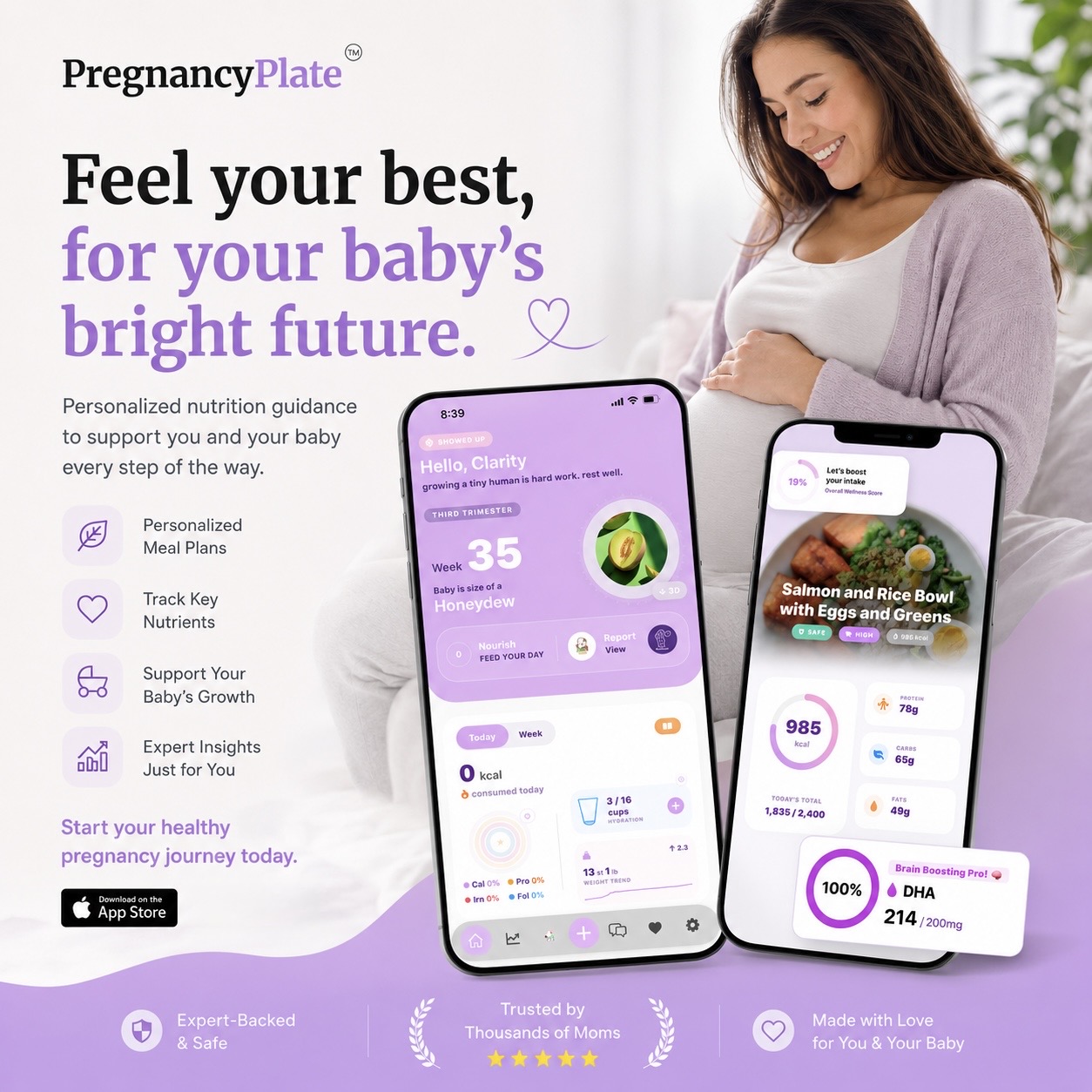
Scan any food for pregnancy safety in the PregnancyPlate AppSafety is step one. Nutrition helps your baby thrive.
Knowing a meal is safe does not tell you whether you are getting enough iron, folate, calcium and choline. PregnancyPlate tracks all of it from a photo of your plate.
- See nutrient progress
- Scan meals instantly
- Nourish with confidence
 Scan to download
Open with iPhone camera
Scan to download
Open with iPhone camera
Search this question and you will find lists of forty things, half of which contradict each other and most of which trace back to somebody's aunt. It is genuinely stressful, and it is the reason so many women end up eating nothing but toast for nine months.
So here is the version organised by why, because once you understand the four underlying risks the list becomes short, logical, and easy to apply to anything you encounter.
Risk One: Listeria in Chilled Ready-to-Eat Foods
Listeria is the reason for most of the pregnancy food list. It matters because pregnancy makes you roughly ten times more susceptible, and it can cross the placenta. Crucially, it is one of the very few bacteria that keeps multiplying at fridge temperatures, which is why chilled ready-to-eat foods are the category rather than "dirty" foods.
- Cold deli meat and cold cuts. Safe when heated until steaming, 165F or 74C. Our deli meat guide covers this properly.
- Pate and meat spreads, including vegetable pate. Genuinely avoid, and liver pate doubles up with a vitamin A problem.
- Soft mould-ripened cheeses like brie and camembert, and soft blue cheeses. Safe cooked until steaming.
- Any unpasteurised cheese or milk. This is the real cheese rule, not softness. Pasteurised feta, mozzarella, ricotta and halloumi are all fine.
- Cold-smoked salmon and lox. Safe cooked, and hot-smoked is safe as it comes. See our salmon guide.
- Pre-prepared chilled salads from a counter where you cannot tell how long they have been sitting.
Risk Two: Mercury in Large Fish
This one is narrow and often over-applied. Mercury accumulates in big, long-lived predatory fish. Most fish is not only fine but actively recommended, because the omega-3s matter for fetal brain development.
Avoid entirely: shark, swordfish, king mackerel, marlin, tilefish and bigeye tuna.
Limit: albacore or white tuna to about one serving a week, and light tuna to two or three. Our tuna audit has the detail.
Actively eat: salmon, sardines, trout, cod, haddock, prawns. Two to three servings a week of low-mercury fish is the recommendation, not a concession.
Risk Three: Raw and Undercooked Animal Products
Standard food poisoning organisms, taken more seriously in pregnancy because you are more vulnerable and dehydration carries its own risks.
- Raw or undercooked meat and poultry. Cook poultry to 165F, mince and burgers to 160F, whole cuts of beef and lamb to 145F.
- Raw fish and shellfish, so sashimi, oysters, ceviche. Cooked sushi rolls are fine, and our sushi guide covers what works.
- Raw or runny eggs, unless they carry a safety mark such as British Lion, in which case UK guidance accepts them. This includes homemade mayonnaise, mousse and raw cake batter.
- Raw cookie dough, for the flour as much as the egg. Commercial edible dough is fine.
- Raw sprouts, which are hard to wash and have a genuine outbreak history.
Risk Four: The Specific Extras
- Alcohol. No known safe amount, so the guidance is none.
- High-dose vitamin A, which means liver and liver products, and any supplement containing retinol. This one is genuinely important and often missed.
- Caffeine over 200mg a day, roughly two mugs of instant coffee or one strong takeaway. Not an avoid, a limit.
- Certain herbal teas in quantity. Our herbal tea guide sorts these out.
- Unwashed fruit and vegetables, because of soil-borne toxoplasma. Wash, do not peel everything.
Things You Have Probably Been Told to Avoid That Are Fine
- Hard cheeses of any kind, including blue-veined hard cheeses like stilton.
- Pasteurised soft cheeses: cream cheese, cottage cheese, mozzarella, ricotta, feta.
- Cooked shellfish, including prawns and crab.
- Spicy food. It will not harm the baby, though it may punish your reflux.
- Pineapple. The labour myth would require eating several fresh cores.
- Honey. The botulism warning applies to babies under one, not to you.
- Ice cream from sealed tubs, which is pasteurised. See our ice cream guide.
The Rule That Replaces the List
If you remember one thing rather than forty, make it this: heat resolves almost everything. Deli meat, soft cheese, cold-smoked salmon, leftovers, all become safe when heated until genuinely steaming. The permanent avoids are a short list: alcohol, liver, high-mercury fish, unpasteurised dairy, and raw shellfish.
Everything else is a temperature problem, not a food problem.
If You Have Already Eaten Something on the List
Almost certainly fine, and this is worth saying plainly because the anxiety does more damage than the sandwich. These illnesses are rare even among pregnant women, and a single exposure very rarely causes harm.
There is nothing useful to do preemptively. What matters is watching for symptoms: a fever, flu-like aches, or persistent stomach upset in the following days or weeks. If any appear, call your midwife or OB and tell them specifically what you ate, which gets you the right test rather than a general one. Our food poisoning in pregnancy guide covers what to watch for.
Common Questions
Q: Why do UK and US lists differ?
A: Mostly eggs and cured meat. The NHS accepts British Lion marked eggs runny because of a vaccination programme US eggs do not have, and is more relaxed about cured salami. Both agree entirely on listeria, mercury and alcohol.
Q: Does the list change by trimester?
A: No. Listeria and mercury risks apply throughout. What changes is your tolerance, since nausea in the first trimester and reflux in the third will shape what you actually want to eat.
Q: Is one glass of wine really a problem?
A: There is no established safe threshold, so official guidance in both countries is none. What is clear is that a single drink before you knew you were pregnant is not a cause for alarm.
Q: Do I need to avoid peanuts?
A: No. That advice was withdrawn years ago. Unless you are personally allergic, peanuts are fine and may even be beneficial.
A Practical Week: What This Looks Like in Real Life
Lists are abstract, so here is the same information as behaviour rather than rules.
At the supermarket, the only label you routinely need to check is "pasteurised" on soft cheese and dairy. Everything else in a sealed packet within date is fine. Sealed chilled ready meals are fine because you are heating them anyway.
At home, the two habits that matter are cooking meat and eggs properly and getting leftovers into the fridge within two hours, then eating them within three days and reheating until steaming. Our leftovers guide covers the timings.
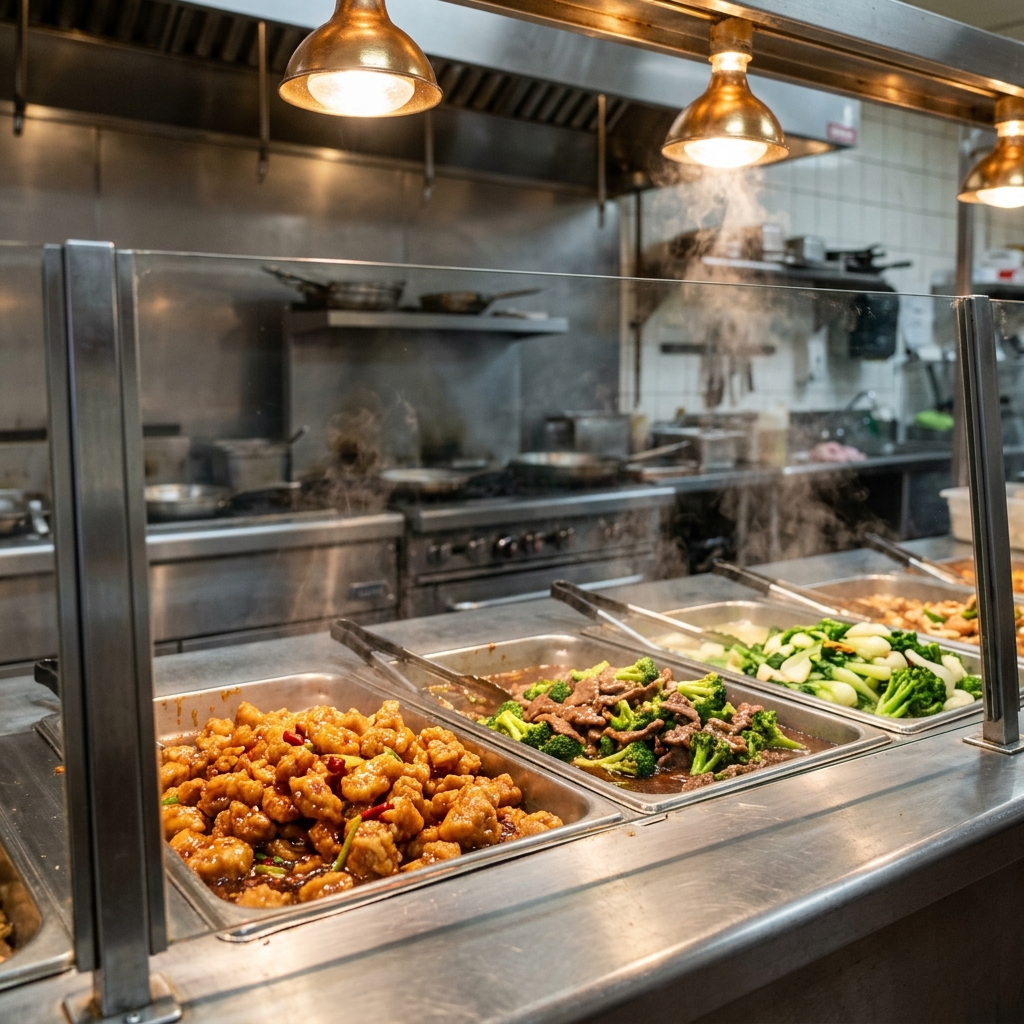
Eating out, the questions worth asking are whether the cheese is pasteurised, whether meat can be cooked through, and whether a sandwich can be toasted. All three are completely normal requests and none of them will raise an eyebrow.
At someone's house, where asking is more awkward, hot food is your ally. Anything served hot from the oven is fine. The buffet table that has been out for two hours is the thing to be relaxed about avoiding rather than the specific dishes on it.
Why the Internet List Is So Much Longer Than This One
Three reasons, and knowing them makes it easier to dismiss the noise.
Cultural advice gets mixed with clinical advice. Warnings about pineapple, papaya, spicy food and cold drinks are traditional beliefs in various cultures, not findings from food safety agencies. They are not dangerous, they are just not evidence.
Old guidance persists. The peanut avoidance advice was withdrawn over a decade ago and still circulates. Similarly, guidance on eggs in the UK changed substantially after the British Lion scheme, but the older blanket warning is still repeated.
Sites hedge to protect themselves. It is easier to write "avoid" than to explain a nuanced position, so borderline items drift onto avoid lists and stay there. The result is a list so long it becomes unusable, and women either follow it miserably or ignore all of it.
The four-risk framework above is what the actual agencies work from. It is short because the evidence is short.
The Nutrients This List Can Cost You
One genuine downside of a long avoid list is that women cut whole food groups and lose the nutrients that were the reason to eat them. Worth naming the swaps.
Cutting fish entirely out of mercury worry costs you the DHA and iodine that made fish worth eating in the first place, and two portions a week of low-mercury fish is the actual target rather than zero. Cutting all cheese costs calcium when the overwhelming majority of cheese is fine. And quietly dropping deli meat without replacing it often costs iron and protein, which matters most for women already dealing with meat aversion. Our pregnancy lunch guide has replacements that need no heating.
Clinical Sources & Research
Meet the Editorial Team
The researchers and experts behind PregnancyPlate.
Fiza Izra
Founder & Tech Researcher
A UK-based mother of 3 with a background in tech and data synthesis, Fiza brings real-world experience navigating hyperemesis gravidarum and postnatal depression. She engineers complex clinical guidelines (NHS, ACOG) into accessible tools, ensuring rigorous fact-checking with deep empathy.

Emma Davies
Senior Nutrition Editor
A mum and writer, Emma runs our food safety desk. She is the one who rings the restaurant to ask how long the lettuce sits out, checks every claim against CDC, FDA and NHS guidance, and rewrites the answer until it is usable at 9pm in a drive-thru queue.