Is Red Lobster Safe During Pregnancy? Shrimp, Crab, Lobster and the Raw Bar
Most of this menu is encouraged in pregnancy, not restricted. Which seafood is low mercury, what to skip, and why the biscuits matter more than the fish.
In this article
Editorial note: This article is researched from official public health and pregnancy food safety guidance, then edited by the PregnancyPlate team for clarity. It is not medical advice. If you are worried about symptoms or a specific exposure, contact your midwife, GP or healthcare provider.
The Fast Answer: A seafood restaurant is better news in pregnancy than most people expect. Shrimp, crab, lobster, scallops, salmon and tilapia are all low-mercury "Best Choices", and health authorities actively encourage two to three servings of low-mercury fish a week. Order it cooked through, skip anything raw or from a raw bar, and treat the biscuits, butter and sodium as the real considerations rather than the seafood itself.
Track your nutrition in seconds in the PregnancyPlate AppSafety is step one. Nutrition helps your baby thrive.
Knowing a meal is safe does not tell you whether you are getting enough iron, folate, calcium and choline. PregnancyPlate tracks all of it from a photo of your plate.
- See nutrient progress
- Scan meals instantly
- Nourish with confidence
 Scan to download
Open with iPhone camera
Scan to download
Open with iPhone camera
Most pregnancy seafood advice is a list of things to avoid, which leaves people assuming a seafood restaurant is a minefield. It's closer to the opposite.
Cooked, low-mercury seafood is one of the few foods official guidance tells pregnant people to eat more of, not less. Red Lobster's menu is built almost entirely from that category.
Why Seafood Is Encouraged, Not Restricted
Fish and shellfish bring three things that are hard to get elsewhere.
Omega-3 fats, particularly DHA, which are used directly in your baby's brain and eye development. Iodine, which is needed for thyroid function and neurological development and is commonly low in pregnancy. And protein with very little saturated fat, alongside iron, zinc and selenium.
US guidance recommends two to three servings a week of fish from its "Best Choices" list, which is around 8 to 12 ounces in total. UK advice is similar, with up to two portions of oily fish a week. Most people eat less than that, not more.
The mercury warnings that dominate the conversation apply to a short list of large predatory fish, and almost none of them appear on a menu like this one. Our omega-3 in pregnancy guide covers why the benefit is worth pursuing.
The Menu, Item by Item
Menus vary by location and change seasonally, so use the pattern rather than only the list.
| Item | Verdict | Notes |
|---|---|---|
| Shrimp, any preparation | Safe cooked | Low mercury and a "Best Choice". Should be pink and opaque, never grey or translucent. |
| Snow crab and king crab legs | Safe | Steamed through and served hot. Low mercury. |
| Lobster tail | Safe | Low mercury, cooked to order. One of the better things you can order. |
| Scallops | Safe cooked | Ask for them cooked through rather than rare in the middle, which some kitchens do by default. |
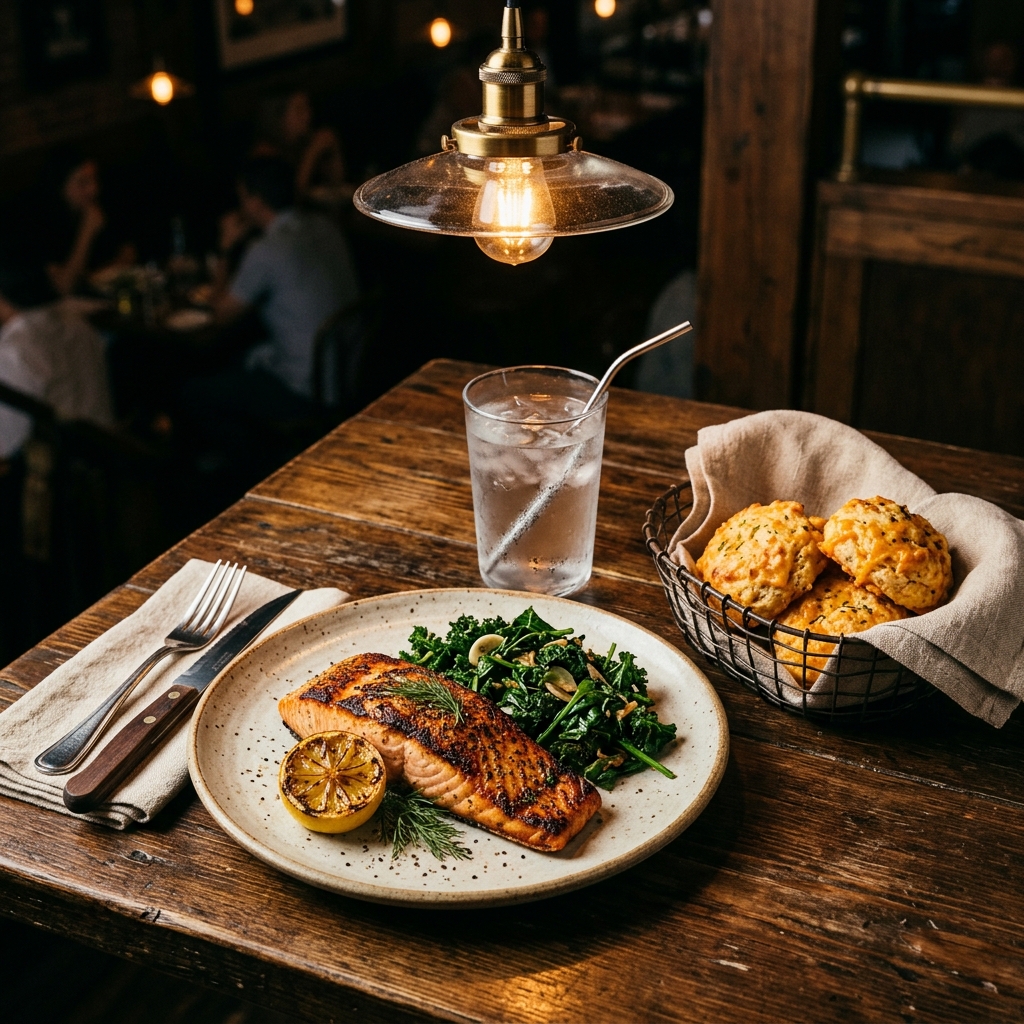
| Atlantic salmon | Safe, and good | Oily fish, high in DHA. Counts towards your two portions of oily fish a week. |
| Tilapia, flounder, cod, haddock | Safe | White fish, low mercury, cooked through. |
| Fried shrimp, fish and chips, calamari | Safe | Cooked through. Fat and salt are the consideration, not safety. |
| Raw oysters or any raw bar item | Avoid | Raw shellfish is one of the few clear no-go foods in pregnancy. |
| Seared tuna, if offered | Avoid rare | Two problems at once: raw in the middle, and tuna sits higher on mercury. |
| Smoked salmon starters, if offered | Avoid cold | Cold-smoked fish is not cooked. Fine only if it's in a hot cooked dish. |
| Cheddar Bay Biscuits | Safe | Baked. Very moreish and very salty. |
| Caesar salad | Safe | Restaurant dressing is a commercial product made with pasteurised egg. |
| Coleslaw and cold sides | Safe fresh | Chilled ready-to-eat. Fine in the restaurant, less so left in a warm car. |
The Mercury Question, Settled
Mercury is the reason people worry about seafood in pregnancy, and it's worth knowing which fish it actually applies to.
The avoid list is short: shark, swordfish, king mackerel, marlin, orange roughy, bigeye tuna and tilefish from the Gulf of Mexico. These are large, long-lived predators that accumulate mercury over years.
Everything shellfish is low. Shrimp, crab, lobster, scallops, clams and mussels are all in the lowest mercury category, which covers most of this menu.
Tuna is the one to watch. Canned light tuna is a "Best Choice", albacore is limited to about one serving a week, and bigeye is on the avoid list. If a seared tuna dish appears as a special, it's the one item worth passing on, for doneness as much as mercury.
Our guides to crab in pregnancy and prawns and shrimp go through the numbers in more detail.
What to Actually Check When It Arrives
The one thing worth doing at the table.
Shrimp should be pink and opaque all the way through, with no grey, glassy centre. Fish should flake apart easily and look opaque rather than translucent. Scallops should be white and firm rather than glossy in the middle. Crab and lobster arrive steaming, which answers the question by itself.
Sending something back to be cooked a little longer is a normal request in any restaurant and takes a couple of minutes. Kitchens cook scallops and tuna rare as a matter of style, not carelessness, so saying "cooked through, please" when you order saves the trip back.
Red Lobster in One Box
- Most of this menu is encouraged, not restricted.
- Say "cooked through" when ordering scallops or any seared fish.
- Nothing raw, including oysters and cold-smoked salmon.
- Salt and butter are the real considerations.
- Leftovers in the fridge within two hours, eaten within a day.
Frozen Is Not a Problem
Worth clearing up, because "fresh" gets treated as a safety word and it isn't one.
Most seafood served anywhere, including good restaurants, was frozen at some point, often on the boat within hours of being caught. For pregnancy that's a positive rather than a negative. Commercial freezing at very low temperatures kills parasites, which is precisely why sushi-grade fish has to be frozen before it's served raw.
So a frozen-at-sea shrimp cooked through is no less safe than one that never saw a freezer. What matters is the cooking, the holding temperature and the time since it was prepared, not whether it arrived frozen.
The Cold Half of the Menu
Every safety question at a seafood restaurant sits on the cold side, not the hot one.
Listeria grows at refrigerator temperatures, which is why chilled ready-to-eat foods get flagged in pregnancy while hot cooked food doesn't. At a place like this, that means the raw bar if there is one, cold-smoked salmon, ceviche, any chilled seafood salad made in advance, and cold sides that have been sitting out.
Shrimp cocktail is the one that causes most confusion. The shrimp themselves are cooked, so they're fine. The consideration is that they're then chilled and held, so you want them properly cold and freshly served rather than sitting on a warm buffet. Our shrimp cocktail guide covers it, and our smoked salmon guide explains why cold-smoked fish is the exception among salmon dishes.
Ordering With Nausea or Heartburn
Symptoms change the best order here more than safety does.
Nausea. Strong cooking smells are the usual trigger, and a seafood restaurant has plenty. Sitting away from the kitchen helps, as does ordering something plain: grilled white fish, plain shrimp, rice, a baked potato. Ask for sauces on the side so you control how strong the plate smells.
Heartburn. Fried seafood, garlic butter and a large portion late in the evening is close to a worst case. Grilled rather than fried, half the plate boxed up at the start, and eating two to three hours before bed makes far more difference than any individual ingredient.
Low appetite in the third trimester. Starters rather than mains often work better once there's no room left. A cup of soup and a side of shrimp is a perfectly reasonable dinner at 36 weeks.
Salt, Butter and How You'll Feel Later
Safety here is straightforward. Comfort is where the choices are.
Sodium. Restaurant seafood is generously salted, the biscuits are salty, and garlic butter sauces add more. In the second half of pregnancy that tends to show up the same evening as swollen feet and fingers. Our swelling guide covers what helps, and drinking water with the meal does more than you'd think.
Butter and frying. Rich, fatty food is one of the most reliable heartburn triggers, and heartburn worsens as the baby takes up more room. Grilled or broiled instead of fried, sauce on the side, and eating earlier in the evening all help more than any single swap. Our heartburn guide ranks the triggers.
The biscuits. They're unlimited, they arrive before the food, and they're very easy to fill up on when you're hungry. Having one or two alongside the meal rather than four before it is the difference between enjoying dinner and feeling uncomfortable for the rest of the night.
Iodine, the Nutrient Nobody Mentions
Worth its own note, because seafood is one of the few reliable sources and it rarely comes up.
Iodine is needed to make thyroid hormones, and those hormones drive your baby's brain and nervous system development, particularly in the first half of pregnancy. Requirements rise in pregnancy, and intakes are often low, especially for people who don't eat fish or dairy.
White fish, shellfish and dairy are the main dietary sources. A plate of cod or haddock does a meaningful amount of work here, which is a reason to order the plain white fish rather than treating it as the boring option.
One caution in the other direction: seaweed and kelp supplements can contain very high and unpredictable amounts of iodine, and are best avoided in pregnancy. Food sources are the sensible route.
A Good Pregnancy Order
If you want something that covers the nutrients as well as the craving.
Grilled salmon with a vegetable side and rice. DHA, protein and iodine in one plate, and grilling keeps the fat down for heartburn.
Snow crab legs with a baked potato. Very low mercury, high protein, and the melted butter is easy to use sparingly when it's on the side.
Shrimp any way but fried, with a salad or vegetables. Light, cooked through, and a good option when you're too nauseated for anything heavy.
If you're ordering for two people and eating half, that works too. Just get the leftovers into the fridge within two hours and eat them the next day rather than later in the week, since cooked seafood keeps less well than most leftovers. Our leftovers guide has the timings.
If You Are Not Sure About Something
Two questions cover almost anything on a seafood menu: is it cooked all the way through, and is anything in it raw or cold-smoked. Staff answer both routinely.
Specials are where it's worth asking, since that's where ceviche, crudo, seared tuna and raw bar items tend to appear. The standard menu is far more predictable. Our sushi in pregnancy guide covers the raw fish reasoning if you want the detail, and our salmon guide explains why cooked oily fish is worth ordering rather than avoiding.
The short version: this is one of the better restaurants to be pregnant in. Order it cooked, skip the raw bar, and go easy on the biscuits.
Clinical Sources & Research
This article is general information and does not replace advice from your midwife, GP or obstetrician. Menus vary by location and season. If you develop a fever or flu-like symptoms after eating seafood you're unsure about, contact your maternity team.
Meet the Editorial Team
The researchers and experts behind PregnancyPlate.

Fiza Izra
Founder & Tech Researcher
A UK-based mother of 3 with a background in tech and data synthesis, Fiza brings real-world experience navigating hyperemesis gravidarum and postnatal depression. She engineers complex clinical guidelines (NHS, ACOG) into accessible tools, ensuring rigorous fact-checking with deep empathy.

Emma Davies
Senior Nutrition Editor
A mum and writer, Emma runs our food safety desk. She is the one who rings the restaurant to ask how long the lettuce sits out, checks every claim against CDC, FDA and NHS guidance, and rewrites the answer until it is usable at 9pm in a drive-thru queue.