Eating on Night Shifts While Pregnant: What to Take and When to Eat It
Digestion slows overnight and pregnancy slows it further. Why your main meal belongs before the shift, what to pack, and how to handle caffeine on nights.
In this article
Editorial note: This article is researched from official public health and pregnancy food safety guidance, then edited by the PregnancyPlate team for clarity. It is not medical advice. If you are worried about symptoms or a specific exposure, contact your midwife, GP or healthcare provider.
The Fast Answer: Eating well on nights while pregnant comes down to three things. Eat your main meal before the shift, not during it, because digestion genuinely slows overnight. Take small protein-based food for the middle of the night rather than relying on whatever the vending machine has. And keep caffeine early in the shift and under 200mg, which is a real constraint when you're working through the night. A light meal after the shift helps you sleep better than a big one.
Track your nutrition in seconds in the PregnancyPlate AppSafety is step one. Nutrition helps your baby thrive.
Knowing a meal is safe does not tell you whether you are getting enough iron, folate, calcium and choline. PregnancyPlate tracks all of it from a photo of your plate.
- See nutrient progress
- Scan meals instantly
- Nourish with confidence
 Scan to download
Open with iPhone camera
Scan to download
Open with iPhone camera
Most pregnancy eating advice quietly assumes you're awake in the day and asleep at night. If you're a nurse, a carer, a midwife, a driver, a warehouse worker or anyone else on rotating shifts, none of it quite fits.
Nights are harder to eat well on, and the reasons are physiological rather than a matter of willpower. Here's what changes, and what's genuinely worth doing about it.
Why Nights Are Harder on a Pregnant Body
Your digestion runs on a clock, and it doesn't reset when your rota does.
Overnight, the body is set up for rest rather than digestion. Stomach emptying slows, blood sugar control is less efficient, and appetite signals get unreliable. Pregnancy already slows digestion because of progesterone, so nights amplify something that's happening anyway.
That combination explains most of what night workers describe: feeling bloated after a meal at 2am, feeling ravenous at 4am, then feeling queasy rather than hungry at the end of a shift.
There's also a research link worth knowing about without being frightened by. Studies have found associations between night and rotating shift work in pregnancy and a somewhat higher risk of gestational diabetes, with irregular sleep timing appearing to be part of the mechanism. These are associations from population studies, not a verdict on your pregnancy, and plenty of people work nights through healthy pregnancies. It's a reason to pay attention to food timing and to take your glucose screening seriously, not a reason to panic.
Eat Your Main Meal Before the Shift
The single most useful change, and it costs nothing.
Have your proper meal in the evening before you start, while your digestion is still working normally. Then treat the shift itself as a series of smaller top-ups rather than a dinner slot at 1am.
It works because a substantial meal in the middle of the night sits heavily, brings on heartburn when you're bending and lifting, and produces a bigger blood sugar swing than the same food eaten in the evening.
Aim for protein, slow carbohydrate and vegetables at that pre-shift meal. A jacket potato with beans and cheese, a chicken and rice bowl, pasta with lentil sauce, or last night's leftovers all work. Our iron-rich lunch ideas transfer directly to a pre-shift meal.
What to Take With You
The vending machine is the enemy of night shift nutrition, and the answer is a bag packed before you leave.
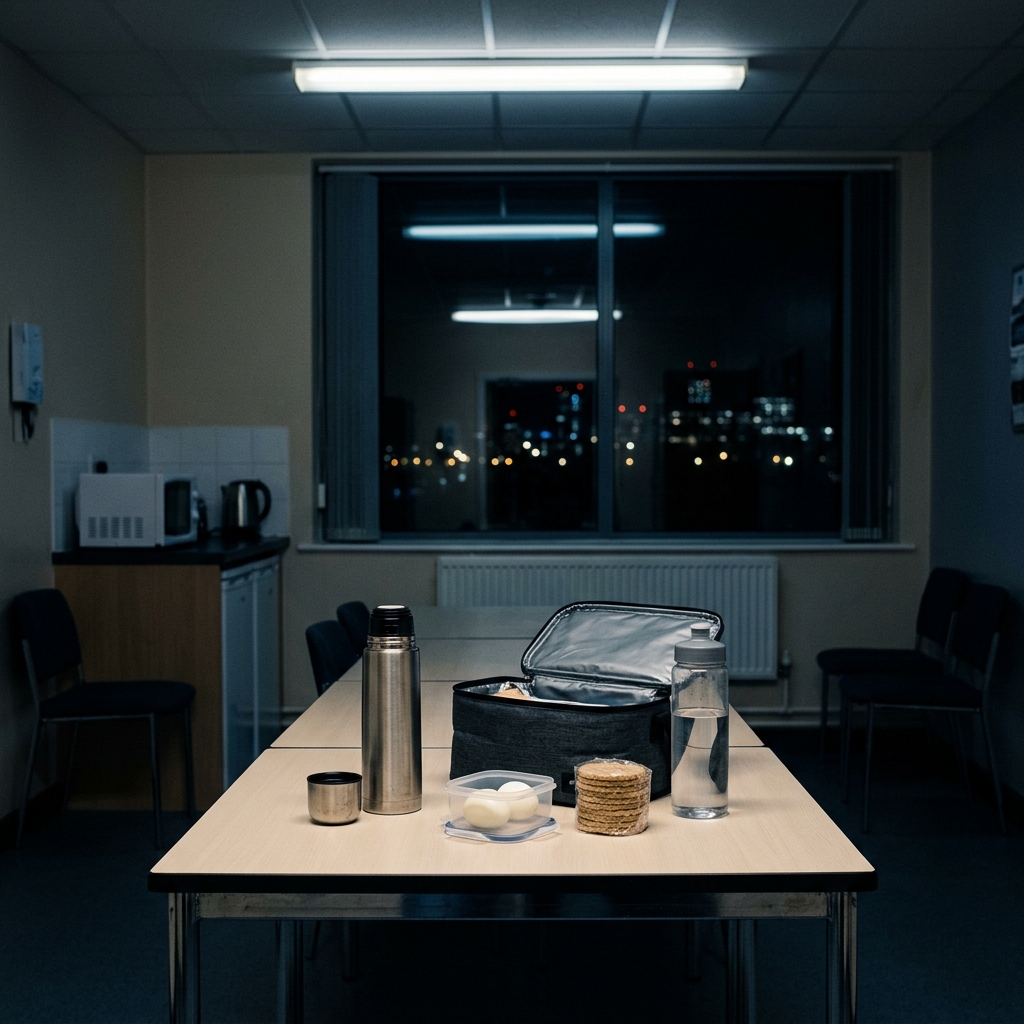
Protein first. Boiled eggs, cheese, Greek yoghurt, hummus, tinned fish, cooked chicken, nuts. Protein is what stops the 4am crash that biscuits guarantee.
Slow carbohydrate with it. Oatcakes, wholegrain crackers, a wrap, a banana, overnight oats.
Something warm if you can. Soup in a flask, or a microwaveable portion if there's a staff microwave. Warm food at 3am is disproportionately comforting.
Iron deliberately. Night workers often run low, and pregnancy doubles the requirement to around 27mg a day. Dried apricots, nuts, hummus and tinned fish are all portable sources. Our iron guide covers absorption, including keeping tea and coffee an hour clear of iron-rich food.
Water, more than you think. Air conditioning, uniforms and long shifts dehydrate you, and dehydration worsens headaches, Braxton Hicks and that hollow 4am feeling that gets mistaken for hunger.
One pattern worth copying from night workers who manage this well: they decide what the shift's food is before the shift starts, and they never leave it to the moment they're hungry at 3am. Hunger at 3am picks badly, every time.
Food Safety at Work
Packed food spends a long time in a bag on a night shift, and pregnancy makes that worth a thought.
Anything chilled and ready to eat needs to stay cold. If there's a staff fridge, use it as soon as you arrive. If there isn't, take a cool bag with an ice block, or pack food that doesn't need refrigeration at all: nut butter sandwiches, oatcakes, dried fruit, nuts, hard cheese, tinned fish.
Once food has been out of the fridge for more than a couple of hours, it isn't worth eating. That's a real constraint on twelve hour shifts, and it's why shelf-stable options earn their place.
Reheated food should be steaming hot, not just warm, and reheated only once. Staff microwaves are notorious for hot edges and a cold middle, so stir halfway. Our leftovers guide has the timings.
Night Shifts in One Box
- Main meal before the shift, not at 1am.
- Small protein top-ups through the night.
- Caffeine early, under 200mg, and none in the last hours.
- Cool bag or shelf-stable food, since fridges aren't guaranteed.
- Light meal after the shift, then sleep.
The Caffeine Problem
This is the genuinely hard part, and pretending otherwise doesn't help.
The pregnancy limit is 200mg of caffeine a day, which is roughly two mugs of instant coffee, and less than a single large takeaway coffee from most chains. On nights, that allowance disappears quickly. Our coffee shop caffeine guide has the figures by drink and size.
What helps within that limit: have your caffeine early in the shift rather than saving it, since it takes hours to clear and pregnancy slows that clearance further. Caffeine at 4am will still be working when you're trying to sleep at 9am, and lost sleep costs you more than the coffee gained.
For the rest of the shift, decaf, herbal tea that's safe in pregnancy, or simply cold water works better than most people expect. So does getting up and moving, and daylight-bright light if your workplace has it.
Energy drinks are the ones to avoid outright. They tend to be high in caffeine, often with added stimulants, and are easy to drink quickly without registering the dose.
After the Shift, and Sleeping
What you eat at the end of a night shift decides how well you sleep afterwards.
A big cooked breakfast at 8am feels earned and then keeps you awake, because digestion and heartburn both work against lying down. Something light is better: porridge, yoghurt and fruit, toast with nut butter, or a small bowl of soup.
Leave a gap of an hour or so before you lie down if you can, and prop your head up. Heartburn is worse lying flat, and worse again later in pregnancy.
If you wake ravenous halfway through your sleep, that's normal and worth planning for rather than fighting. Keep something simple by the bed so you're not standing in the kitchen at midday deciding what to eat. Our pregnancy night snack guide has options that settle rather than stimulate.
Rotating between days and nights is harder again, because your body never settles into either pattern. If you have any say over your rota, blocks of the same shift are easier to eat and sleep around than alternating ones, and that is a reasonable thing to ask for in pregnancy.
Nausea, Heartburn and Swelling on Shift
Three symptoms that hit differently at work.
Nausea. An empty stomach makes it worse, and long gaps between breaks guarantee an empty stomach. Keep dry crackers or oatcakes in a pocket, literally, so you can eat something small without waiting for a break.
Heartburn. Bending, lifting and rushing after eating all make it worse. Smaller amounts more often help more than any particular food, and our heartburn guide covers the triggers.
Swelling. Standing for twelve hours and eating salty convenience food is the combination most likely to leave your feet aching by the end. Water and less salt help, and so does sitting with your feet up on your break. Our swelling guide covers when it's worth mentioning to a midwife.
One thing worth saying clearly: you're entitled to breaks, and to a risk assessment of your role in pregnancy. If your shifts are making it impossible to eat, drink or sit at reasonable intervals, that's a conversation with your employer and your midwife, not something to absorb quietly.
Making It Easier on Yourself
The practical bit, for the week rather than the shift.
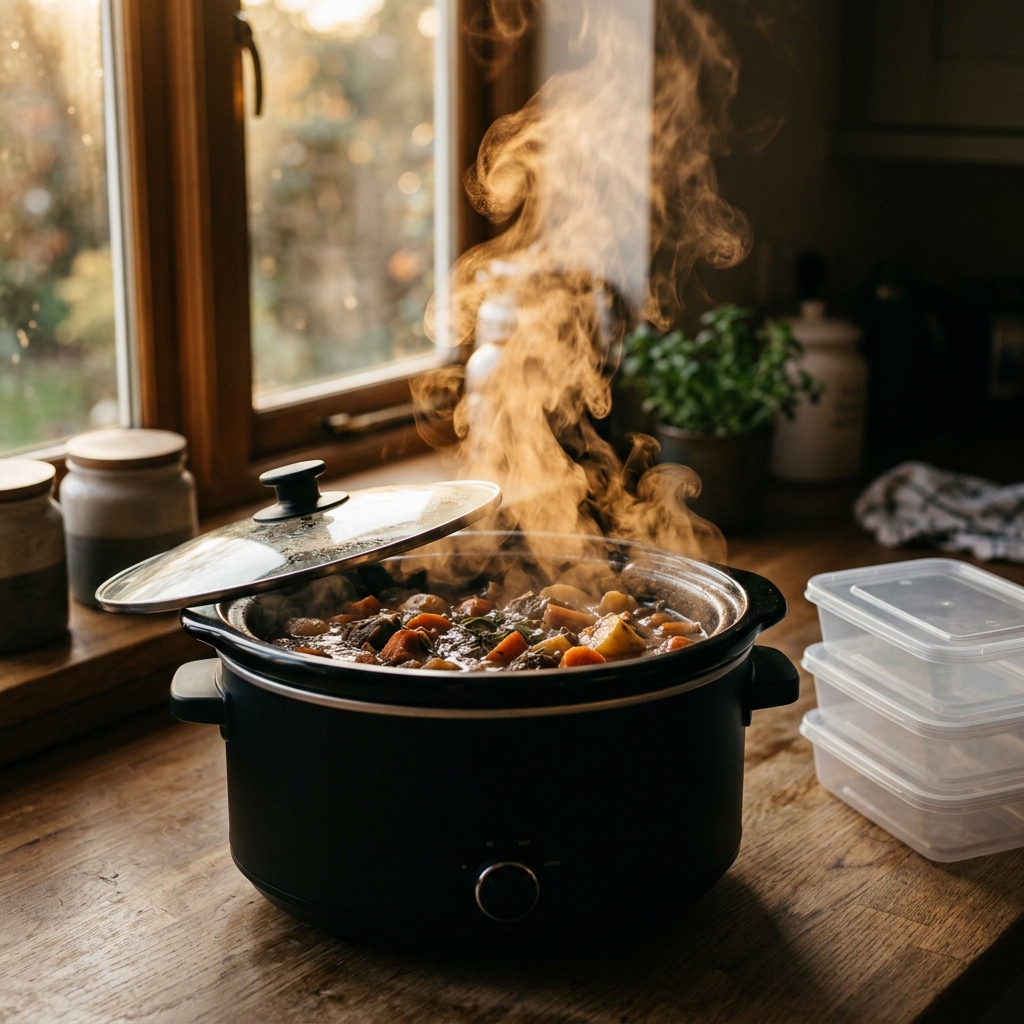
Cook in batches on days off and freeze in single portions, so a pre-shift meal is a reheat rather than a decision. Our meal prep routine and slow cooker guide are both built for that.
Pack the bag before you sleep, not when you wake up, because tired-you makes worse choices than rested-you. And keep a standing list of what goes in it so it isn't a fresh decision every time.
Blood sugar steadiness is the thread through all of this. Eating something every few hours, with protein alongside carbohydrate, prevents most of the crashes that make a night shift feel unsurvivable. Our guide to pregnancy blood sugar crashes explains the mechanism, and if you've been diagnosed with gestational diabetes, our meal plan adapts to shift patterns better than most.
Clinical Sources & Research
This article is general information and does not replace advice from your midwife, GP or occupational health team. If night shifts are affecting your health in pregnancy, ask for a workplace risk assessment.
Meet the Editorial Team
The researchers and experts behind PregnancyPlate.

Fiza Izra
Founder & Tech Researcher
A UK-based mother of 3 with a background in tech and data synthesis, Fiza brings real-world experience navigating hyperemesis gravidarum and postnatal depression. She engineers complex clinical guidelines (NHS, ACOG) into accessible tools, ensuring rigorous fact-checking with deep empathy.

Emma Davies
Senior Nutrition Editor
A mum and writer, Emma runs our food safety desk. She is the one who rings the restaurant to ask how long the lettuce sits out, checks every claim against CDC, FDA and NHS guidance, and rewrites the answer until it is usable at 9pm in a drive-thru queue.