Healthy Pregnancy Desserts: 15 Sweet Treats With Protein, Fiber and Calcium
Fifteen easy, healthy pregnancy desserts that satisfy a sweet craving and add protein, fiber or calcium, plus the desserts to make safely and the ones to skip.
In this article
Editorial note: This article is researched from official public health and pregnancy food safety guidance, then edited by the PregnancyPlate team for clarity. It is not medical advice. If you are worried about symptoms or a specific exposure, contact your midwife, GP or healthcare provider.
The Fast Answer: Sweet cravings are a normal part of pregnancy, and dessert can be part of a healthy diet. The best pregnancy desserts pair something sweet with protein, fiber or calcium, like a Greek yogurt parfait, chia pudding, baked apples or dark chocolate with fruit. For safety, use pasteurized dairy, skip raw eggs and raw cookie dough or batter, and leave out desserts made with alcohol. Keep added sugar in check: the American Heart Association suggests about 6 teaspoons a day for most women.
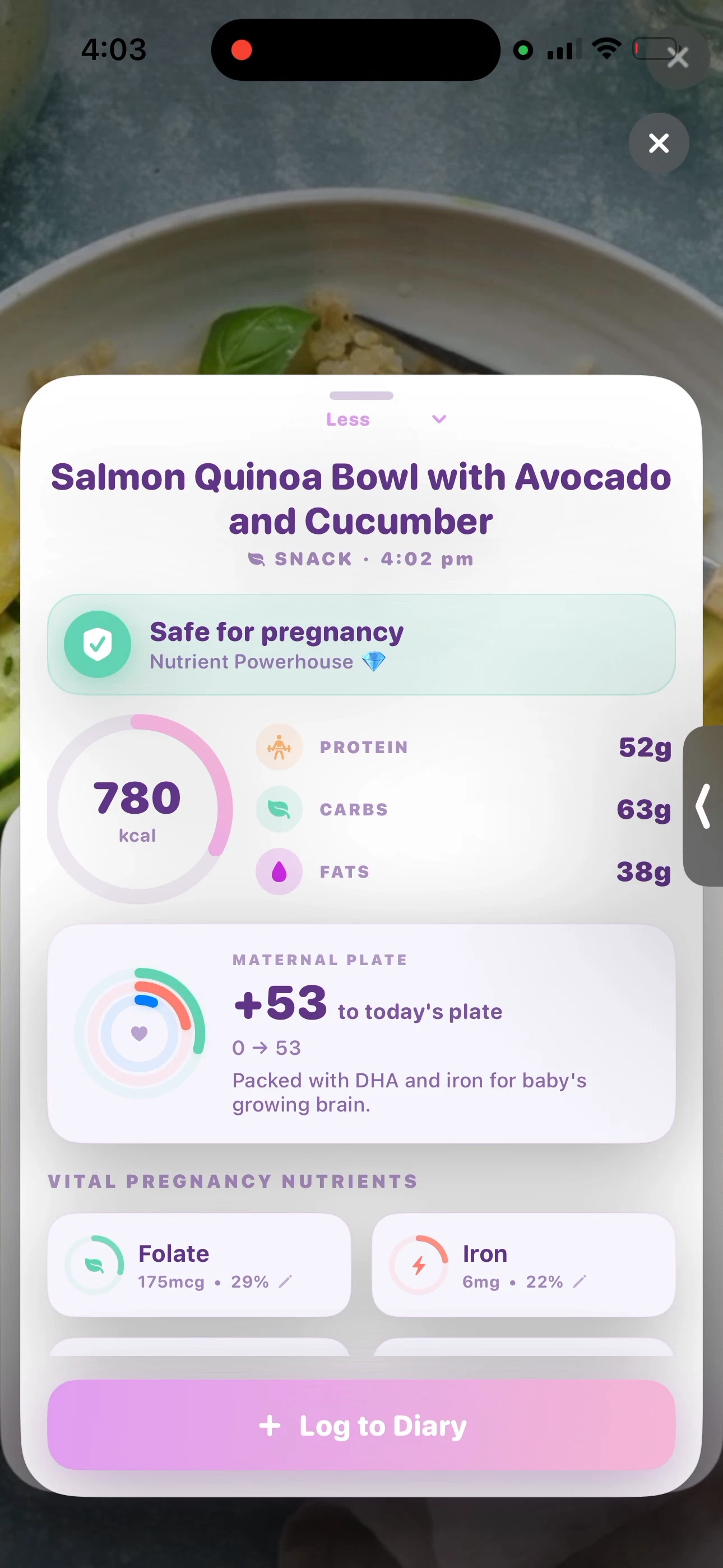
Track your nutrition in seconds in the PregnancyPlate AppYour next meal, a little less guesswork.
Scan your plate for pregnancy food-safety guidance and a nutrition breakdown. Keep your meals and nutrient progress in one place.
 Scan with your iPhone
to get the app
Pregnancy has a way of turning "I'll have a little something sweet" into "I need ice cream right now." Sweet cravings are common, especially in the evenings, and trying to ignore them usually ends with a whole sleeve of cookies at 10pm.
A better plan is to have desserts ready that actually do something for you. A dessert with protein or fiber keeps your blood sugar steadier and fills you up, so the craving goes away instead of coming back an hour later. A dessert with dairy adds calcium, which you need 1,000 milligrams of a day in pregnancy. Here are fifteen that hit the spot, plus the dessert safety rules worth knowing.
The Healthy Dessert Formula
Every dessert below follows the same simple pattern, and you can use it to turn almost any sweet treat into a better one.
- Something sweet: fruit, a drizzle of honey or maple syrup, or a few squares of dark chocolate.
- Something that fills you up: Greek yogurt, milk, cottage cheese, nuts, nut butter, oats or chia seeds.
- A sensible portion: a small bowl or a couple of pieces, not the whole tray.
That pairing is what makes the difference. Sugar on its own is digested quickly and leaves you hungry again soon after. Sugar with protein, fat and fiber is digested more slowly.
15 Healthy Pregnancy Desserts
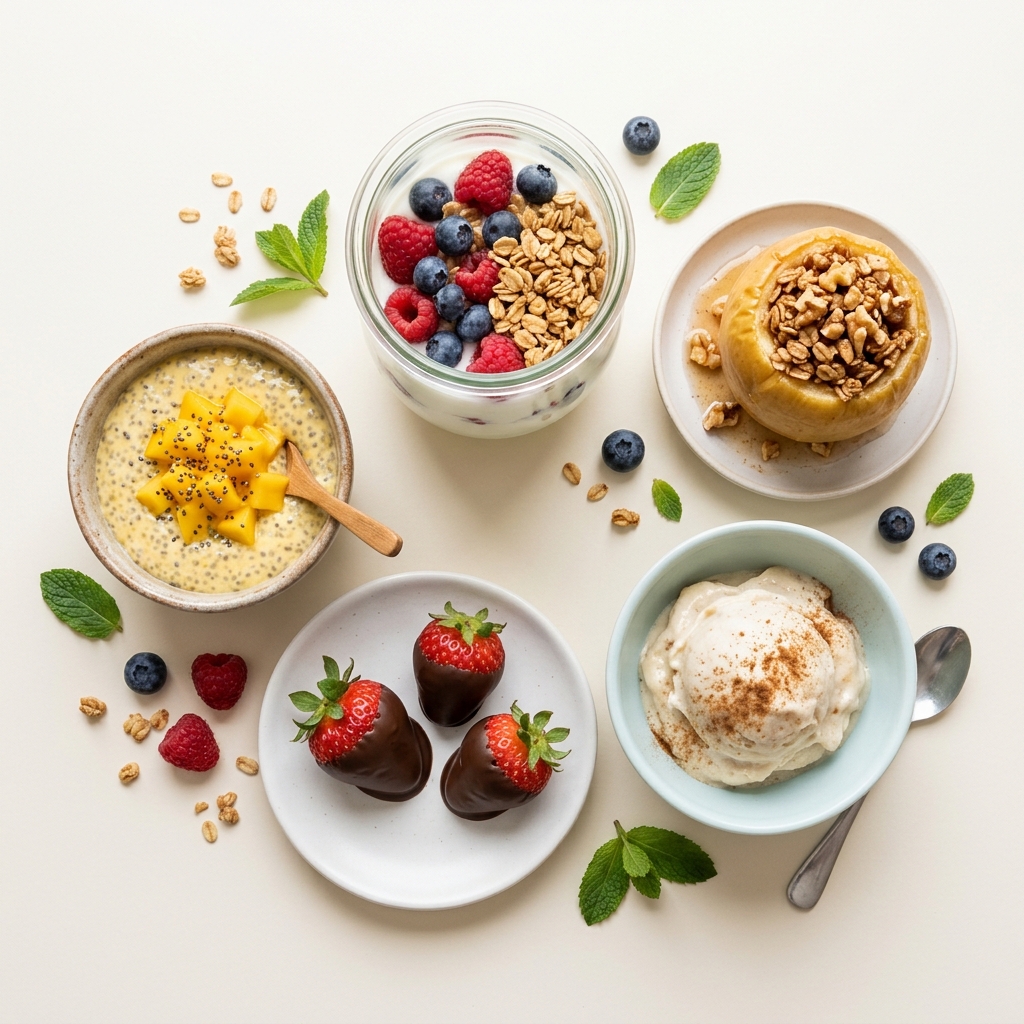
1. Greek yogurt berry parfait (protein and calcium). Layer plain Greek yogurt with berries and a spoonful of granola or chopped nuts, and drizzle with honey. Greek yogurt has much more protein than regular yogurt, and honey is safe in pregnancy. The honey warning is for babies under one. Our honey guide explains why.
2. Mango chia pudding (fiber). Stir 3 tablespoons of chia seeds into a cup of milk with a little vanilla and honey, leave it in the fridge overnight, and top with diced mango. Chia seeds are rich in fiber, which helps with pregnancy constipation.
3. Baked apples with oats and walnuts. Core apples, fill them with oats, chopped walnuts, cinnamon and a little maple syrup, and bake at 375°F for about 30 minutes. Serve warm with a spoonful of Greek yogurt.
4. Dark chocolate strawberries. Dip strawberries in melted dark chocolate and chill until set. A few pieces satisfy a chocolate craving with fruit doing most of the work. Chocolate does contain a little caffeine, and our chocolate guide has the numbers.
5. Banana "nice cream." Freeze sliced ripe bananas, then blend them until creamy. Add cocoa powder, peanut butter or a few frozen berries for flavor. It tastes like soft serve with nothing but fruit in it.
6. Frozen yogurt bark. Spread Greek yogurt on a lined tray, scatter with berries, chopped pistachios and a few dark chocolate chips, and freeze until firm. Break it into pieces and keep it in the freezer for quick treats.
7. Cottage cheese with pineapple. A classic for a reason. Pasteurized cottage cheese is high in protein and on the CDC's list of safer cheeses for pregnancy, and pineapple or peaches make it taste like dessert.
8. Peanut butter oat energy bites. Mix rolled oats, peanut butter, honey, ground flaxseed and mini chocolate chips, roll into balls and chill. Two bites make a filling snack with protein and fiber. Use rolled oats rather than raw flour, which isn't safe to eat uncooked.
9. Warm rice pudding. Simmer rice in milk with cinnamon and a little sugar until thick and creamy. It's comforting, gentle on a queasy stomach and adds calcium from the milk.
10. Pumpkin pie yogurt bowl. Stir canned pumpkin puree, cinnamon, nutmeg and a little maple syrup into Greek yogurt, and top with crushed graham crackers. All the flavor of pumpkin pie, plus protein and vitamin A.
11. Oatmeal fruit bars. Bake a tray of oat bars with mashed banana, chopped dates and walnuts. They keep for days in an airtight container and work as breakfast in a pinch.
12. Berry crumble. Toss frozen berries with a little cornstarch, top with oats, butter, flour and brown sugar, and bake until bubbling. Serve with Greek yogurt instead of ice cream for extra protein.
13. Avocado chocolate mousse. Blend ripe avocado with cocoa powder, maple syrup, a splash of milk and vanilla until silky. It has the texture of mousse with no raw eggs at all.
14. Ricotta with figs or berries. Whip pasteurized ricotta with a little honey and vanilla, then top with figs, berries or a sprinkle of crushed pistachios. Our ricotta guide covers the label check.
15. Real hot chocolate made with milk. Warm milk with cocoa powder and a little sugar or maple syrup. Made with a full cup of milk, it adds calcium and protein, and it has far less caffeine than coffee.
Pregnancy Dessert Rules in One Box
- Pair sweet with protein or fiber so the craving actually goes away.
- Pasteurized dairy only.
- No raw eggs in homemade mousse, tiramisu or ice cream.
- No raw cookie dough or cake batter, unless it's sold as edible.
- No alcohol-soaked desserts.
- Keep added sugar to about 6 teaspoons a day.
Desserts to Make Carefully or Skip
Raw cookie dough and cake batter. The FDA says not to eat or taste raw flour, dough or batter, because flour is a raw ingredient that can carry E. coli, and raw eggs can carry Salmonella. Licking the spoon is the riskiest part of baking. Dough sold as "edible" is made with heat-treated flour and no raw eggs, and is fine. Our raw cookie dough guide has more.
Homemade mousse, tiramisu and no-bake desserts with raw eggs. Traditional recipes use raw eggs. Use pasteurized eggs, or choose recipes where the egg mixture is cooked. Store-bought versions are usually made with pasteurized eggs, and the FDA notes that commercial sauces and dressings use them too.
Homemade ice cream. Custard-style recipes need the egg base cooked to 160°F before churning. Store-bought ice cream is made with pasteurized milk and eggs. Our ice cream guide covers soft serve and ice cream shops.
Unpasteurized dairy. The CDC advises pregnant women to avoid raw milk and anything made from it. That's rarely an issue in store-bought desserts, but it can come up at farm stands and specialty bakeries.
Boozy desserts. Rum cake, bourbon balls, trifle with sherry and liqueur-soaked tiramisu all hold on to their alcohol, especially when the alcohol is added after baking. The CDC says there's no known safe amount of alcohol in pregnancy.
Coffee desserts. Tiramisu, coffee ice cream and mocha desserts add caffeine. Count them toward ACOG's limit of under 200 mg a day.
How Much Sugar Is OK in Pregnancy?
There's no special sugar limit for pregnancy. The American Heart Association suggests most women keep added sugar to about 100 calories a day, which is about 6 teaspoons. Natural sugar in whole fruit and plain milk doesn't count toward that, which is why fruit and yogurt desserts go further than cookies and candy.
A few easy ways to cut added sugar without losing the treat: use ripe fruit for sweetness, buy plain yogurt and add your own honey, choose dark chocolate over milk chocolate, and serve dessert in a small bowl rather than eating from the container.
Desserts With Gestational Diabetes
Dessert is still possible with gestational diabetes, but it needs more planning. Keep portions small, always pair sweetness with protein or fat, and have dessert straight after a meal rather than on its own. Berry parfaits, chia pudding, avocado mousse and a couple of dark chocolate strawberries tend to work better than baked goods. Check your numbers when you try something new, and follow your care team's targets. Our gestational diabetes meal plan shows how a small dessert fits into a day.
Desserts for Nausea and Heartburn
Nausea: cold, simple desserts often go down best. Banana nice cream, frozen yogurt bark, a fruit popsicle or plain rice pudding are good choices on bad days.
Heartburn: chocolate, mint, rich creamy desserts and big portions are common triggers, especially late at night. Baked apples, rice pudding or a small yogurt parfait are gentler. Our pregnancy heartburn guide has more ideas.
Buying Dessert Instead
Not every craving needs a recipe. Baked cheesecake, store-bought ice cream, cookies and most bakery treats are fine in pregnancy. Our guides to cheesecake, Crumbl cookies and fast food desserts cover the popular ones. For more ideas between meals, see our healthy pregnancy snacks and midnight snacks guides, or blend a dessert-style shake from our pregnancy smoothie recipes.
Clinical Sources & Research
- FDA: Flour Is a Raw Food and Other Safety Facts.
- FDA: Dairy and Eggs (Food Safety for Moms-to-Be).
- CDC: Preventing Listeria Infection.
- CDC: About Alcohol Use During Pregnancy.
- ACOG: How Much Coffee Can I Drink While I'm Pregnant?.
- American Heart Association: Added Sugars.
- NIH: Calcium Fact Sheet for Consumers.
- USDA: Safe Minimum Internal Temperature Chart.
This article is general information and does not replace advice from your doctor, midwife or dietitian. If you have gestational diabetes, a food allergy or another condition that affects your diet, follow the plan your care team has given you.
Meet the Editorial Team
The researchers and experts behind PregnancyPlate.

Fiza Izra
Founder & Tech Researcher
A UK-based mother of 3 with a background in tech and data synthesis, Fiza brings real-world experience navigating hyperemesis gravidarum and postnatal depression. She engineers complex clinical guidelines (NHS, ACOG) into accessible tools, ensuring rigorous fact-checking with deep empathy.

Emma Davies
Senior Nutrition Editor
A mum and writer, Emma runs our food safety desk. She is the one who rings the restaurant to ask how long the lettuce sits out, checks every claim against CDC, FDA and NHS guidance, and rewrites the answer until it is usable at 9pm in a drive-thru queue.
Make sense of every plate.
Scan your plate for pregnancy food-safety guidance and a nutrition breakdown. Keep your meals and nutrient progress in one place.
Scan with your iPhoneto get the app