Is Indian Food Safe During Pregnancy? Paneer, Rice, Spice and What to Order
Paneer, yoghurt and lassi are all fine, and spice is safe. The real considerations are rice that has been held and the chutneys added raw at the end.
In this article
Editorial note: This article is researched from official public health and pregnancy food safety guidance, then edited by the PregnancyPlate team for clarity. It is not medical advice. If you are worried about symptoms or a specific exposure, contact your midwife, GP or healthcare provider.
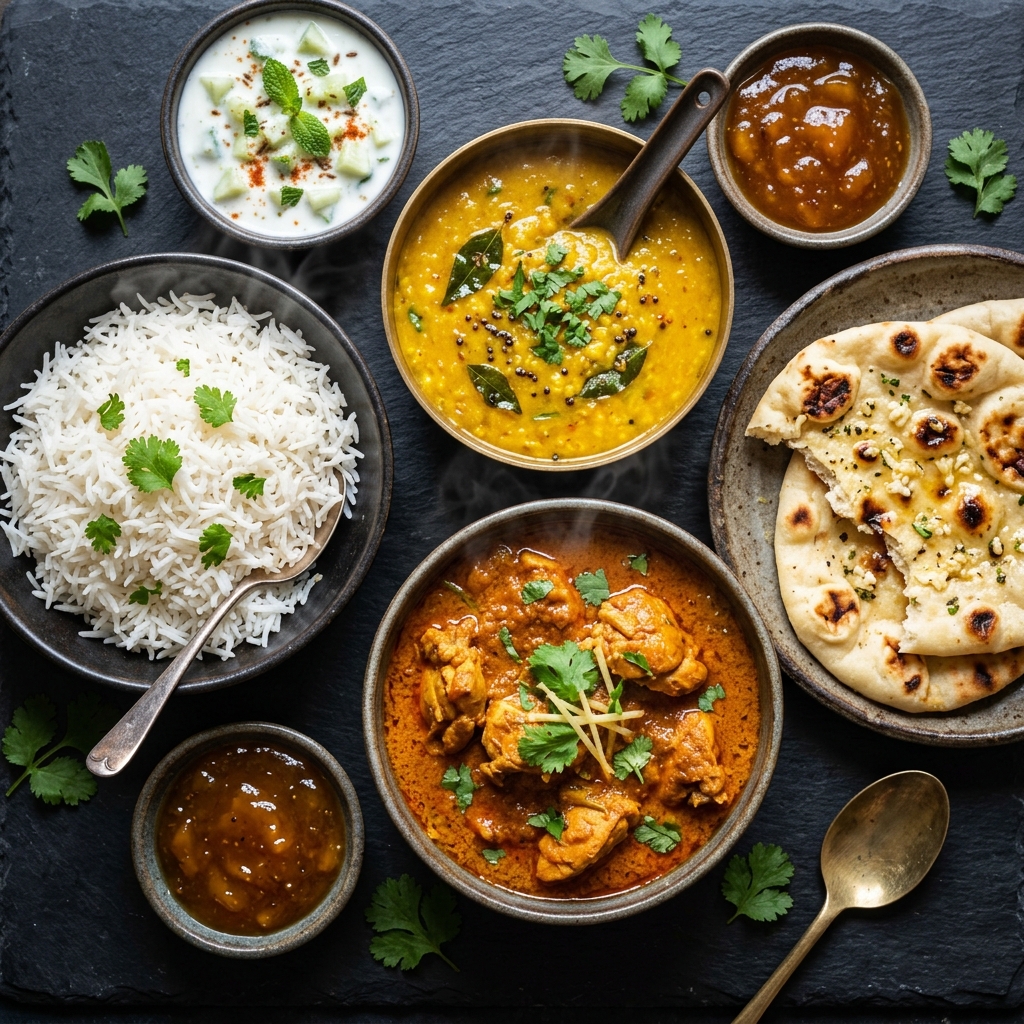
The Fast Answer: Indian food is one of the easier cuisines in pregnancy. Almost everything is cooked thoroughly at high heat, paneer is a cooked cheese made from pasteurised milk, and yoghurt, raita and lassi are made from pasteurised dairy. The two things worth a thought are rice that has been held or reheated, and fresh chutneys and raw garnishes. Spice itself is safe, though it will make heartburn worse later on.
Track your nutrition in seconds in the PregnancyPlate AppSafety is step one. Nutrition helps your baby thrive.
Knowing a meal is safe does not tell you whether you are getting enough iron, folate, calcium and choline. PregnancyPlate tracks all of it from a photo of your plate.
- See nutrient progress
- Scan meals instantly
- Nourish with confidence
 Scan to download
Open with iPhone camera
Scan to download
Open with iPhone camera
Indian food gets more nervous questions in pregnancy than it deserves, usually about paneer, yoghurt and spice. All three turn out to be fine.
What genuinely needs attention is narrower and more specific, and it is mostly about rice and about the things added raw at the end.
Paneer, Yoghurt and the Dairy Questions
These come up most, so they go first.
Paneer is safe. It is a fresh, unaged cheese, which sounds like the category pregnancy guidance warns about, but two things make it straightforward. Commercial paneer is made from pasteurised milk, and it is almost always cooked in the dish, whether grilled, fried or simmered in a sauce. Cooking resolves any remaining question. The only version to avoid would be paneer made at home from unpasteurised milk and eaten uncooked, which is not what a restaurant serves.
Yoghurt and raita are safe. Commercial yoghurt is made from pasteurised milk, and raita is yoghurt with cucumber or mint stirred through. The cucumber should have been washed, which is a kitchen hygiene point rather than a pregnancy one.
Lassi is safe when made with commercial yoghurt, which is the norm. Mango lassi is yoghurt, mango and sugar. The thing to be aware of is sugar content rather than safety.
Ghee and cream are both fine. Ghee is clarified butter, and the cream in a korma or butter chicken is pasteurised.
Our cheese guide explains why fresh cooked cheeses sit in a different category from soft mould-ripened ones.
The Rice Question
This is the one genuine food safety consideration on an Indian menu, and it applies to any cuisine serving rice.
Uncooked rice can carry Bacillus cereus spores that survive cooking. If cooked rice is then left at room temperature, those spores can produce a toxin, and reheating does not destroy it. The risk is not the rice itself but the time it spends sitting warm.
In a busy restaurant cooking to order this is rarely an issue. Where it is worth more thought is a buffet, a lunchtime steam table, or a takeaway that has been sitting before delivery.
What to do: take rice that is steaming rather than warm, and at home, cool leftover rice quickly, keep it no more than a day, and reheat it once until piping hot. Our guide to rice and pasta leftovers covers it in detail.
Biryani and pilau follow the same rule. Freshly made, they are fine.
The Menu, Item by Item
Menus vary enormously by region and restaurant, so use the pattern rather than only the list.
| Dish | Verdict | Notes |
|---|---|---|
| Tandoori chicken, tikka, seekh kebab | Safe | Cooked at very high heat. Check nothing is pink at the bone. |
| Curries: korma, masala, jalfrezi, madras | Safe | Simmered through. Cream and yoghurt in them are pasteurised. |
| Lamb, goat and beef dishes | Safe | Slow cooked through by method rather than served pink. |
| Paneer dishes | Safe | Pasteurised and cooked. No soft cheese concern. |
| Dal and chana | Safe, and good | Lentils and chickpeas are among the best plant iron sources. |
| Naan, roti, paratha, poppadoms | Safe | Cooked through. |
| Rice, biryani, pilau | Take it steaming | See the rice section. Fine fresh, less so held or reheated twice. |
| Raita and yoghurt sauces | Safe | Pasteurised dairy. |
| Mango chutney, lime pickle | Safe | Cooked or preserved commercial products. |
| Fresh mint or coriander chutney | Mild caution | Raw herbs, blended uncooked. Fine from a good kitchen, worth skipping if unsure. |
| Raw onion and salad garnish | Mild caution | Raw and ready to eat. Fine fresh, skip if tired-looking. |
| Pani puri and street-style chaat | Caution | Assembled cold, often with flavoured water. One to have from a kitchen you trust. |
| Kulfi, gulab jamun, kheer | Safe | Made with pasteurised dairy and cooked. |
Indian Food in One Box
- Paneer, yoghurt and lassi are all fine. Pasteurised and usually cooked.
- Rice steaming, not warm, and never reheated twice.
- Fresh chutneys and raw garnish are the only uncooked items.
- Spice is safe, and will cost you at bedtime later on.
- Dal and chana are excellent iron. Order them deliberately.
Buffets and Lunchtime Thalis
Worth separating out, because a buffet is a different proposition from a kitchen cooking to order.
Hot food held on a buffet is safe while it is genuinely hot. The risk builds as dishes cool toward the end of a service, and the curries at the far end of the line are often the ones that have sat longest.
Take what is steaming, go earlier in the service rather than at the end, and treat the rice with the most care since it is the dish most affected by holding. Anything cold on a buffet, including salads, raita in an open bowl and chutneys, follows the usual chilled ready-to-eat rules. Our buffet guide goes through the whole approach.
A thali cooked to order is simpler, since everything arrives fresh at once, and is usually the better choice if both are available.
Ordering With Nausea
First trimester changes this menu more than safety does.
Strong aromatics are the most common trigger, and an Indian kitchen produces a lot of them. If walking into the restaurant is the problem, a collection order eaten at home with a window open is a reasonable adjustment.
On the menu, the mildest things tend to be the most manageable: plain rice, naan, dal, a korma or a mild chicken dish. Yoghurt-based dishes and raita can settle a queasy stomach, and plain rice is one of the better foods for a bad day.
What to avoid on a nausea day is anything deep fried, very rich or heavily spiced, which is the same list that causes trouble with heartburn later in pregnancy. Our bland dinner guide covers the wider approach when nothing much appeals.
Spice, Heartburn and the Myths
Two myths worth dealing with directly.
Spicy food does not harm your baby. It does not cause miscarriage and it does not bring on labour, despite the persistence of that idea. Capsaicin is not a problem in pregnancy.
It will make heartburn worse, and heartburn gets worse anyway as hormones relax the valve at the top of the stomach and the baby takes up more room. So the honest position is that a hot curry is safe and you may regret it at eleven o'clock. A milder dish, eaten earlier, with less of the fried starter, makes a real difference. Our heartburn guide ranks the triggers.
One genuine nuance on spices: culinary amounts are fine, concentrated supplements are different. Fenugreek is the clearest example. As methi leaves or seeds in cooking it is food. As a concentrated supplement it is generally not recommended in pregnancy. The same logic applies to any herb sold as a capsule rather than used in a pan, which our herbal safety guide covers.
Fasting, Festivals and Cultural Context
Worth addressing, because it comes up and is rarely covered.
Several festivals involve fasting, and pregnancy changes the calculation. Many religious traditions explicitly exempt pregnant women from fasting, and most faith leaders will say so if asked. Going long periods without food in pregnancy drops blood sugar, worsens nausea and makes dehydration more likely, none of which is good for you or the baby.
If you do choose to observe a partial fast, the practical advice is the same as for anyone with a long gap between meals: eat something substantial with protein and slow carbohydrate before it starts, drink properly, and break it with something gentle rather than a large rich meal. Speak to your midwife first, particularly if you have gestational diabetes, where fasting needs specific guidance.
On the other side, festival food tends to be fried and sweet in quantity. That is fine as an occasional thing, and the same two considerations apply as everywhere else: heartburn and a sharp sugar load on an empty stomach. Our guide to blood sugar crashes explains why pairing sweets with a meal works better than eating them alone.
What to Order for Iron
This is where Indian food is genuinely useful rather than merely safe.
Dal, chana and rajma are lentil and bean dishes, and lentils and chickpeas are among the best plant sources of iron there are. Pregnancy roughly doubles the iron requirement to around 27mg a day, and most people fall short.
Spinach dishes like saag and palak paneer add more, and the tomato base in many curries supplies vitamin C, which markedly increases how much of that plant iron you absorb. Our iron guide explains why that pairing matters so much.
Lamb and goat dishes bring heme iron, the form absorbed most efficiently of all.
A dal, a vegetable dish and some rice is one of the better pregnancy meals you can order in any restaurant, and it costs less than most of the menu.
The things to go easy on are the ones adding ghee and cream in quantity, which is a comfort issue rather than a safety one, plus the salt, which shows up as swollen fingers by evening. Our swelling guide covers that.
Takeaway and Leftovers
Most Indian food is eaten at home from a bag, which changes the timing rather than the food.
The clock starts when the food is cooked, not when it arrives, so eat it promptly rather than leaving it while you finish something. If it arrives lukewarm, reheat it until steaming rather than eating it as it is.
Leftovers go in the fridge within two hours, keep for a couple of days, and get reheated once until piping hot. Rice is the exception and should be treated as a one day item. Our takeaway guide and leftovers guide have the detail.
If you would rather cook a version at home, our slow cooker guide includes a dal and a chicken curry, both of which freeze well and are among the cheapest iron-rich meals you can make.
Clinical Sources & Research
This article is general information and does not replace advice from your midwife, GP or dietitian. Speak to your midwife before taking any concentrated herbal supplement in pregnancy.
Meet the Editorial Team
The researchers and experts behind PregnancyPlate.

Fiza Izra
Founder & Tech Researcher
A UK-based mother of 3 with a background in tech and data synthesis, Fiza brings real-world experience navigating hyperemesis gravidarum and postnatal depression. She engineers complex clinical guidelines (NHS, ACOG) into accessible tools, ensuring rigorous fact-checking with deep empathy.

Emma Davies
Senior Nutrition Editor
A mum and writer, Emma runs our food safety desk. She is the one who rings the restaurant to ask how long the lettuce sits out, checks every claim against CDC, FDA and NHS guidance, and rewrites the answer until it is usable at 9pm in a drive-thru queue.